Misted and Failed Rooflight Replacement in Poole
Replacing misted and failed rooflights across Poole, starting with whether the fault is a failed seal, condensation or a leak, and whether the frame and kerb can stay.
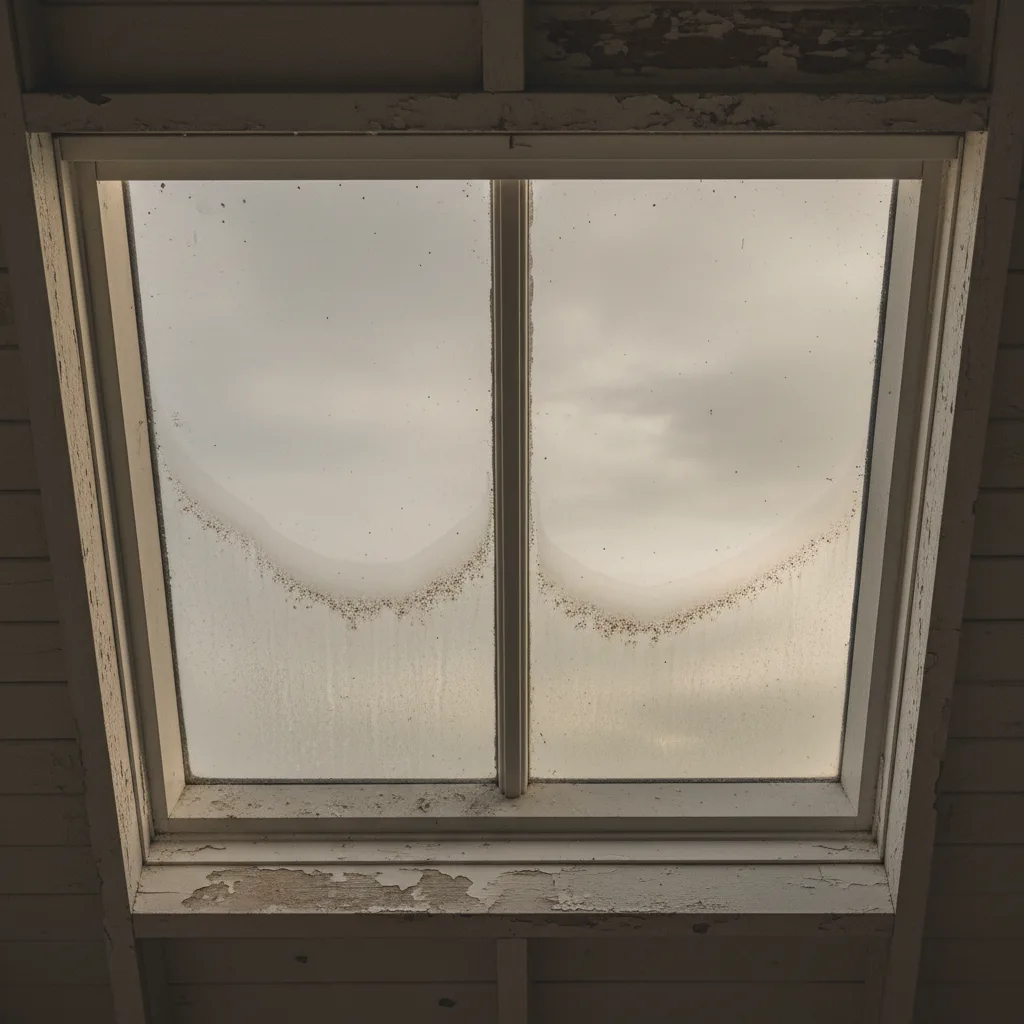
Misting is a symptom, and three faults produce it
Most enquiries arrive with the same sentence: the skylight has gone cloudy. That describes what you can see, not what has failed — and three faults produce it, one a repair, one a replacement, one not a fault at all.
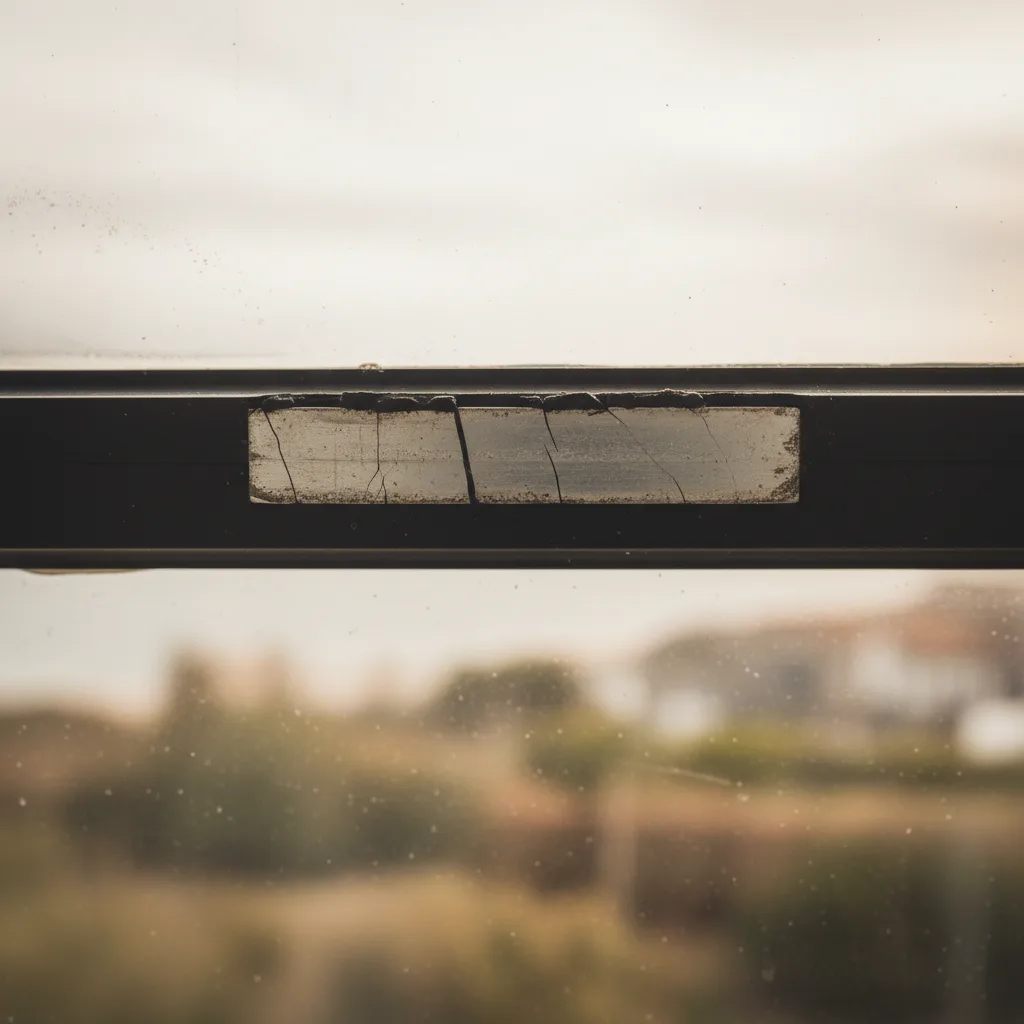
A sealed unit is two panes held apart by a spacer bar packed with desiccant, closed by an inner butyl seal that keeps vapour out and an outer seal that holds the sandwich together. Breach the inner one and damp air works in, the desiccant saturates, and the cavity dews at whatever temperature suits it. Nothing you do from either side reaches it.
Overhead units get there sooner than the windows in the same house: the pane lies flat, so the edge seal sits in water rather than shedding it, and ultraviolet strikes the perimeter seal all day. Polysulphide degrades under UV, so an overhead unit wants a silicone secondary seal — a window make-up fitted flat mists early, and the glass was never the fault.
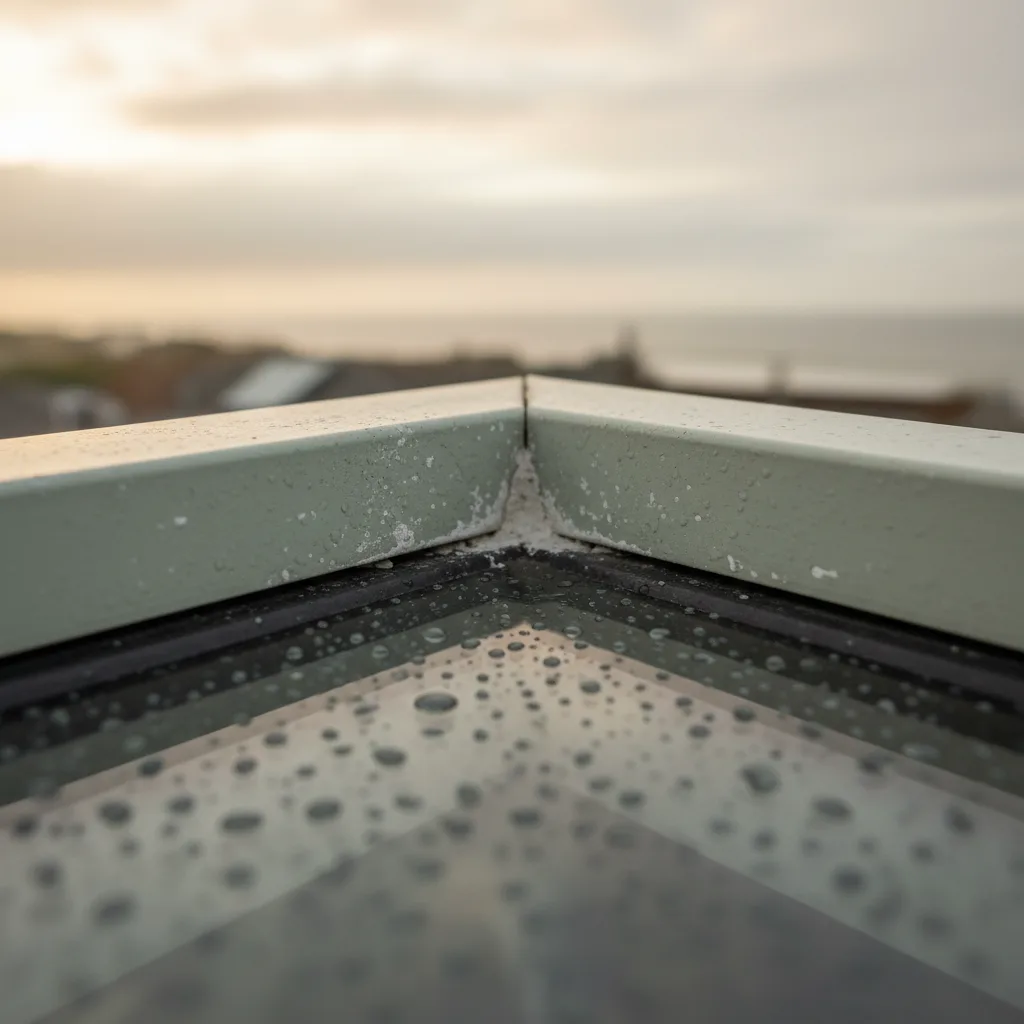
| What you are seeing | Most likely cause | Is it a fault? |
|---|---|---|
| Cloudy patch or tide mark between the panes; cleaning either side changes nothing | Failed primary edge seal, desiccant saturated | Yes, of the unit. Frame and kerb may be sound |
| Droplets on the room side on cold mornings, wipeable, worst in a kitchen or bathroom | Surface condensation, warm moist air on cold glass | No — ventilation and humidity, though an old unit runs colder and makes it worse |
| Water on the inside of the frame or down the reveal, cold weather, no rain | Cold bridge at the frame or an uninsulated timber kerb | Yes, of the installation. Reported to us as a leak more than anything else |
| Wet only during or just after rain, and only on one wind direction | Water entry at the flashing, upstand or kerb junction | Yes, a roof detail fault. New glass will not touch it |
| Rust streaks running down from the fixing heads | Wrong fixing grade — plated steel or A2 stainless on a coastal roof | Yes, and a warning about everything else specified that day |
How old is it, and what is left of the label
Age narrows the question. A unit from 2003 that has misted has reached the end of an ordinary life; one from 2016 has failed, and it is worth knowing why before the same thing goes back in the same hole.
- The edge of the glass, seen through the pane. Many sealed units carry a date or batch code stamped into the aluminium spacer bar, readable wherever the edge cover lets you see it.
- The toughening mark. A permanent etched mark in one corner names the processor and the standard. No date, but it confirms the pane is toughened rather than annealed.
- A label on the frame. Usually under the frame or inside the kerb on a flat rooflight; on the top bar of the sash on a roof window. Photograph it square on, with the flash.
- The paperwork the house came with. BCP Council holds records of work notified in its area, and a 2004 completion certificate dates the roof even when it does not name the rooflight.
- Nothing readable at all. Common on 1990s units. We read the frame profile, glazing method, spacer and kerb detail instead.
Under about twelve years, a misted unit failed for a findable reason: edge cover too shallow, no fall, or a vertical-window make-up fitted flat. Put the same specification back and you buy the same failure on the same timetable.
Repair before replacement, and when repair is not honest
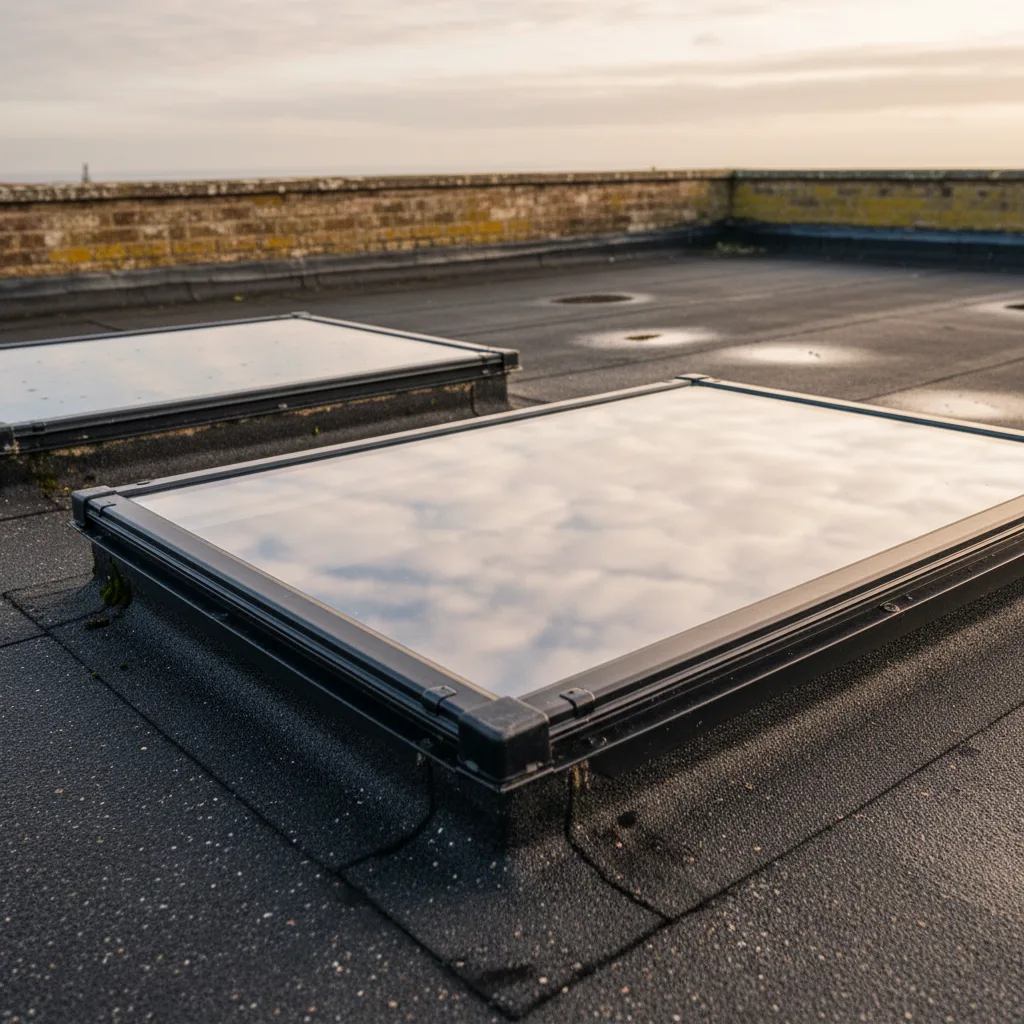
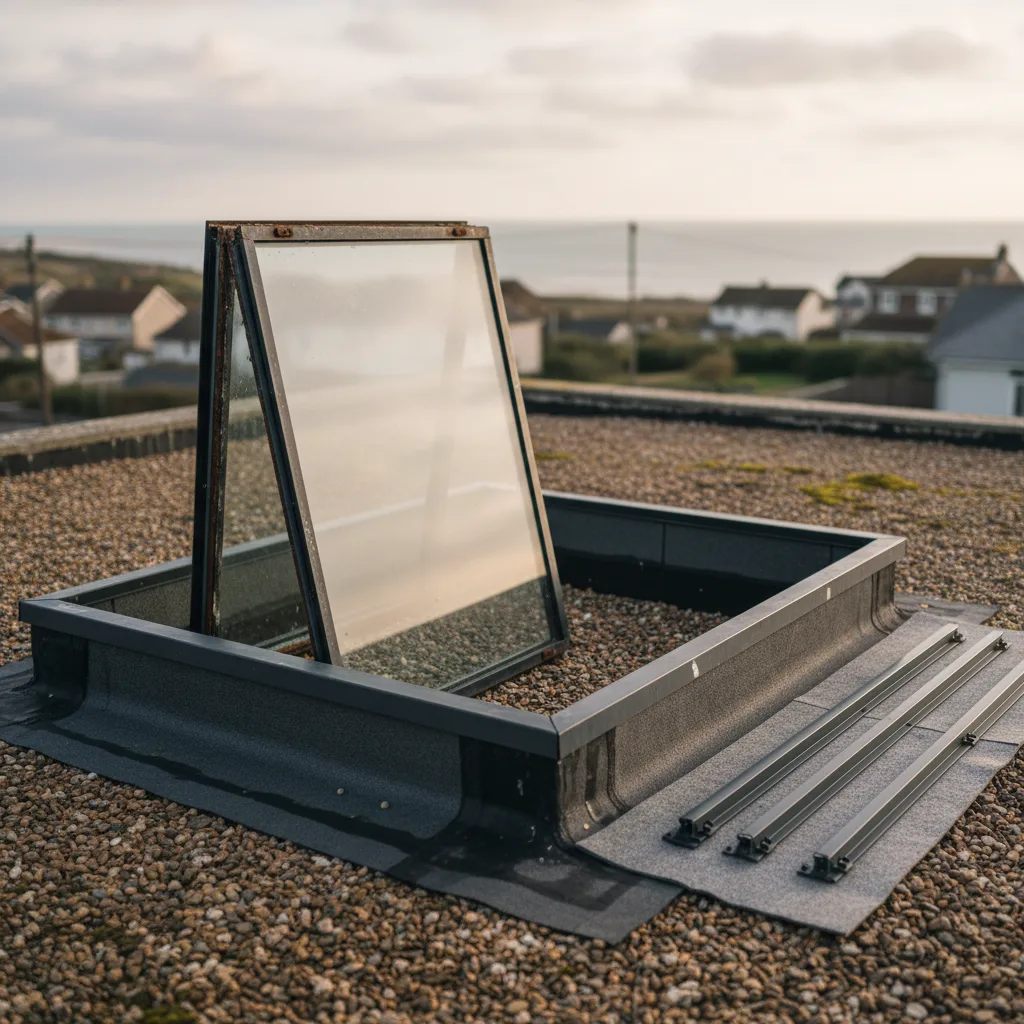
A misted pane is not a failed rooflight. Often the frame is sound, the kerb dry and only the glass gone, and we would rather sell you a pane than a skylight you did not need. What decides it is how the glass is held: a bead or gasket-glazed frame holds the unit mechanically, so one comes out and another goes in, while a bonded rooflight — glass silicone-fixed to a carrier in the factory — does not come apart on a roof.
| What has failed | Repairable in place? | What the repair involves | When it is not possible |
|---|---|---|---|
| Misted unit in a bead or gasket-glazed frame | Usually yes | New unit to the measured rebate, new gaskets, setting blocks renewed | Frame corroding, rebate too shallow for a compliant unit, beads no longer made |
| Misted unit in a bonded frameless rooflight | No | Glass and carrier are one factory assembly | Always. Replaced complete — on a sound kerb, still a one-day job |
| Perished gasket or a whistle in a south-westerly | Yes | Renewed with moulded corners | Obsolete extrusion, no equivalent section made |
| Leak at the flashing, upstand or kerb junction | Yes, and it should be | Detail opened, remade and re-dressed; the glazing stays put | Where the covering has failed too — a sequence, not a patch |
| Yellowed, crazed polycarbonate dome | No | A dome cannot be re-glazed | Always — and the one replacement nobody regrets |
Chalked coatings, salt, and the zone your roof sits in
Powder coating fails from the outside in: ultraviolet breaks down the resin, the pigment is left loose, and the finish goes matt and then chalky. Salt accelerates it, and salt in a wind carrying sand accelerates it again. Underneath, the aluminium is usually still sound; the steel is not — fixings, flashing clips, reinforcement inside a composite frame. A chalked frame is a decision about appearance. Rust under the fixings is a decision about whether it is still held on.
A frame at the harbour mouth is not weathering at the rate of an identical frame in Creekmoor four miles away. Sandbanks sits on a sand spit with open water either side, and the prevailing south-westerly arrives with no fetch break. On the spit we expect chalked coatings and seals at the end of their life by twelve to fifteen years. On heathland-edge roofs at Canford Heath the same units reach twenty.
| Exposure zone | Where it covers | What a twenty-year-old unit looks like | What the replacement changes |
|---|---|---|---|
| Spit and harbour mouth | Sandbanks, the harbour entrance, the seaward peninsula | Coating chalked to a matt bloom, rust weeping from fixing heads, seals gone by fifteen years | Marine pre-treatment and coating, A4 (316) stainless fixings throughout, silicone secondary seal |
| Harbour edge | Poole Old Town, the Quay, Hamworthy, lower Parkstone, Upton | Coating often sound; failures are gaskets, kerb detail, a leak chased for years | Marine finish on exposed faces, A4 stainless on exposed fixings, conservation checked |
| Wooded cliff | Canford Cliffs, Branksome Park, upper Lilliput | Early seal failure at the low edge, moss and resin against the edge cover | Deeper edge cover, fall checked not assumed, self-cleaning outer pane as standard |
| Suburban Poole | Parkstone, Penn Hill, Oakdale, Branksome | Ordinary end-of-life misting; coating faded, not chalked | Standard coating, glass chosen for aspect rather than corrosion |
| Inland | Broadstone, Creekmoor, Canford Heath, the heathland edge | Units that ran their full life; the fault is age, not the air | Standard coating and fixings. Marine-grade here is money spent on a threat that is not present |
In Canford Cliffs and Branksome Park the trees are staying. Tree preservation orders make the pine canopy permanent rather than seasonal. Needles and resin gather at the low edge of a flat rooflight, hold water against the edge cover and keep the seal wet all winter. It is the one part of Poole where a unit fails early with no salt involved.
Like-for-like, or correcting a kerb that was wrong from the start
The cheapest replacement is a straight swap into the kerb already there, and where it is sound that is what we do. But a noticeable share of failed rooflights failed because of the kerb rather than the glass. The upstand is too low — 75mm carrying the waterproofing, where driven rain on this coast wants 150mm above the finished surface. Or it is bare timber, so the perimeter is a cold bridge and February puts water down the inside of the frame, which the owner reports as a leak. Or it is out of square and was packed with offcuts and sealant. Or there is no fall, so the low edge stands in water.
The rule, and the exception
The rule: if the kerb is square, sound, insulated and tall enough, we swap like for like and you pay for glazing rather than carpentry.
The exception: where the kerb is why the unit failed, we say so and price the correction as a separate line you can decline. What we will not do is fit a new skylight onto a kerb we have just told you is the fault and then guarantee the result. A ten-year workmanship guarantee covers our work; it cannot be stretched over somebody’s 1998 upstand.
When nothing matches: obsolete sizes and old frames
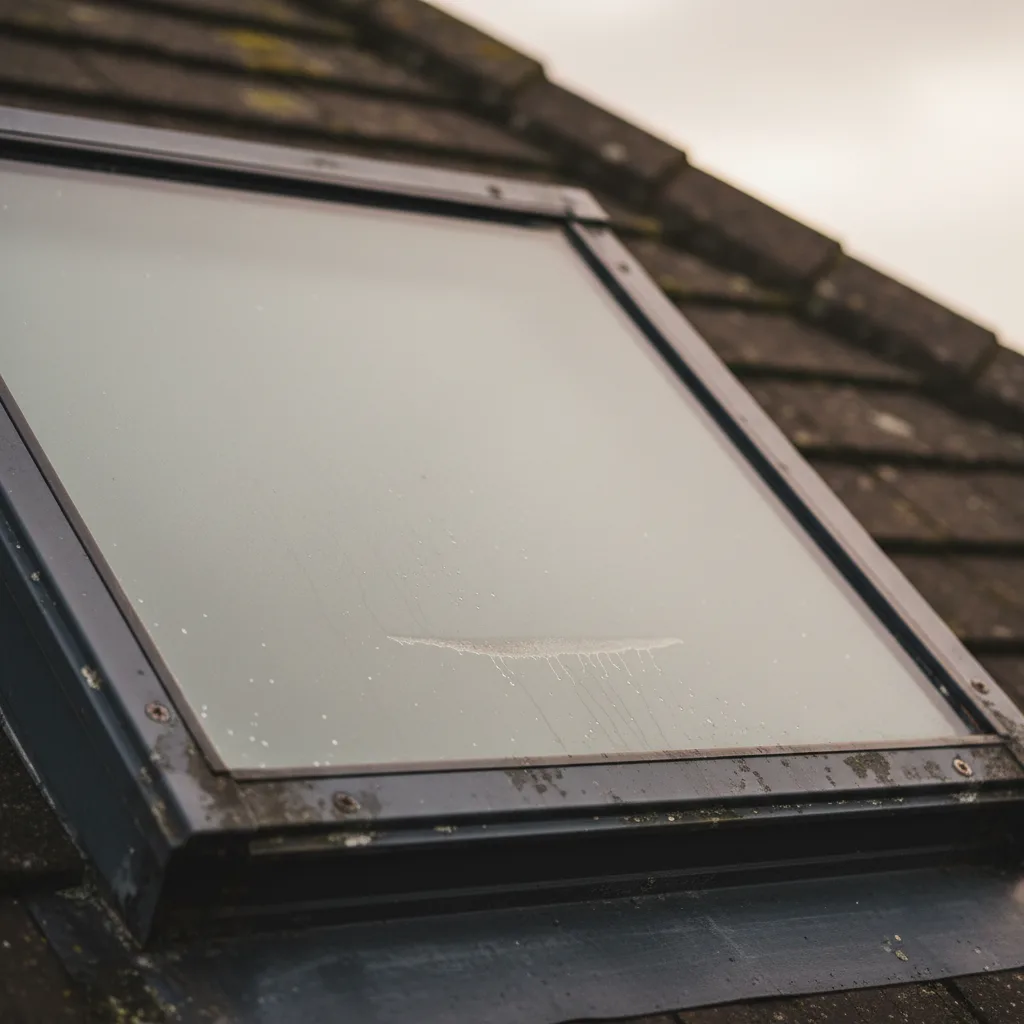
Older rooflights were made to sizes that have gone, by manufacturers that in some cases went with them — and on a 1990s extension the builder often built a kerb to whatever the timber gave him and had glass made to fit, so there was never a catalogue size at all. Most flat rooflights and lanterns are made to order now, which turns an odd size into a lead time rather than a dead end. Where a maker has closed we specify a current make to the measured opening, and we would be wary of anyone offering a matching unit from a company that stopped trading a decade ago.
| What we find | What happens next | What it means for you |
|---|---|---|
| The opening matches a current stock size | Straight swap into the existing kerb or opening | Shortest lead time and no carpentry |
| No catalogue match, but the product is made to order | Manufactured to the measured kerb, after the measure rather than before it | The usual outcome on flat rooflights and lanterns. Weeks of lead time, no extra disruption |
| Odd opening and a stock-size product, as most roof windows are | Nearest size below, opening packed and re-lined — or the opening altered | The first is modest carpentry. The second cuts structure and brings Building Control with it |
Then there is the frame itself. A 1990s frame was built for 1990s glazing: a 20mm to 24mm unit, an air-filled cavity, a plain aluminium spacer, no low-emissivity coating. A unit that performs today is thicker — low-E, argon and a warm-edge spacer generally want 28mm or more. Slim make-ups exist and often drop straight in, which on a sound frame is a good outcome: you keep the aluminium, the flashing and the covering.
What cannot be done is forcing a thick unit into a shallow rebate by cutting the edge cover — the depth of frame overlapping the perimeter seal, whose job is keeping ultraviolet off it. Shorten it and the new unit fails early for the reason the old one did. Where the frame will not take a compliant unit with proper edge cover, we say so and give you the measurement.
What a replacement does to your U-value obligation
Replacing a whole rooflight is not maintenance. In England it is a controlled fitting under the Building Regulations, so what goes back has to meet a standard the thing coming out almost certainly does not: Approved Document L sets 2.2 W/m²K as the limit for a replacement rooflight, and a 1990s air-filled unit with no coating is nowhere near it.
There is a trap in the numbers. Since the 2021 edition, rooflight U-values in England are stated in the vertical plane, which is not how all manufacturer literature has quoted them. The same product carries a worse figure in the horizontal plane, because convection inside the cavity works harder when the unit lies flat. Two rooflights both described as 1.2 may not be the same product, so ask which plane a quoted figure is in.
The rule, and the exception
The rule: replacing the whole skylight is a controlled fitting. It must meet the current standard and the work is notifiable. We are not registered under a competent person scheme, so where a replacement is notifiable it goes to BCP Council building control, and the quote says so before you agree to anything.
The exception: replacing only the sealed unit inside a frame that stays exactly where it is is generally treated as a repair, and the duty does not bite the same way. That is not a loophole to aim for — a repair is only right when the frame is genuinely sound — but it is the honest reason a pane swap is cheaper than a new rooflight. We will tell you in writing which of the two you are being quoted.
When the roof covering is failing too
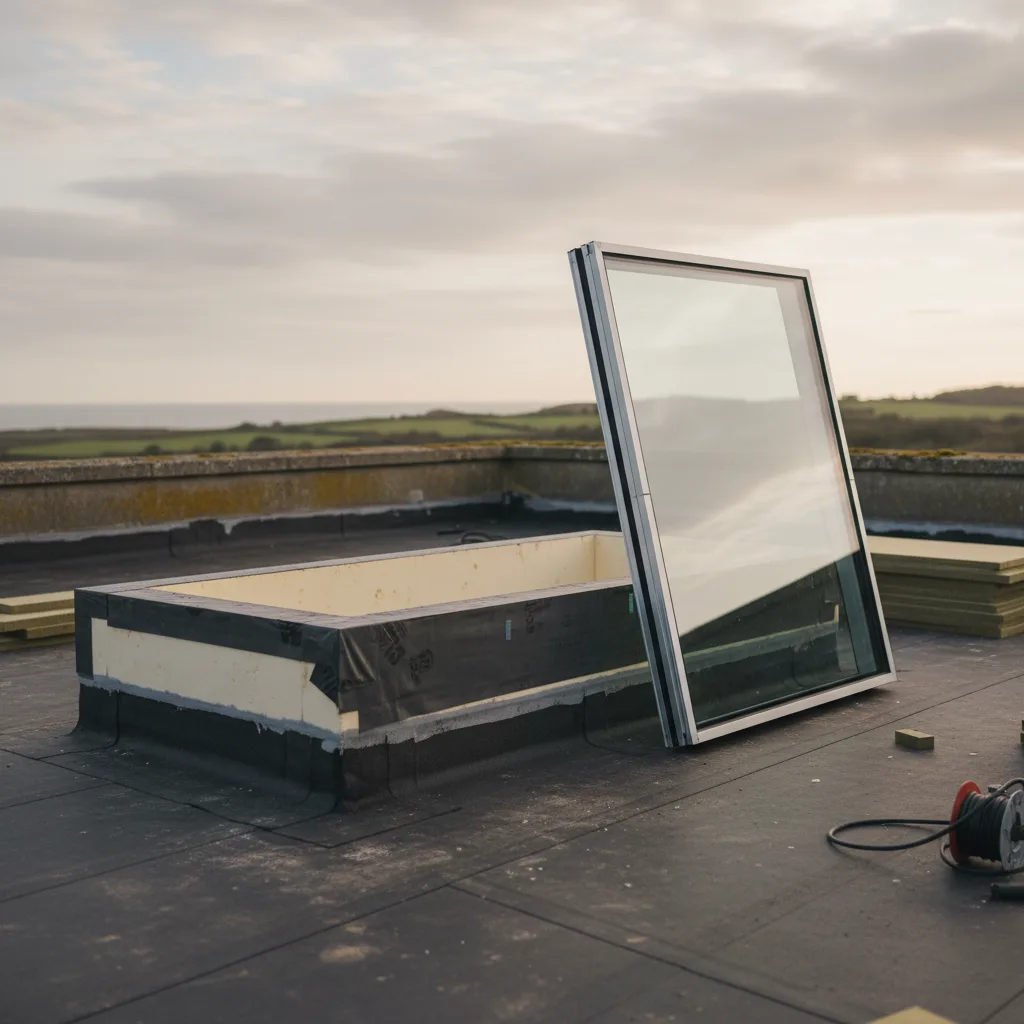
A fair number of the misted units we are asked about sit in a mineral-felt or early single-ply flat roof of the same age, and that covering has an end of life of its own. A new unit bedded into a covering stripped eighteen months later means the detail is cut out and remade.
- Covering sound, years left in it. Replace the rooflight now and dress the covering into the new detail — one visit, opened and closed the same day.
- Covering at the end of its life, unit not leaking. Recover first, or do both together: cheaper and drier, because the roof is opened once.
- Covering finished and the unit leaking now. Watertight as a holding repair, then the roof as one piece of work. We say plainly when something is temporary.
- Covering sound but the deck under it is not. Soft deck is what most often changes a price, which is why we cut a small inspection opening rather than guess.
- Neither is urgent. A misted unit is ugly and costs a little in heat; it is not an emergency, and we will say so rather than manufacture one.
We install and replace glazing; we are not a general roofing firm. Where a covering needs replacing we say so and work alongside your roofer.
What the survey settles
We do not price a replacement from a photograph. The survey is the method, and it ends in a fixed written price rather than an estimate that moves once the unit is off.
- Which of the three it is — failed seal, surface condensation or an actual leak, including a look from inside on a cold morning if that is what it takes.
- What has actually failed: glass, gasket, frame, kerb, covering, or more than one at once.
- Whether the frame and kerb can be kept, and if not, the reason written down with a measurement attached rather than asserted.
- The exposure zone, named — which of the five your roof sits in, and what that changes in coating, fixings and unit make-up.
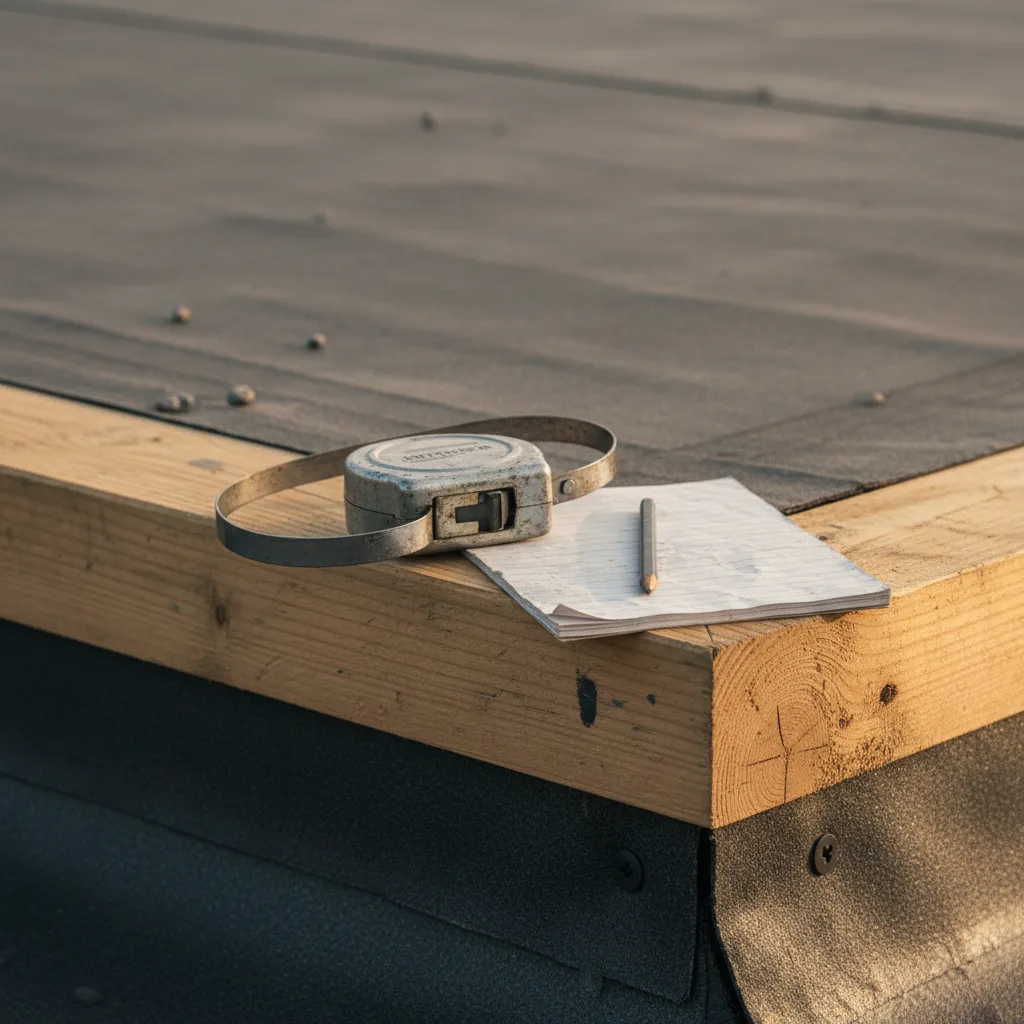
- The measurements that decide the order: rebate depth and edge cover if the frame stays, kerb size, height and diagonals if it does not.
- Availability — current size, made to order, or the opening altered, and the lead time each carries.
- The Building Regulations position and the sequence with the covering: controlled fitting or repair, notifiable or not, and whether anything should wait.
- The price, in writing. One figure, with glazing, carpentry and any roof repair on separate lines so you can decline any of it.
If the honest answer is a new sealed unit rather than a new rooflight, the survey says so and the price falls accordingly.
What we put in writing, and what we will not claim
This is a new firm.
The two things we put in writing
A ten-year workmanship guarantee on our installation work. It is a workmanship guarantee and it is not insurance backed — we say that plainly, because the difference matters if a firm stops trading. Glazing units and frame components carry their own manufacturer warranties, handed over with the paperwork.
A fixed written price after survey. Not a range, not a guide figure, not a number that grows once the old unit is off. Where something genuinely could not be seen until then — soft deck under a sound-looking covering is the usual one — we stop, show you, and price that separately before carrying on.
We replace failed and misted units across Poole and about thirty miles around it, alongside flat rooflight, roof lantern and roof window installation. If your skylight has gone cloudy and you are not sure whether you are looking at a fault or a cold morning, ring 01202 923272. We will name the exposure zone your address sits in over the phone, and tell you what to photograph before we come out.
In this section
Are 1990s rooflights on Poole extensions worth replacing now?
In most cases yes, and usually not for the reason people expect. A 1990s unit that has misted is finished…
Can a leaking rooflight be resealed instead of replaced?
Sometimes, where the leak is at a gasket, a termination or a joint that can genuinely be renewed. But the…
Can a misted rooflight be repaired?
Sometimes, but not in the way most people mean. The misting itself cannot be cured, because the fault is inside…
Can a misted unit be replaced with a larger one?
Yes, and it is often worth doing while the roof is open. But be clear what you are agreeing to:…
Can a rooflight be replaced in one day?
The fitting usually is, yes. One rooflight, on a roof that can be reached, onto a kerb that turns out…
Can an old dome rooflight be swapped for flat glass?
Yes, and it is one of the replacements people are most pleased with afterwards. The work is usually straightforward, because…
Changing the glass without changing the frame, and when that works
Whether you can change the glass and keep the frame comes down to one thing: how the frame holds the…
Do both panes need replacing when only one is misted?
Neither pane is replaced, because the misting is not on a pane. It is inside the sealed cavity between the…
Do failed rooflights get worse in winter?
Both, and they are worth separating. A failed unit looks dramatically worse in winter because the cavity reaches its dew…
Do misted rooflights lose their insulation value?
Yes, but less because of the mist than because of what the mist proves. Three things happen to a failed…
Does a like for like rooflight replacement need building regulations?
Yes, in England a whole-rooflight replacement is a controlled fitting under the Building Regulations, and “like for like” is not…
Does a misted rooflight mean the roof is leaking?
No. Misting is water that is trapped inside the sealed unit and has nowhere to go. A leak is water…