Rooflight and Skylight Installation Brockenhurst
Rooflight and skylight installation in Brockenhurst, where valleys, hips and stacks on Victorian roofs decide the position long before the room below does.
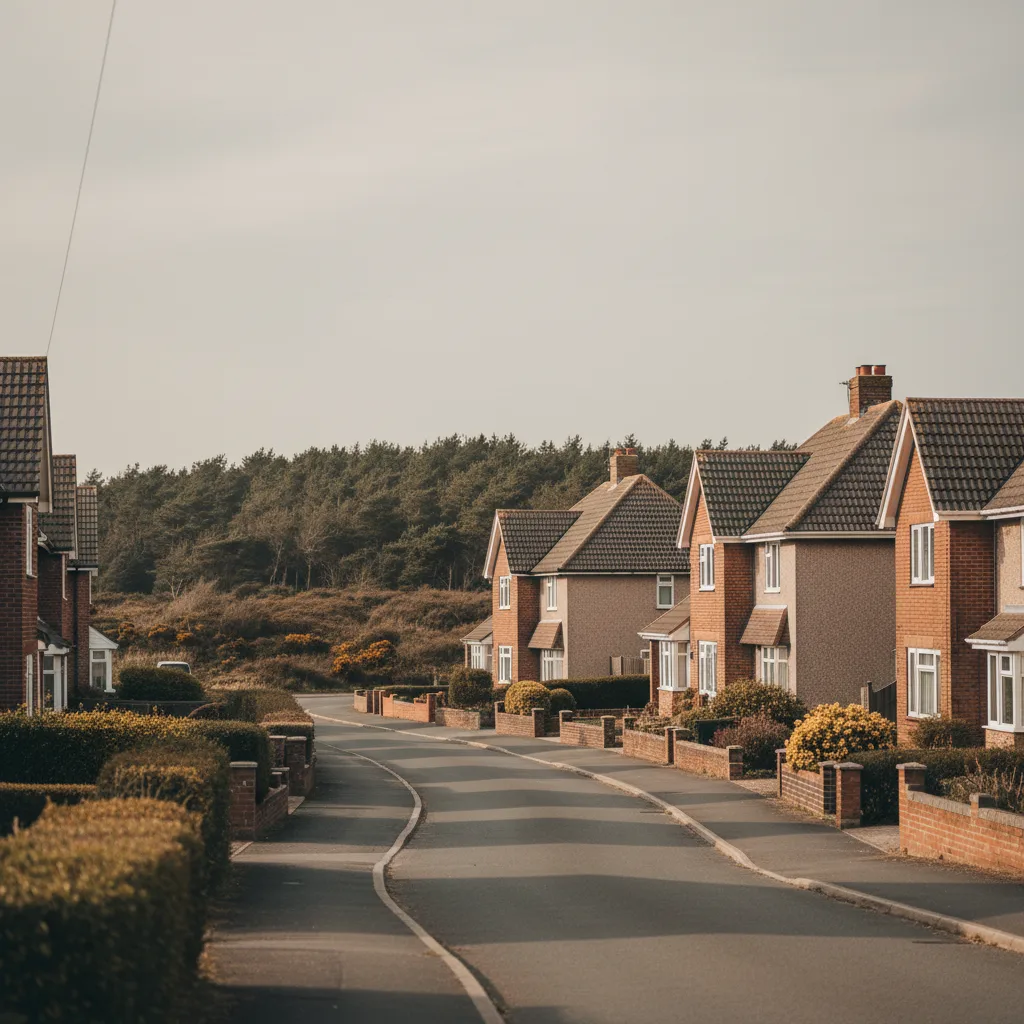
Brockenhurst has a ford in the middle of the village, a level crossing on the main line, ponies on the pavement and some of the most complicated Victorian roofscapes in the New Forest. Three of those four facts change how a rooflight job is programmed, and the fourth changes where the skylight can actually go.
The roofscape is the constraint, not the room below
The large Victorian and Edwardian houses that give Brockenhurst its character were built with ambitious roofs: steep pitches, multiple gables, valleys running between them, dormers, bay roofs and chimney stacks placed for flues rather than for symmetry. They are handsome and they are a genuine puzzle to glaze.
Most rooflight enquiries begin inside — a dark landing, a room that needs light, a loft conversion. On a simple modern roof that is where the decision gets made. On a Brockenhurst villa it cannot be, because the slope above that room may contain a valley, a hip, a stack or an existing dormer within the space the unit needs. Water concentrates in valleys; a rooflight set too close to one is a leak waiting for the right storm.
How the position actually gets chosen
Clear of valleys and hips. Enough uninterrupted slope above, below and to each side for the flashing to work as designed rather than be improvised.
Clear of stacks and existing dormers. Both throw water and both restrict the flashing zone.
With the rafters, not across them. On a cut roof a single rafter is trimmed simply; a wide opening across several is a designed structural job, and on these houses the timbers are often not the sizes a modern table assumes.
Then the room. Where daylight lands is decided last, and sometimes that means two smaller units in the clear areas rather than one large one where the room wanted it.
Ponies, a ford and a level crossing walk into a delivery schedule
Brockenhurst’s access constraints are unusually specific and they are not going away. The watersplash on Brookley Road is a working ford that rises after heavy rain. The level crossing sits on the Bournemouth to Southampton line with frequent trains. The open Forest comes right into the village, so the grass either side of many roads is grazed land rather than verge — you cannot store, tip or stand anything on it, and the ponies and cattle will investigate whatever is left out.
| Constraint | What it does to a job | What we do about it |
|---|---|---|
| The ford at the watersplash | Impassable to some vehicles after sustained rain; the alternative route is longer and narrower | Route checked at survey and confirmed on the morning of a delivery, not assumed from a map |
| The level crossing | Queues at the barriers, and a long vehicle needs somewhere to go once it is across | Deliveries timed away from the worst of it and an agreed standing place before the lorry sets off |
| Open Forest verges | No storage, no skip, no scaffold base on the grass — it is grazed Forest land, not highway verge | Everything on the plot. On an unfenced plot, nothing is left out overnight |
| Free-roaming stock | Ponies and cattle through gardens and drives, entirely unbothered by materials | Materials secured or removed daily; gates closed as a matter of routine rather than courtesy |
Trees: debris, daylight and the ones you must not touch
Brockenhurst is a village inside a wood. Oak, beech and Scots pine stand in and over the larger plots, and a great many roofs here spend the year under a canopy. Three consequences, and they pull in different directions.
Debris is the first. Leaf fall is seasonal and manageable; pine needles are neither. They are fine enough to enter a drainage channel, fibrous enough to mat once they are in it, and they fall continuously. A rooflight under conifers needs drainage that can be reached and cleared, and honest expectations about self-cleaning coatings, which depend on direct sunlight and clean rainfall and simply underperform in shade.
Daylight is the second, and it cuts the other way. A slope shaded from May to October does not have the summer overheating problem that solar-control glazing exists to solve. Buying that glass for a shaded Brockenhurst slope costs you winter daylight you were short of anyway. We look at what is above the roof before choosing what goes in it.
The third is legal, and it is the one that bites. Trees in the National Park may be protected individually or through area designations, and getting a scaffold in sometimes means somebody wants a branch out of the way. Do not have anything cut before its status is confirmed. Unauthorised work to a protected tree carries serious penalties, and it is not a conversation you want attached to your own building project.
The National Park Authority decides here
Brockenhurst sits inside the New Forest National Park, so planning applications for the village are determined by the National Park Authority rather than New Forest District Council. The district remains your building control authority, or you can use an approved inspector. The two approvals are separate, they are decided by different people, and satisfying one has no bearing on the other.
For a straightforward rooflight in an existing slope the usual position still applies — permitted development where it projects no more than 150mm beyond the plane of the roof and stays below the highest part of it. The Park position bites where a proposal is prominent in the Forest streetscape, where a building is listed, where an Article 4 direction applies, or where an earlier consent carried conditions. In any of those cases an application is assessed on its merits and no honest firm will tell you the outcome in advance.
What the roofs are covered with
| Covering | Where | What it means for the job |
|---|---|---|
| Clay plain tile | The Victorian and Edwardian villas and much of the older village | Plain tile kit, tile-and-a-half cuts, steep pitches that weather well. Complex roofscapes make positioning the real work |
| Natural slate | Some Victorian housing and later additions | Hand-stripped and re-laid around a slate kit; nail-sick slate that breaks on removal becomes a repair, priced separately |
| Concrete interlocking tile | Post-war and later infill through the village | Standard profiled kit and a one-day job. Check whether the roof is trussed before planning a wide opening |
| Thatch | Cottages on the outlying lanes towards the commons | Not glazed directly. The alternatives are set out properly on our Burley page rather than half-explained here |
| Flat roofs | Rear extensions, garden rooms and link extensions on the larger houses | Kerb built with a fall of three to five degrees, waterproofing carried at least 150mm up, then the unit measured to the finished opening |
Exposure: sheltered, wooded, and no case for marine grade
Brockenhurst is several miles inland from the Solent shore with the whole of the southern Forest in between. There is no salt load here that changes a specification, and we will not quote one.
What the setting does affect is wind behaviour rather than wind strength. Tall trees and clearings produce gusting and eddying that open country does not, and on a large flat rooflight the sensible response is fixing centres taken from the manufacturer’s wind-load schedule rather than from habit. That costs nothing and it is the difference between a detail that has been thought about and one that has been repeated.
Exposure zone: inland. Standard architectural powder coat, stainless on exposed fixings as normal good practice, standard fixings where concealed and dry. Marine coating and a full 316 schedule belong at Milford on Sea and Barton on Sea, which are the same council area and an entirely different roof.
Questions we get asked in Brockenhurst
Can I have a big rooflight where the room needs it?
Sometimes, but on these Victorian roofs the position is set by valleys, hips, stacks and rafters before the room gets a say. Two well-placed units frequently deliver better daylight than one badly placed large one, and they avoid a structural job.
Who decides my application — the district or the Park?
The New Forest National Park Authority, for planning. New Forest District Council for building control, or an approved inspector. Two separate approvals, two separate decisions.
Do the trees over my roof change the glass?
Yes. Heavy shade removes most of the summer overheating argument for solar-control glazing and makes clarity more valuable. It also means more debris in the drainage channels and less benefit from self-cleaning coatings.
Can you get a lorry to my house?
Usually, with the route checked first. The ford and the level crossing are real constraints, and we would rather plan around them than discover them with a driver on the phone.
Can we glaze the thatched part of the cottage?
No, not the thatch itself. A dormer formed by a thatcher, or glazing in an adjoining tiled section, are the routes that work. Our Burley page covers it in full, including the fire separation and insurance issues.
Is a rooflight noisy under trees or in rain?
Rain noise on glass is real but far less than on a plastic dome. Falling acorns and branches are the Brockenhurst version of the question — another reason we look at what is overhead and, where it matters, discuss laminated glass with you.
What we promise
Rooflights and skylights only — installation and replacement. Not roofing, not carpentry, not extensions.
Two written commitments
A ten-year workmanship guarantee on our installation, stated plainly as not insurance backed.
A fixed written price after survey. On a complicated Victorian roofscape that is worth more than it sounds — a price from photographs would be a guess, and guesses get corrected upwards once the scaffold is standing.
Ring 01202 923272 and describe the roof. We will tell you which authority decides, which exposure zone you are in, and whether your roofscape is likely to take the unit you have in mind, before anybody arranges a visit.
Related reading
Rooflight and Skylight Installation Alderney
The Alderney question is not what it is made of. It is whether it opens Most of the calls we…
Rooflight and Skylight Installation Barton on Sea
Barton on Sea is a cliff top with a clear view of the Isle of Wight and absolutely nothing between…
Rooflight and Skylight Installation Bere Regis
Cob, and why we ask what your walls are made of Cob is earth. Subsoil, water, straw and sometimes chalk…
Rooflight and Skylight Installation Blandford Forum
A town rebuilt all at once, and what that does to roof work Most English towns grew in layers, so…
Rooflight and Skylight Installation Boscombe
In Boscombe, the roof is usually not the shape people think it is Ask someone what their roof looks like…
Rooflight and Skylight Installation Bournemouth
Bournemouth is not one exposure, and neither is its roof stock Bournemouth runs from a clifftop down a set of…