Electric and Opening Rooflight Installation in Poole
Electric and opening rooflights installed across Poole, with the drive, cable route, sensors and escape provision specified for the exposure zone the roof actually sits in.
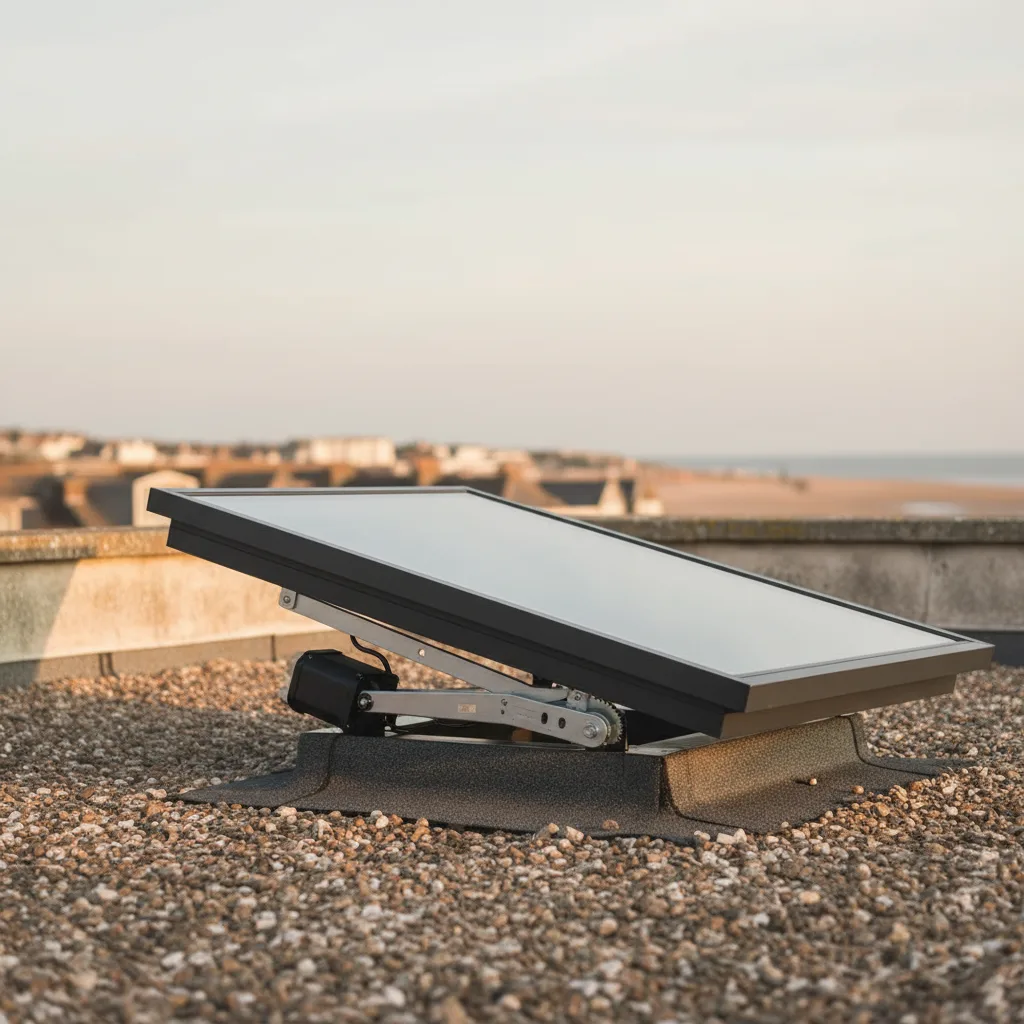
An electric rooflight is a motor, a cable and a hinge
The glass in an opening skylight is the same glass that sits in a fixed one. What you are buying when you specify an electric rooflight is a drive unit, the cable that feeds it, the hinge it pushes against and the control that decides when it moves. Those four things settle how it behaves in weather, and whether a fault in year seven is a twenty-minute swap or a plasterer’s visit.
Nearly every domestic opening rooflight around Poole runs on 24 volts direct current from a transformer tucked out of sight. Mains stops at the transformer; a low-voltage cable runs on to the unit, and the drive does the pushing. Two families of drive cover almost all of it, and they are not interchangeable.
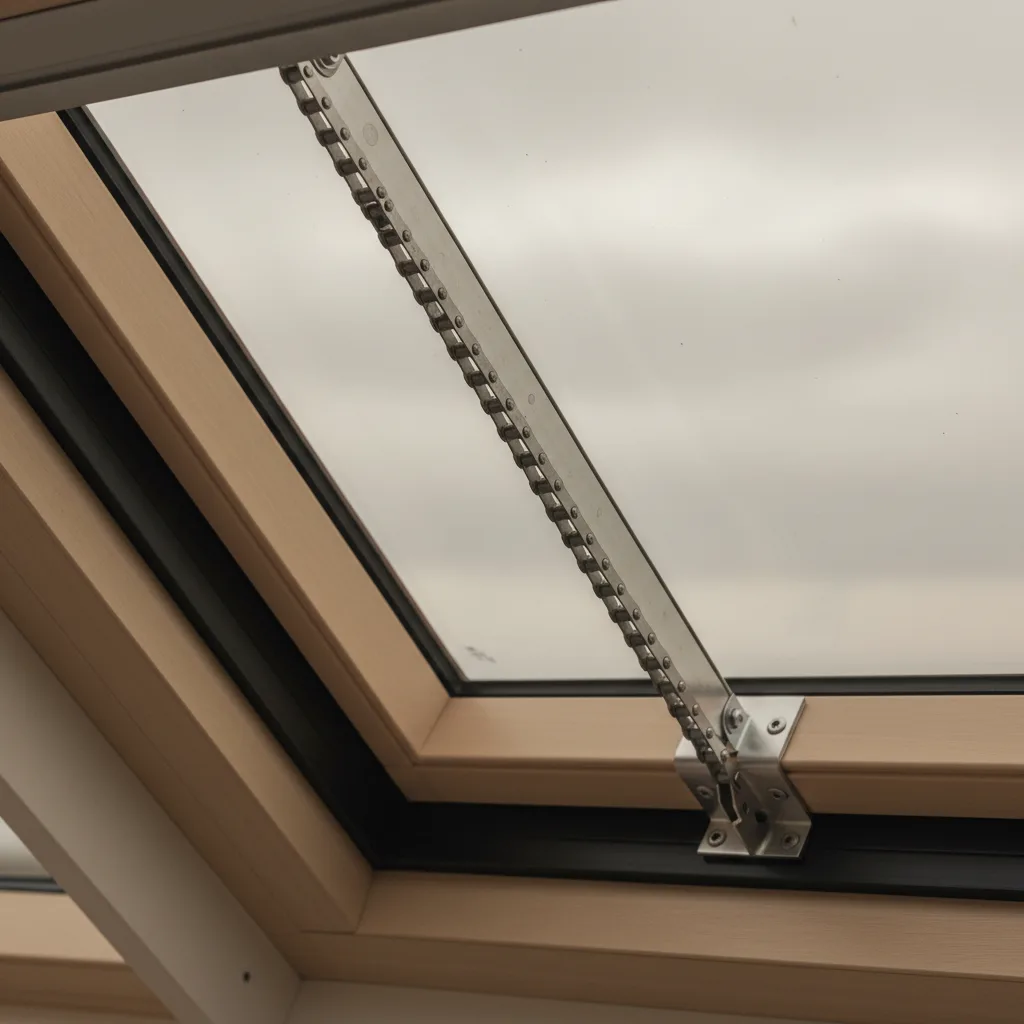
| Comparison point | Chain actuator | Linear spindle drive |
|---|---|---|
| How it moves | A jointed chain unrolls from a housing and stiffens into a strut | A motor turns a threaded spindle or rack behind a rigid arm |
| Usual stroke | 200-400mm — a ventilation gap, not a wide sash | 300-1000mm, enough to reach a set angle |
| Usual force | Around 200-300N | 600N and upwards, which heavy glazing needs against wind |
| Sash it suits | Flat rooflights and roof windows to roughly 1.2m by 1.2m | Large or triple-glazed sashes that must open fully every time |
| Visible hardware | Chain shows across the opening | Concealed, but needs more depth in the frame |
| Smoke vent duty | Rarely rated to open far enough, fast enough | Yes, where drive and unit are certified together |
| Replacement | Cheaper, usually a same-day swap | Dearer, often means removing beads or trim |
Worth hearing early: whichever drive you get, it will be the first part of the rooflight to fail. Glass and frames outlive motors. Treat the actuator as a serviceable component and every decision below gets easier.
Which Poole exposure zone your roof sits in
Poole is not one exposure, and an opening unit feels that harder than a fixed one. A fixed skylight presents a sealed face to the weather. An open sash presents a lever arm, a gap, and moving parts with salt or pine debris landing straight on them.
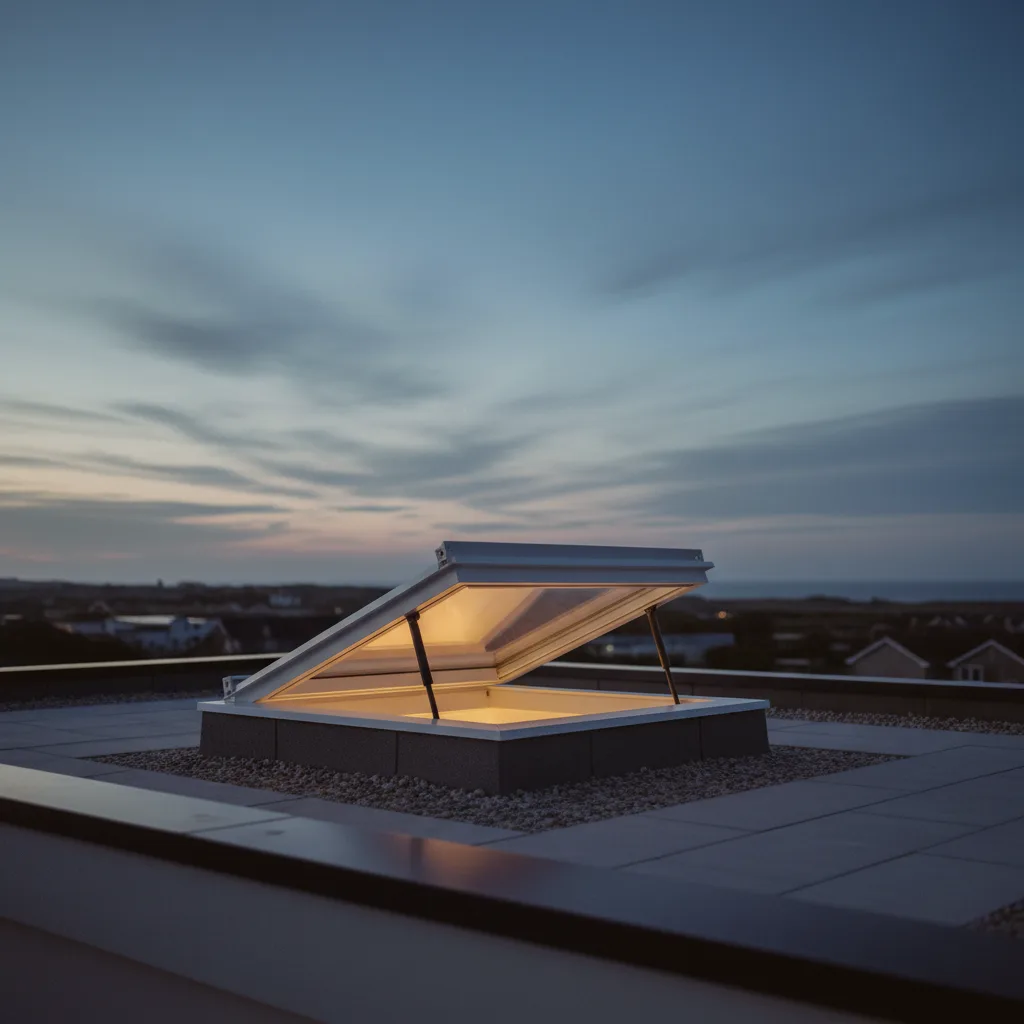
An open sash on the Sandbanks spit is a sail. Water either side, no fetch break on the prevailing south-westerly, and the wind load acts on the open leaf with the actuator and hinges holding it. Four miles away at Creekmoor the same unit opens into ordinary sheltered air, and the only thing that troubles it is its own gasket.
So the survey names the zone first and the specification second, both in writing on the quote. None of this is an upsell menu — in two of these zones the honest answer is that the coastal extras are money spent on nothing.
| Zone | Where | What changes on an opening unit | Why |
|---|---|---|---|
| Zone 1 — severe marine | Sandbanks, the harbour mouth, seaward Lilliput | Sealed actuator, stainless chain or spindle, A4 (316) hinge fixings, wind sensor, restricted opening angle | Salt reaches moving parts first, and an open sash takes wind load the hinge was never sized for |
| Zone 2 — sheltered marine | Poole Old Town, the Quay, Hamworthy waterside, Parkstone shore | Coastal coating, A4 stainless on exposed fixings, rain sensor standard, wind sensor only on exposed roofs | Salt is present, but the land behind breaks the south-westerly before it lands |
| Zone 3 — wooded and elevated | Canford Cliffs, Branksome Park, upper Lilliput | Mains rather than solar, channels cleared twice a year, sensor pad sited off the debris path | Tree preservation orders keep the pine canopy: needles foul channels and pads, and a panel under it never charges |
| Zone 4 — inland | Broadstone, Creekmoor, Canford Heath, Upton | Standard actuator, coating and fixings; rain sensor optional; solar or mains both fine | Sheltered heathland edge with no salt load — marine hardware here buys you nothing |
The cable is decided before the ceiling closes
This is the commonest regret on an electric rooflight, and it is avoidable. The low-voltage cable reaches the unit through the ceiling void. Once plasterboard is up, insulation is in and the room is skimmed, that route is gone. What is left is surface trunking down the reveal, a battery unit that will not suit every roof, or opening the ceiling again.
The rule, and the exception
The rule: if there is any chance you will ever want the rooflight to open by motor, the cable goes in while the ceiling is open — even if you are fitting a fixed unit today. A spare 24V tail coiled in the void costs almost nothing. Retrofitting it later costs a room.
The exception: a solar-powered unit carries its own panel and battery and needs no cable, which makes it the sensible retrofit into a finished room. But it is an exception, not a default. Under the mature pines of Branksome Park a roof-mounted panel sees a fraction of the light it is rated for, and through a Dorset winter the battery never recovers between openings. In Zone 3 we will normally talk you out of solar and into a cable.
Four details separate a cable that lasts twenty years from one that causes a callout: conduit or a draw cord, so a failure can be pulled through rather than chased out; clipped clear of the insulation line and of anywhere a fixing will later be driven; 300-500mm of slack at the kerb; and kept apart from any mains cable sharing the void. We mark the route on the drawing at survey and put it in the quote.
Rain sensors, wind sensors, and what they honestly do
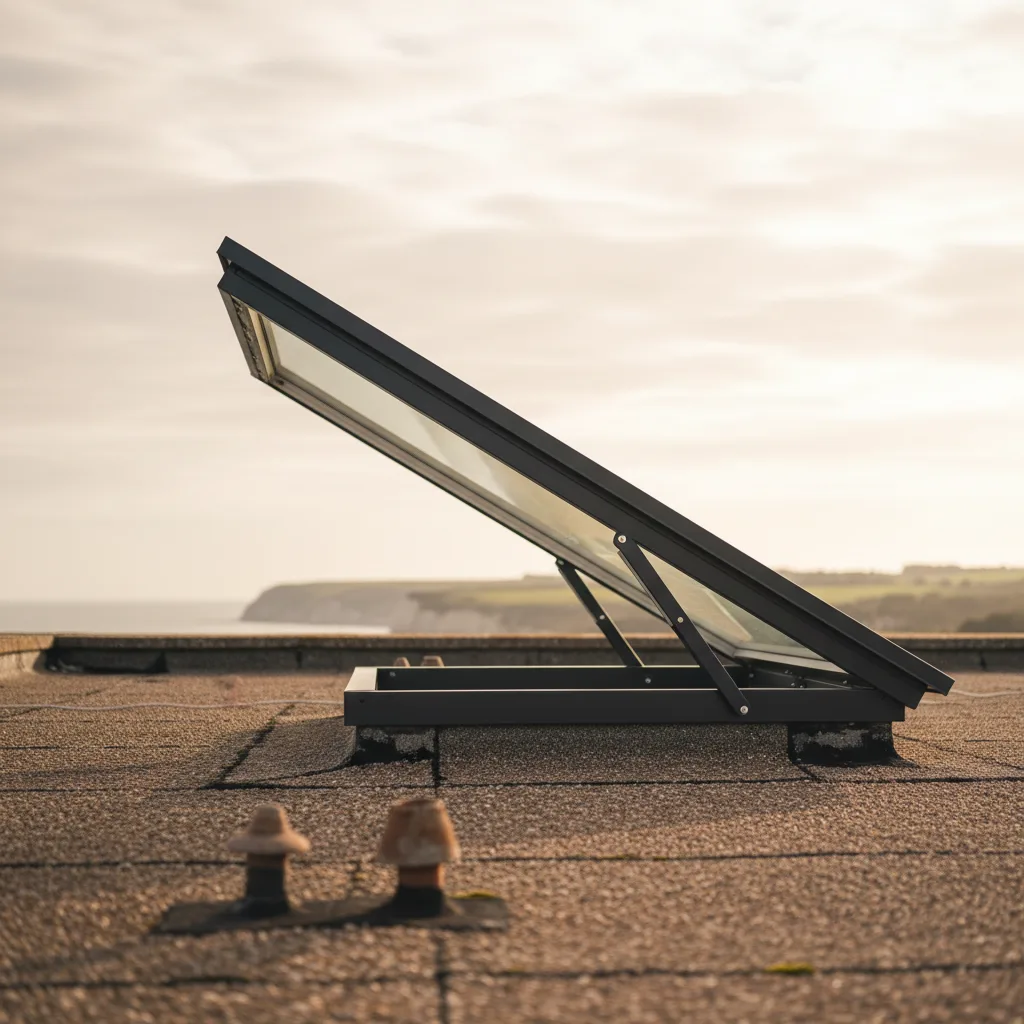
A rain sensor is a small conductive pad, usually on the external face of the frame. When it gets wet it completes a circuit and the control closes the sash. That is the whole mechanism — useful, cheap, and oversold.
It does not predict rain. It reacts to the first drops, and the sash then takes ten to thirty seconds to travel — on a windy afternoon, long enough for water to reach a sill. It does not work with the power off. It will not usually reopen the unit once the pad dries. It is fooled by heavy dew and by a garden sprinkler. And a pad crusted with salt at the harbour mouth, or filmed with pine resin in Canford Cliffs, either stops sensing or reads as permanently wet — at which point the rooflight refuses to open and the owner assumes the motor has failed.
| Control | What it responds to | Where we fit it | The limit to know about |
|---|---|---|---|
| Rain sensor | Water on a conductive pad | All zones, standard on any unit opened by switch or remote | Reacts rather than predicts, and is dead without power |
| Wind sensor | Wind speed at an anemometer, threshold set at commissioning | Standard in Zone 1, on request for exposed roofs in Zone 2 | Reads the wind where the anemometer is, not at the sash |
| Opening restrictor | Nothing — a commissioned limit on drive travel | Zone 1 as standard, and any large sash facing the prevailing wind | Cuts the ventilation you paid for; a smaller gap against longer hinge life |
| Timer or humidity control | A clock, or internal humidity above a set point | Bathrooms and utility rooms, where the point is moisture not heat | Opens the unit when nobody is home unless rain and wind inputs override it |
A wind sensor matters more than most Poole homeowners expect, and in a specific way: the load is not on the glass but on the hinge and the drive, holding a flat leaf against pressure they were sized for at a much lower speed. On the spit we fit the sensor and restrict the travel. Inland in Broadstone, neither is worth the money.
Smoke vents and AOVs are a different animal
People use “electric rooflight” and “AOV” as though they were one product. A comfort-ventilation skylight opens because you want fresh air. An automatic opening vent opens because a fire detection system told it to, and drive, panel, supply, certification and servicing all change to suit.
Where an AOV actually appears, and where it does not
Almost never in an ordinary house. In a single private dwelling the escape strategy is normally a protected stairway, interlinked mains-wired alarms and, where it applies, an escape rooflight. Nobody should be selling you an AOV for a kitchen extension.
Where it does apply: the common stair of a block of flats, a converted building with shared escape routes, and commercial work — typically a vent at the head of the stair, sized by a fire strategy rather than by us. Those units are certified to BS EN 12101-2, run from a dedicated 24V panel with standby batteries, and are triggered by detection and by break-glass call points.
Two things follow. Comfort controls must not override a fire signal: on a certified vent the rain and wind inputs are defeated in fire mode, because a vent that shuts itself in a rainstorm during a fire is worse than no vent. And an AOV carries a legal maintenance duty — under the Regulatory Reform (Fire Safety) Order 2005 the responsible person keeps it tested and serviced, with records. We install AOV-rated rooflights to a specification a fire engineer, architect or Building Control body has already set. We do not write smoke strategies, size vents, or certify someone else’s design.
Escape rooflights and the clear opening a loft room needs
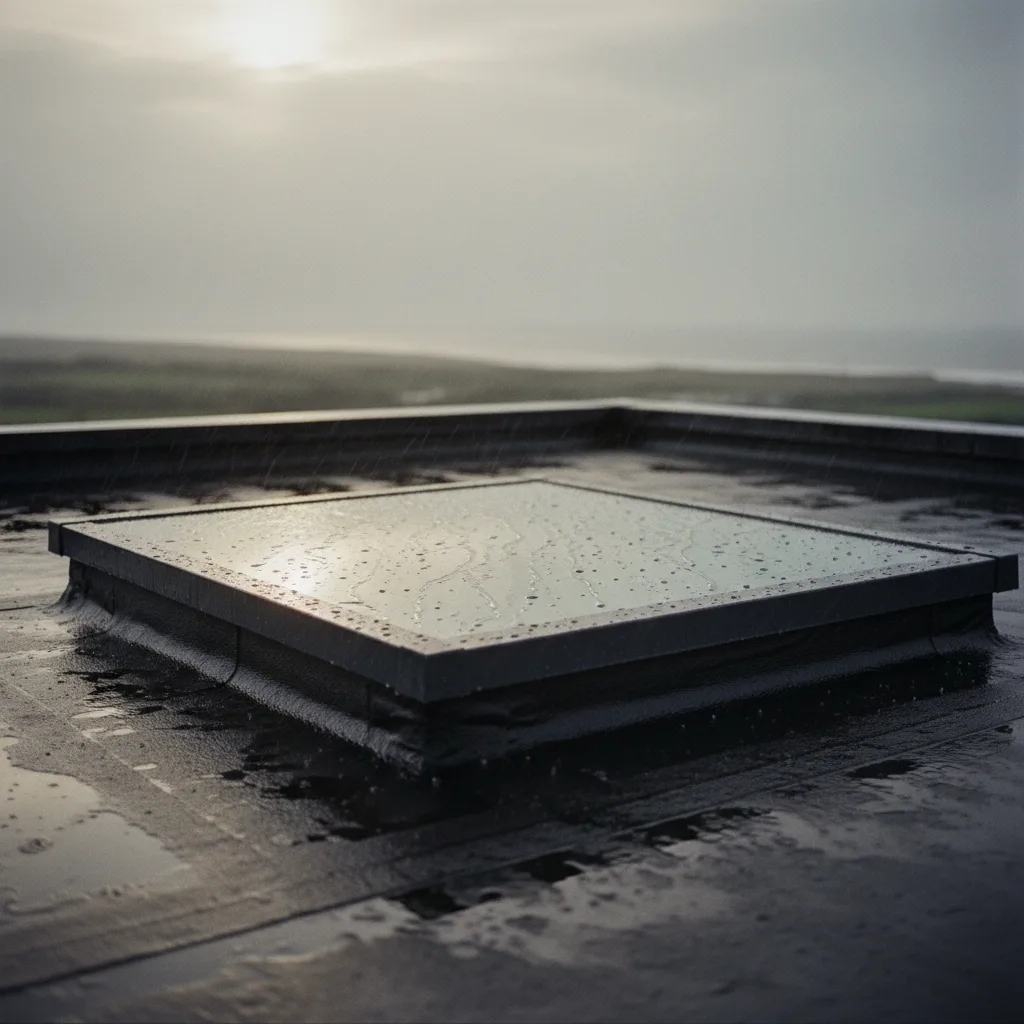
If a loft conversion creates a habitable room, means of escape is a Building Regulations matter and BCP Council or an approved inspector will look at it. A rooflight can serve as the escape opening, but only if it gives a real clear opening in the right place — and many roof windows sold as “escape” do not, because of how the sash sits once open.
| Requirement | The figure | What it means on a pitched roof |
|---|---|---|
| Clear openable area | At least 0.33m² | Measured through the real opening with the sash where it stops, not from the brochure frame size |
| Minimum clear height | 450mm | Height and width must be met together, so a long thin opening of the right area still fails |
| Minimum clear width | 450mm | Rules out narrow units chosen to slot between rafters without trimming |
| Height above floor | Bottom of the openable area 600-1100mm | A 45 degree roof puts the unit far further up the slope than a 30 degree one |
| Opening action | Top-hung, typically to about 70 degrees | A centre-pivot sash parks across the aperture and swallows the clear opening |
| Operation | Openable from inside without a key | An escape unit should open by hand with no power at all |
That last row catches people. A sash that will not move in a power cut cannot be the thing you climb out of, so a loft room wanting both motorised ventilation and a compliant escape opening usually needs two rooflights: one electric, one manual top-hung unit set to the figures above. Where a maker offers a single unit with an override genuinely usable from floor level we will specify it, and show you it working before you sign. Confirm the figures for your own conversion with BCP Council; they sign it off, not us.
One more thing about lofts
Turning a two-storey house into a three-storey one usually needs a protected stairway to a final exit, fire doors to the habitable rooms off it, and interlinked mains-wired smoke alarms. An escape rooflight alone does not satisfy that. If a builder has told you a big skylight is all the loft needs, check it with Building Control before the plasterboard goes on.
Power, and who does the electrical work
We fit rooflights. We are not electricians and do not pretend to be, so the line between the two trades is drawn at survey and written into the quote rather than sorted out on the day.
How the work splits
Ours: the structural opening or kerb, the unit, the drive and its mounting, the low-voltage cable through the void, terminating the 24V side at the rooflight, and commissioning the movement, sensors and any restrictor.
The electrician’s: everything on the mains side — supply to the transformer or control panel, any new circuit, isolation and certification. Electrical work in a dwelling falls under Part P of the Building Regulations and a new circuit is notifiable. Your electrician notifies it through their own competent-person route, or it goes to BCP Council Building Control. They issue the electrical installation certificate; we do not.
Most jobs use a fused spur off an existing circuit feeding a 24V transformer, usually not notifiable but still subject to BS 7671. An AOV is different: dedicated supply, a panel with standby batteries, and the panel maker’s commissioning requirements. If you already have an electrician on the project we work to their programme; if you do not, we say so before we start rather than after.
Commissioning is a separate job, not a switch flick
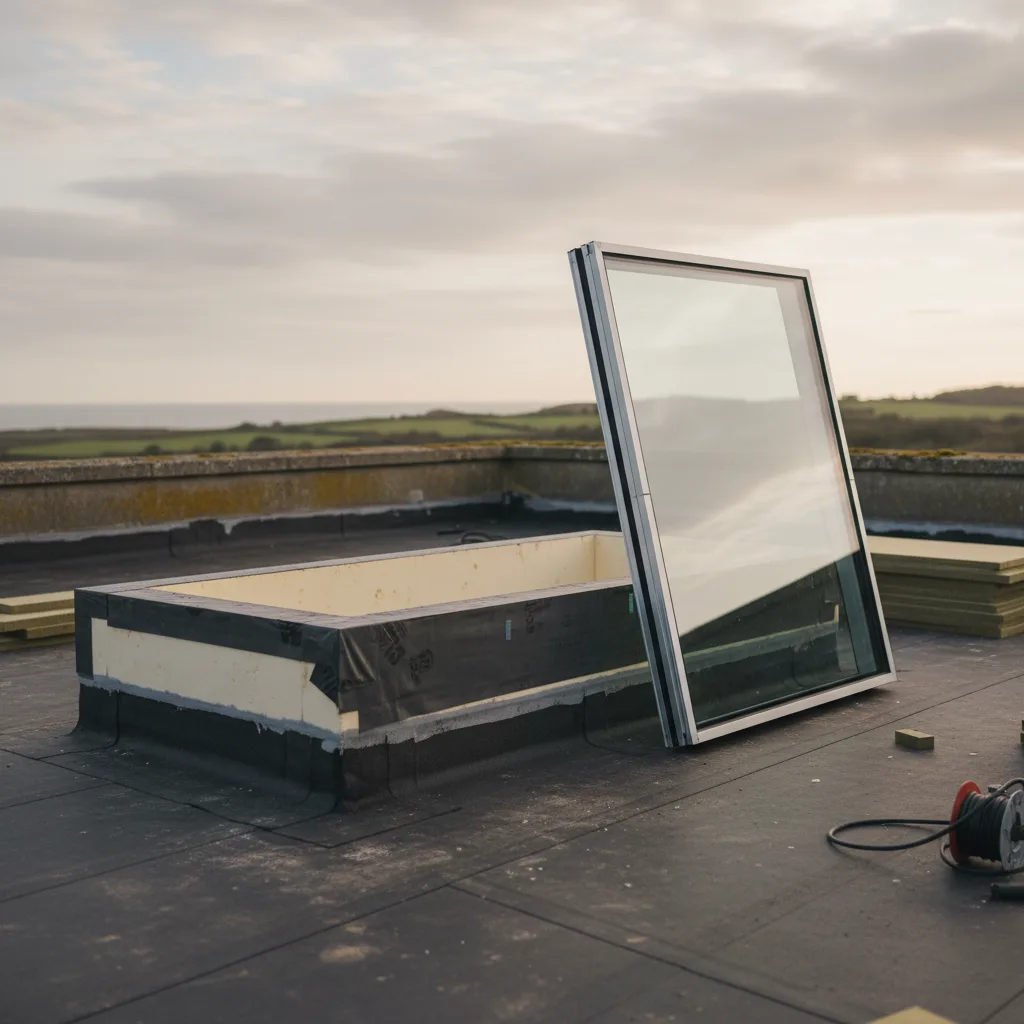
A rooflight that has been fitted is not one that has been commissioned. Commissioning sets the travel limits, sensor thresholds and fallback behaviour for your roof, and water tests the unit while it is still easy to act on the result.
- Mechanical check first. Sash square, even gasket compression all round, hinges free, drive at the maker’s centres and not packed to fit.
- Travel limits set. Open and close limits programmed, and where the zone calls for it the opening restricted — on a Zone 1 roof that limit is short, and you are told the figure.
- Sensors calibrated. Rain pad tested wet, wind threshold set for the exposure rather than left at the factory default, timer and humidity inputs configured if fitted.
- Override tested. Manual release, key switch or crank worked by hand with you watching, so you can close the unit when nothing is powered.
- Water test. Hose test closed, then again with the sash part open, to see where water tracks on your pitch.
- Cycle test. Ten full cycles from every control point, catching a limit that drifts on the third run rather than the first.
- Handover. Controls demonstrated, thresholds and travel figures written down, documents and guarantee handed over, cable route noted for whoever changes the actuator.
If your electrician has not energised the supply by the time the mechanical work is done, we return to commission rather than leaving you an uncommissioned unit. That visit is priced into the original quote.
What happens in a power cut
This gets asked late, usually after a storm, and the answer is blunter than people expect: a mains-fed electric rooflight does nothing. It stays where it was. If it was open, it stays open, and the rain sensor cannot help because it needs the same power the motor does. Poole gets its worst weather and its likeliest outages on the same south-westerly, so it is worth planning for.
| Unit type | Behaviour when the supply fails | What we fit where it matters |
|---|---|---|
| Mains 24V comfort rooflight | Stops in position; rain and wind sensors are dead too | A battery backup module holding enough charge to close the sash a few times, or a manual crank |
| Solar-powered skylight | Unaffected — it runs on its own panel and battery | Nothing extra, though in Zone 3 the battery is the weak point long before a power cut is |
| Escape rooflight | Must open by hand regardless, which is why we specify a manual unit | A top-hung manual unit, with no electrical dependency in the escape route |
| Certified AOV | Runs from the panel’s standby batteries and still operates | Panel and batteries to the fire specification, standby duration set by it |
Backup batteries are consumables — three to five years, sooner in an unheated loft — and a module nobody has ever tested is not a backup. We show you how to test it at handover and write the date on the panel.
The maintenance an opening unit actually needs
A fixed rooflight asks for a wash. An opening one has hinges, seals, drainage channels, a sensor pad and a motor, and all of those foul. The interval is not annual everywhere in Poole: on the spit a yearly rinse is not enough, and under the Canford Cliffs canopy the channels fill twice a year whatever the sea is doing.
| Job | How often | What happens if it is skipped |
|---|---|---|
| Fresh-water rinse of frame and hardware | Quarterly in Zones 1 and 2, annually inland | Salt builds in the hinge knuckle and on the chain, and the motor fails years early |
| Wipe the sensor pad | Two or three times a year, more under trees | A resin or salt film reads as permanently wet, so the unit refuses to open |
| Clear the drainage channel | Twice a year in Zone 3, annually elsewhere | Needles dam the channel and the blockage gets reported as a leak |
| Check and lubricate hinges | Annually, with a dry PTFE lubricant | Stiff hinges load the actuator, which stalls short of its limit |
| Inspect the gasket | Annually, on a closed sash in daylight | A split seal lets driven rain past long before the glazing is at fault |
| Test the backup battery | Annually, replacing every three to five years | You find out it is flat during the storm it was bought for |
Five minutes twice a year on a domestic unit, plus a hose. We would rather say that than sell a service plan for something you can do from a stepladder.
What the survey settles, and what we put in writing
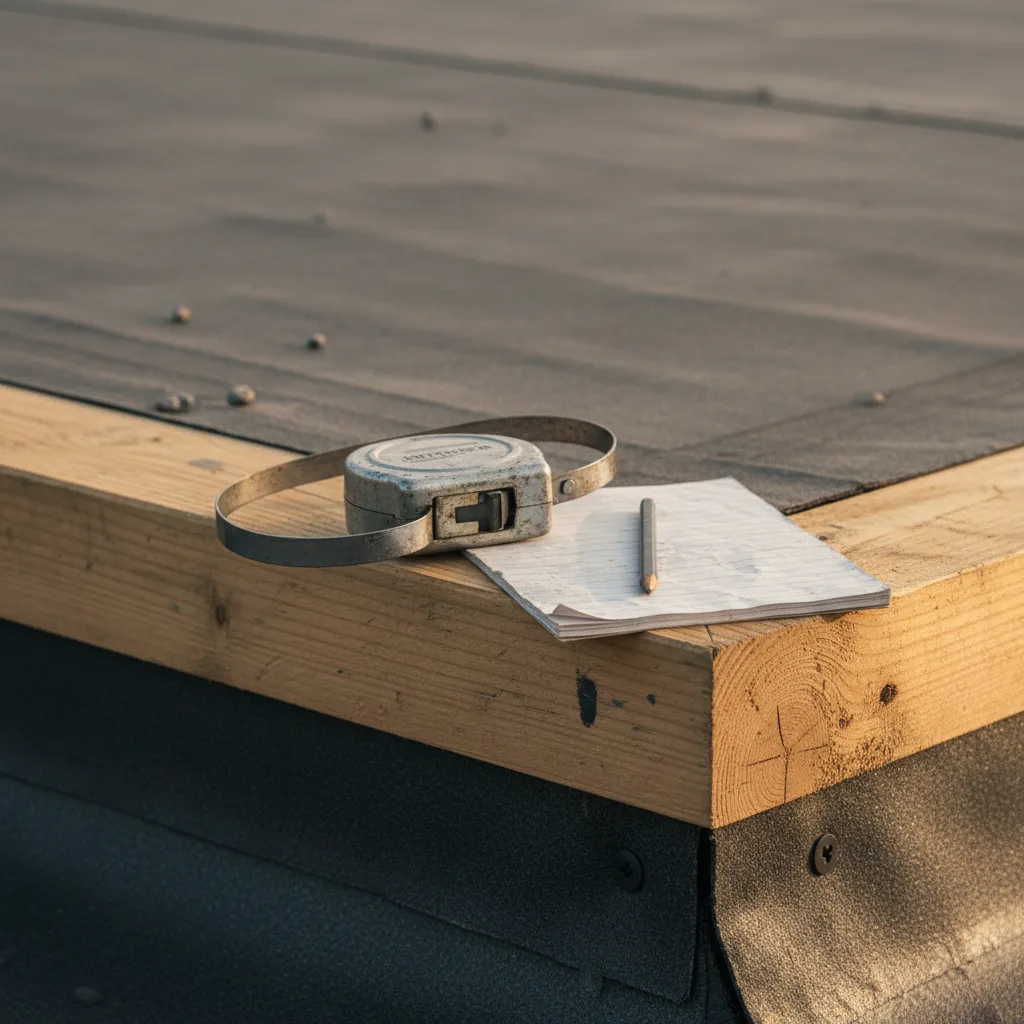
We do not price an electric rooflight from a photograph, because much of the cost sits in what a photograph cannot show: where the cable can run, what the roof is built from, and how exposed the sash will be once it is open.
- The exposure zone, named on the quote. Which of the four zones the address falls in, and so the coating, the fixing grade, and whether a wind sensor and a restrictor are fitted.
- What the rooflight is for. Summer heat, cooking moisture, a loft room needing escape provision, or a vent someone else specified. Four different units.
- Drive selection. Chain or spindle, sized against sash weight and the opening angle you need rather than the largest number available.
- The cable route. Marked on the drawing, with conduit or draw cord, slack at the kerb, and the point your builder must reach for us to run it.
- The electrical split. What we terminate, what your electrician wires, whether a new circuit is involved and who notifies it.
- Approvals. Building Control through BCP Council or an approved inspector, plus conservation area or listed status around Poole Old Town and the Quay.
- Price, in writing. One itemised fixed figure after survey, with any roof or structural repair shown separately.
What we put in writing, and what we will not claim
A ten-year workmanship guarantee on our installation. It is a workmanship guarantee and it is not insurance backed — we say so plainly, because the difference is real. Drives, controls and glazing carry their own manufacturer warranties, handed over at commissioning.
A fixed written price after survey. Not a range, and not a figure that grows once the ceiling is open. If something genuinely unforeseeable appears, we stop, show you, and price it separately before going on.
This is a new firm, it holds none of those, so it claims none of them.
Opening units are one part of what we install across Poole and about thirty miles around, alongside fixed flat rooflights, roof lanterns, pitched-roof skylights and replacement of failed sealed units. We are not a general roofing firm and we do not carry out electrical certification. To find out which exposure zone your roof sits in, or whether the loft rooflight you have been quoted would pass as an escape opening, ring 01202 923272. We will name the zone on the phone. Everything after that needs the roof measured.
In this section
Are electric rooflights noisy when they open?
No. A correctly installed unit makes a low hum for the twenty or thirty seconds it is moving and is…
Cable routing through a warm deck without breaching the vapour layer
The electrical side of getting power to an actuator is a settled matter, and it is set out on wiring…
Can a fixed rooflight be upgraded to an opening one?
Almost always this turns out to be a replacement rather than an upgrade, because a fixed rooflight has no hinge,…
Can a rooflight be set to close automatically at night?
Yes. A timed close is the most useful automation an opening rooflight can have, and unlike most of them it…
Can a smoke vent rooflight be used for everyday ventilation?
Technically, often yes — many certified automatic opening vents include a comfort ventilation mode, and it works. Practically, it is…
Can an electric rooflight be controlled from a phone?
Yes — either through a gateway that bridges the rooflight controller onto your home network, or through a manufacturer’s own…
Can an electric rooflight be fitted in a bathroom?
Yes, and a bathroom is one of the best arguments for an electric rooflight there is. It is the room…
Can an electric rooflight be opened by hand if the motor fails?
Usually yes, but not by simply pushing it: the gearing inside a failed actuator still holds the sash where it…
Chain actuators or spindle drives: which suits which opening
Two families of drive open almost every electric rooflight fitted in a house around Poole. Which one you end up…
Control options: wall switch, remote, app and hard wired scene
Almost every conversation about controlling an opening rooflight starts with the app and ends up somewhere else. The useful way…
Do electric rooflights need a separate circuit?
Usually not. A single domestic opening rooflight draws so little that it runs happily from a small transformer fed by…
Do electric rooflights need servicing?
Yes, though “servicing” overstates it for most houses. An electric rooflight needs a rinse, a look and a few full…