Why a lantern gathers more summer heat than a flat rooflight
The geometric reasons a roof lantern collects more solar heat than a flat rooflight over the same opening, and the levers that control it, including which slopes actually need solar control glass.
The hole is not the glass
Start with the arithmetic, because it settles most of the argument before any talk of coatings. A flat rooflight covering a two metre by one metre opening has roughly two square metres of glass in it. The glass and the hole are the same thing. A roof lantern over that same opening does not, and cannot, because a sloping plane is always longer than the horizontal distance it covers.
How much longer depends on the pitch. At around twenty five degrees each slope is about a tenth longer than its footprint; at forty degrees it is about a third longer. Add the two end planes, whether they are raked hips or vertical gable triangles, and a lantern typically carries somewhere between a fifth and a third more glazed area than a flat skylight over the identical opening. That extra glass is not free daylight. It is extra collector.
Four planes, four orientations
A flat rooflight faces one direction: straight up. It gathers most when the sun is high, which in southern England means the middle of the day in summer, and it gathers relatively little at the start and end of the day when the sun is low.
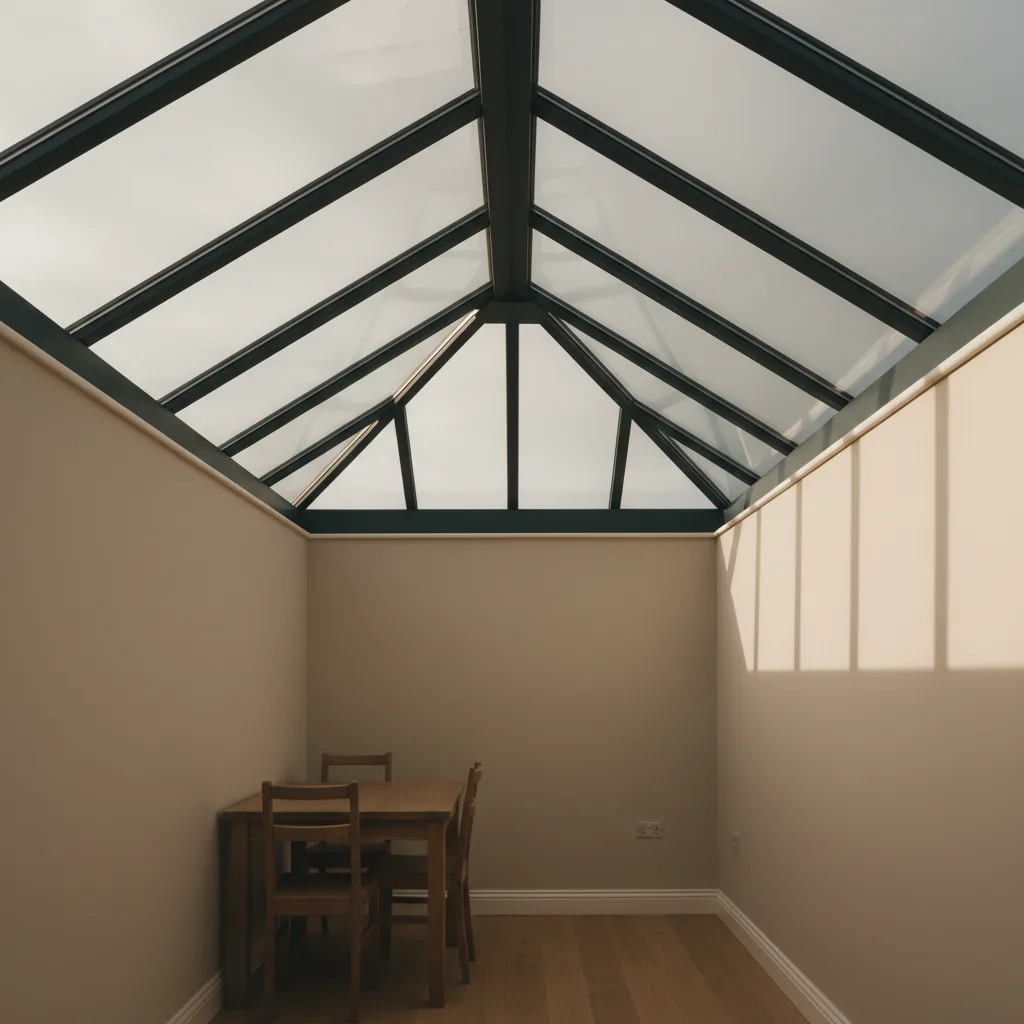
A lantern faces four directions at once. Whatever the time of day, one of its planes is angled toward the sun. In the morning the east slope is working, at midday all of them contribute, and in the evening the west slope takes over. The result is not a higher peak so much as a much broader curve: the lantern is gathering solar energy for more hours of the day, and by late afternoon it is gathering it enthusiastically while the flat unit next door has largely stopped.
Why the same sun does more through a slope
There is a second effect stacked on top of the orientation one, and it is the one people find counterintuitive. Glass transmits best when light strikes it close to square on. At a grazing angle a good deal of the energy is reflected off the surface instead of passing through. That is why a flat pane handles low morning and evening sun rather well by accident; the sun skims it and much of the energy bounces away.
| What drives the gain | Flat rooflight | Roof lantern |
|---|---|---|
| Glazed area over the same opening | Equal to the opening | Typically a fifth to a third more, rising with pitch |
| Orientations facing the sun | One, upward | Four, so something is always aimed at it |
| Low morning and evening sun | Strikes at a grazing angle and largely reflects away | Strikes a slope close to square on and transmits |
| Midsummer midday sun | Worst case; the sun is nearly overhead and square to the glass | Spread across four planes, so no single one is at its worst |
| Air volume above the ceiling line | Almost none; the glass is close to the ceiling | A pitched void that fills with warm air and holds it |
| Hot internal surface radiating down | One plane, directly overhead | More surface, and some of it angled at the walls and people |
The warm air that collects inside it
The third mechanism has nothing to do with glass at all. A lantern adds volume above the ceiling line, and warm air rises into it. On a hot afternoon that pitched void becomes the warmest part of the room by a clear margin, and it sits there as a reservoir, radiating gently downward from the glass and the frame long after the sun has moved off.
A flat rooflight has no such void. Its glass sits close to the ceiling plane, so the warm air that reaches it is already in the room and is not being collected anywhere in particular. This is why two rooms with similar measured solar gain can feel completely different in the evening: the lantern has been storing the afternoon in its own roof space.
It is also why ventilation does more for a lantern than for a flat unit. An opening at the top of that void lets the hottest air in the house leave first, and pulls cooler air in behind it. What that opening has to satisfy in regulatory terms is a separate subject, covered by the Part F guidance on this site. As a comfort measure, it is the single most effective thing a lantern can be given.
Why it is always the afternoon
Complaints about an overheating lantern almost never describe the morning. They describe four o’clock onward, in a kitchen at the back of a house, in June and July. There are three reasons and they arrive together.
The building has been absorbing heat all day and is already warm, so the afternoon gain lands on top of a raised baseline rather than a cool one. The sun has dropped low enough to strike a west facing lantern slope close to square on, which is the transmitting angle rather than the reflecting one. And the room is occupied: people are cooking, the oven is on, and the space is being used exactly when the roof is working hardest. A north facing flat rooflight in the same house is having a quiet evening.
South west over the water
Poole Harbour is a large, flat, reflective surface sitting to the south and west of a great deal of the housing around it. A rear extension facing that way at Lower Parkstone, Hamworthy, Sandbanks or Lilliput takes direct late sun on a lantern slope and a second helping reflected off the water. It is the local reason a unit that would be comfortable four miles inland is not comfortable there, and it is an argument for solar control glazing on the seaward slopes specifically rather than on all four.
Branksome Park and Canford Cliffs are the opposite case. Mature pine canopy shades many of those roofs for much of the day, and the trees are usually protected, so the shading is permanent rather than a risk. Specifying heavy solar control glass under a dense canopy buys a tint you will notice in January and a gain reduction you did not need in July. We look up before we specify.
The levers, roughly in the order they work
| Lever | What it does | What it costs you |
|---|---|---|
| External shading | Stops the energy before it reaches the glass; by far the most effective option | Cost, maintenance, and an object on the roof; rarely chosen on a lantern |
| Solar control glazing | Reduces the proportion of solar energy transmitted, while passing most of the visible light | A slight tint, reduced useful winter gain, and a higher unit price |
| High level ventilation | Removes the heat that has already arrived, starting with the hottest air | An opening sash and its mechanism, plus something to operate it |
| Selective specification by slope | Puts the controlling glass only on the planes that face the sun | Nothing, if it is decided before the unit is ordered; impossible afterwards |
| Smaller unit or shallower pitch | Less glazed area and less collecting surface, directly | Less daylight and a different look, so it has to be weighed properly |
| Internal blinds | Blocks glare and some radiant heat once it is already inside | The energy is in the room; blinds manage the symptom, not the cause |
Glass is the first lever, not the only one
The rule, and the exception
The rule: on a lantern facing anywhere between south east and west, solar control glazing on the sun facing slopes is the default and it should be priced in from the start, not offered as an upgrade after the room has cooked for a summer.
The exception: a shaded roof, a north facing slope, or a room that is genuinely only used in the mornings. There, the same glass reduces the winter daylight you were buying the lantern for in the first place.
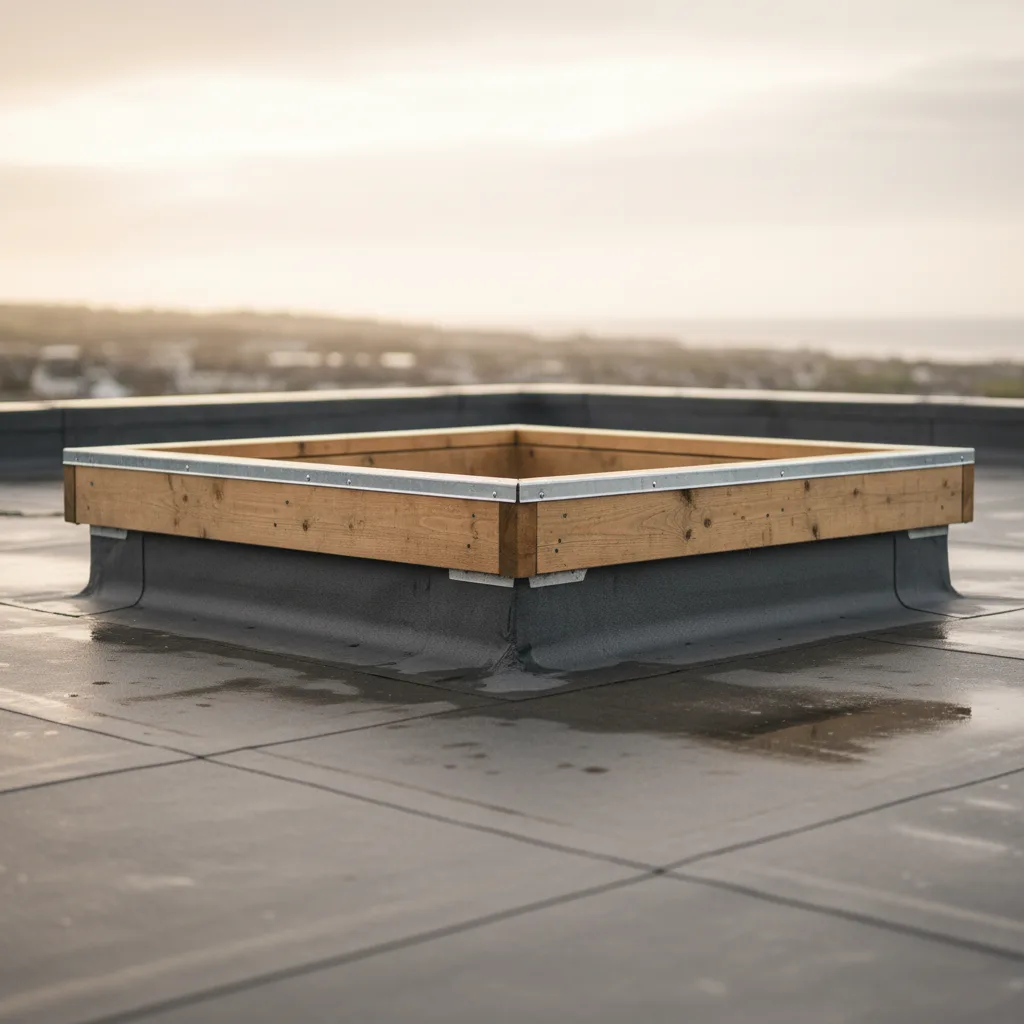
What no glass can do: remove heat that is already in the room. Every coating works on the way in. If the room is going to be occupied on hot afternoons, it needs a way for hot air to leave as well, and that decision is made when the frame is ordered, because a fixed lantern cannot be given an opening sash later.
The chemistry of coatings, what a g-value actually measures and where triple glazing earns its weight are covered in the energy efficient rooflights guidance on this site. What belongs here is only which slopes need it and why a lantern needs it sooner than a flat unit does.
Pitch, size and long axis: the free decisions
Three of the most effective heat decisions cost nothing at all, provided they are made before the unit is ordered. Pitch: a shallower lantern has less glazed area and collects less, though it also sheds water and debris less readily, so it is a trade rather than a win. Size: a unit sized to the room rather than stretched to fill the deck carries less glass, and there is a separate guide on this site about doing that properly.
The third is orientation of the long axis. A long narrow lantern with its ridge running east to west presents one large slope to the south and one to the north. Turn the same unit so the ridge runs north to south and you get a smaller east slope and a smaller west slope, which changes both the total afternoon gain and the hours over which it arrives. Where the room allows either, that is a genuinely free adjustment, and it is almost never discussed.
What we settle at survey
We record which way each slope will face, what shades the roof and at what times of day, how the room is used and when, whether the address looks out over water, and which exposure zone it falls in. From that we specify the glass slope by slope rather than uniformly, and we say whether the unit needs to open, in writing, before anything is ordered.
We will not give you a temperature prediction. Anyone quoting one for a specific room without a full thermal model is guessing, and we would rather tell you the mechanisms and let you weigh them. Where we think a room will be uncomfortable with the unit being proposed, we say so and offer the alternative, including the alternative where a flat rooflight is the better answer and the lantern is not worth its heat.
Before the order goes in
Ring 01202 923272 with which way the back of the house faces, whether anything shades the roof, and when the room gets used. Those three answers decide the glazing specification, and they are much cheaper to act on now than in July.
You get a fixed written price against a stated specification, including which glass is on which slope. Our installation carries a ten year workmanship guarantee, which covers workmanship and is not insurance backed; the glazing carries its own manufacturer warranty.
Related reading
Can a roof lantern be fitted in winter?
Yes. Winter changes how the working day is organised, not whether a roof lantern can be installed. Cold is a…
Can a roof lantern be made to open?
Yes, but it is decided at order, not afterwards A roof lantern can be made to open. Most systems offer…
Can a roof lantern go on a pitched roof?
Not onto the slope itself. A roof lantern is designed to stand on a level kerb, and a pitched roof…
Can a roof lantern go over a garage conversion?
Frequently yes — but the garage decides, not the lantern Garage conversions are one of the better places to put…
Can a roof lantern sit on a flat roof without a kerb?
No. A roof lantern has to stand on an upstand of some kind — either a kerb built on site…
Can one cracked pane in a roof lantern be replaced on its own?
Normally yes, and that is a designed-in advantage of the format A roof lantern is assembled from a frame, a…