VELUX age plates and dating a unit already on the roof
The manufacture date, not the condition, decides whether a skylight can be serviced, re-glazed or fitted with a blind, and it can usually be established even when the plate is gone.
Age decides more about a roof window than condition does. A tidy-looking unit from a discontinued generation may have no gaskets, no friction parts and no blind available for it; a scruffy one from a current generation is entirely serviceable.
So the first thing we do with any existing window is date it. Sometimes that takes ten seconds and a torch. Sometimes the plate is painted over, missing or unreadable and we date the unit from the window itself, which is slower but perfectly possible.
What the plate carries, beyond the size
The data plate is a small label on the frame, visible when the sash is rotated. Finding it is covered on its own answer page, along with what to do when it has been painted over. What concerns us here is the rest of what is printed on it, because most people read the size code and stop.
Alongside the size there is the product type, which tells you whether you are looking at a centre-pivot or top-hung unit and what the glazing and finish were. There is a manufacture date. And on many generations there is a further code identifying the pane, which is what a glazing supplier will want if only the sealed unit is being changed.
Reading the date
What you are looking for
A year, usually with a week or month alongside it. The format has changed between generations, so it may read as a four-digit year, a two-digit year with a week number, or a date stamp.
Do not confuse it with the size code. The size code is a letter and digits. The date is digits alone, and it will make sense as a date when you look at it.
Photograph the whole plate, not the part you think matters. The single most useful thing you can send us is a clear, square-on picture of the entire label, because the codes we need are not always the ones a homeowner would pick out.
If it is illegible, do not scrape it. A wire brush across a plate destroys the one piece of evidence on the window. We can date it other ways.
Dating a unit with no readable plate
The window itself is a decent witness. Design generations changed in ways that are visible from the room, and once you know what to look at you can place most units within a decade.
| What to look at | What an older generation shows | What a more recent one shows |
|---|---|---|
| Operating handle | A simple handle or catch, often at the bottom of the sash on the oldest units | A ventilation bar across the top of the sash, with the flap integrated into it |
| Glazing thickness | A thin double-glazed unit, sometimes with a visible spacer of narrow depth | A noticeably thicker pane, deeper spacer, often a coating visible as a faint tint at an angle |
| Glazing bead and sash profile | Chunkier timber section, more visible frame, less glass area for the same size code | Slimmer sash, more glass, cleaner junction between pane and timber |
| External cladding | Plain mill-finish aluminium, often chalked to a dull grey | Coated finish that still holds colour, tighter corner detailing |
| Hinge and cleaning catch | A simple barrel bolt, and a hinge with visible adjustment screws | Integrated catch, concealed friction adjustment |
| Blind fixing points | Screwed brackets, or no provision at all | Pre-formed sockets in the sash designed to take a blind without tools |
None of these is conclusive on its own. Together they place a unit well enough to answer the question that actually matters, which is whether parts exist for it.
Why the year matters more than the condition
A roof window is a mechanism with consumables, and consumables get discontinued. Gaskets, friction components, ventilation filters, catches and blind fittings all have a support life that follows the generation rather than the individual window. Once that support ends, a unit in otherwise excellent order becomes unrepairable, not because anything has failed but because the part that will eventually fail cannot be replaced.
This is the one structural difference between an opening roof window and a fixed rooflight. A fixed rooflight has a frame, a pane and a seal, and nothing that wears; when it goes, it goes all at once and usually through the sealed unit. An opening unit has consumables, so its useful life is set by parts support rather than by the glass, and the date on the plate is how you find out where it stands.
That is the whole reason we check the date before quoting service work. Quoting a service on a window whose gaskets are unobtainable would be taking money for a visit that cannot achieve what it was called for, and it is the sort of thing that only becomes obvious once someone is already on the roof.
Parts availability against age
| Rough age | Service parts | Sealed unit replacement | Blinds and accessories |
|---|---|---|---|
| Under ten years | Everything available | Straightforward, matched pane code | Full current range fits |
| Ten to twenty years | Generally available, occasional gaps | Usually possible | Most current blinds fit, some need an adaptor |
| Twenty to thirty years | Patchy. Gaskets and friction parts are the common gaps | Sometimes, often as a made-to-size pane rather than a catalogue one | Off-the-shelf rarely fits without modification |
| Over thirty years | Assume none | Made-to-size only, and rarely worth it against the frame’s remaining life | Bespoke or a screwed-bracket solution |
These are broad bands rather than guarantees, and they move as ranges are withdrawn. We check current availability against the specific code rather than working from the band, because the band is a planning tool and the code is the answer.
Two windows, two ages, one roof
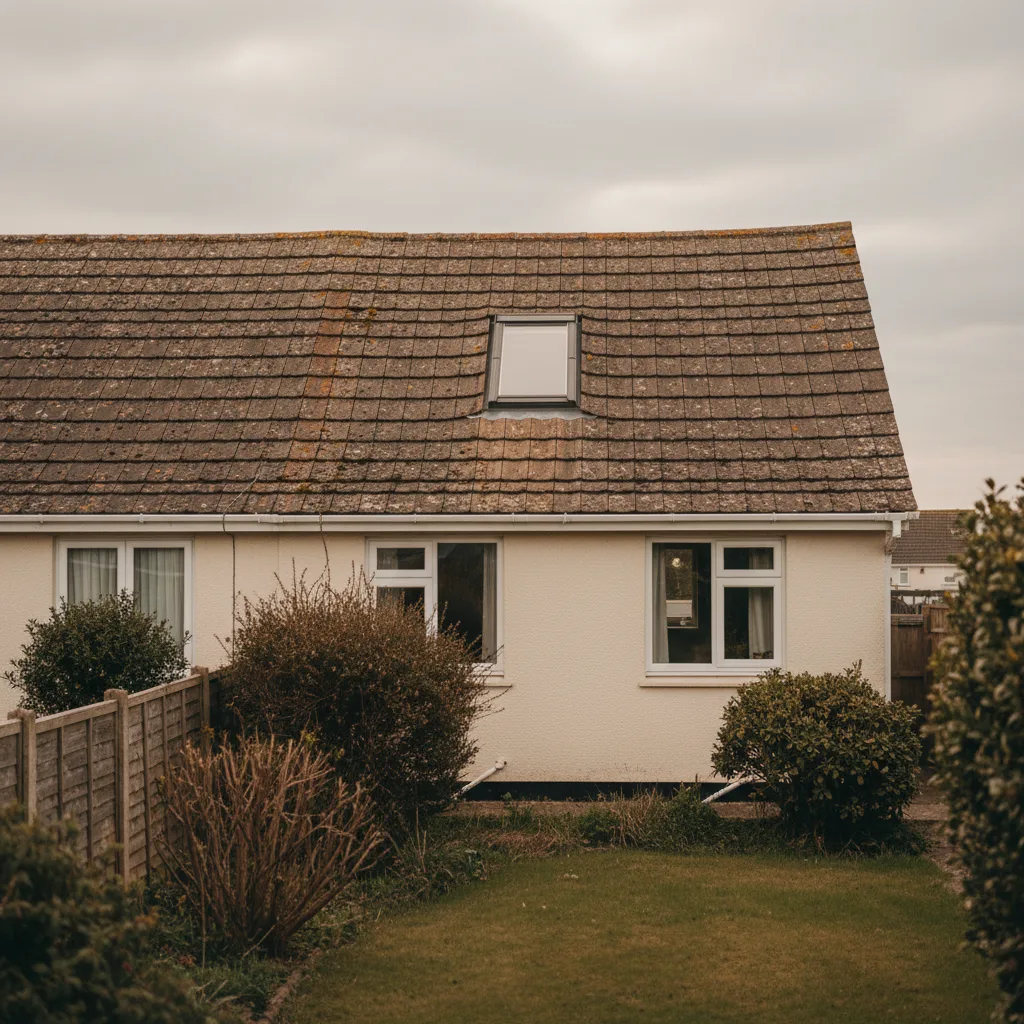
It is surprisingly common to find two skylights of different ages on the same slope, because one was replaced at some point and the other was not. The tell is usually the sash profile, which reads as a different amount of visible timber when you stand back in the garden.
This matters when one fails. If the survivors are twenty-five years old and the failure is the ten-year-old unit, the survivors are the ones to think about. If the failure is the old one and the rest are recent, a single replacement is straightforward. Dating the whole slope, not just the broken window, is what turns that into an informed decision.
Photographing it so someone else can date it
- Rotate the sash to the cleaning position and engage the catch before doing anything else.
- Photograph the data plate square on, filling the frame, with the flash off and a torch held to one side if the light is poor.
- Photograph the whole sash from inside the room, so the handle position and glazing bead are visible.
- Photograph the edge of the glass where the spacer is visible.
- Photograph the window from outside, from the garden, showing it in its course of tiles or slates.
- Note the roof covering and the rough pitch, since we will need both for the flashing anyway.
The honest limits of dating
A manufacture date is not an installation date. Units sit in stock and in builders’ merchants, and a window made in one year may have gone onto the roof two or three years later. For parts availability that difference is irrelevant. For working out how much life is left in it, and for any conversation about a manufacturer’s guarantee period, it is not, and the only reliable record of the installation date is your own paperwork.
What we do with a date at survey
We use it for three things. Whether a service is worth booking. Whether a re-glaze is a real option or a false economy. And whether a blind, a restrictor or an electric conversion will physically go onto that frame.
We are an independent installer with no approved, accredited or partner status with VELUX or any other manufacturer, which is worth stating because it means there is no incentive here to date a window older than it is. Send a photograph of the plate to 447880284133 on WhatsApp, or call 01202 923272 and describe what the handle looks like. We work across Poole, Bournemouth, Christchurch, the Purbeck area and into the New Forest, and every job carries our own ten-year workmanship guarantee, given directly by us and not insurance backed, on a price fixed in writing after survey.
Related reading
Can a VELUX be converted from manual to electric?
Usually yes, if the unit is from roughly the last twenty years. A retro-fit kit replaces the top control bar…
Can a VELUX be fitted to a flat roof?
Not as it comes. A standard pitched-roof unit needs a slope of roughly fifteen degrees or more to shed water…
Can a VELUX be fitted to a roof with solar panels?
Yes, but it stops being a roofing question and becomes a clearance and sequencing one. A flashing needs a clear…
Can a VELUX be replaced with the same size unit?
Usually yes. The standard size grid has been stable for decades, so a like-for-like frame is normally available, but “same…
Can a VELUX window be repaired?
Yes, more often than not. Glass, gaskets, filters, handles, friction components and flashings are all replaceable on their own. The…
Can I fit a blind to an old VELUX window?
Usually yes, provided you can read the size and type codes off the data plate. Manufacturer blinds are made to…