Three planning authorities across the Poole service area
A thirty-mile radius from Poole crosses a county boundary and a national park, so who decides an application changes inside the service area — and several bodies people assume are deciders are not.
Draw thirty miles around Poole and you cross a unitary boundary, a county boundary and a national park. Three local planning authorities cover the ground, a fourth takes over inside the park, and at least three more organisations get quoted at owners as though they decided things when they do not.
None of this changes what a conservation rooflight is. It changes who you ask, what they want to see, and how long it takes — and it decides where the first phone call goes.
A thirty-mile radius crosses a county boundary
The old borough boundaries are gone but their consequences are not. BCP Council was formed by merging Bournemouth, Christchurch and Poole, and Dorset Council by merging most of the rest of the county. Both inherited conservation area designations, Article 4 directions, local lists and planning histories from the predecessor councils, and those inherited documents still bind the land even where the letterhead has changed.
That matters practically. An Article 4 direction made by the Borough of Poole decades ago is still in force over the addresses it covers; the fact that it was made by a council that no longer exists is irrelevant to whether it applies to your roof.
Who decides where
| Authority | Where it decides | What is distinctive for roof work |
|---|---|---|
| BCP Council | Poole, Bournemouth, Christchurch and their suburbs — Parkstone, Branksome, Canford Cliffs, Sandbanks, Hamworthy, Broadstone, Creekmoor, Boscombe, Southbourne, Highcliffe | Dense conservation area coverage in the Old Town and the wooded western suburbs, and a large stock of flats above shops with no permitted development rights at all |
| Dorset Council | Wareham, Swanage, Corfe Castle, Langton Matravers, Wimborne, Blandford, Dorchester, Weymouth, Portland, Upton and Lytchett Minster | Purbeck stone slate roofs, high listing density in the Purbeck villages, and the Dorset National Landscape over much of the area |
| New Forest District Council | Lymington, New Milton, Ringwood, Fordingbridge and the parts of the district outside the park boundary | A Hampshire authority with its own validation requirements, and a boundary with the park that does not follow the roads you would expect |
| New Forest National Park Authority | Everything inside the national park boundary, including Brockenhurst, Lyndhurst, Burley and Sway | It is the planning authority in its own right, not an advisor to the district council, and it publishes its own design guidance |
BCP Council
Most of our work sits here. The Old Town carries the conservation area everybody has heard of, but designations run well beyond it, through the older suburbs and the wooded ground towards Canford Cliffs. Two things recur on BCP addresses more than anywhere else in the service area.
The first is the flat. A great deal of Poole and Bournemouth housing is flats and maisonettes, including converted Victorian villas that look for all the world like houses. Permitted development rights of the kind a rooflight relies on do not attach to them, so a unit in a flat roof or a top-floor slope needs an application regardless of designation — and the freeholder’s consent before that.
The second is trees. In Branksome Park and Canford Cliffs the constraint owners meet first is frequently a tree preservation order rather than anything to do with the roof, and it affects access, scaffold and debris more than it affects the rooflight.
Dorset Council
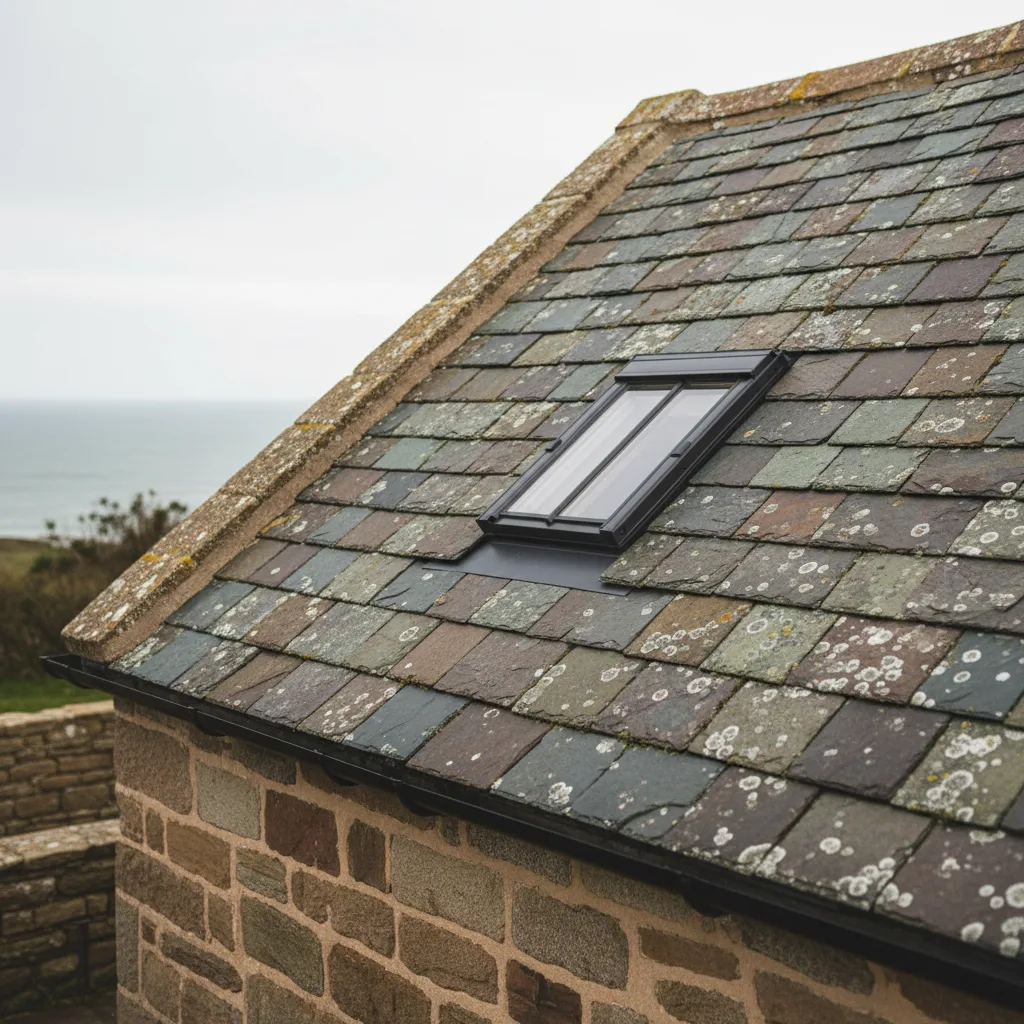
West and south of the harbour the character of the work changes with the covering. Purbeck stone slate roofs in Corfe Castle, Langton Matravers and the older parts of Swanage are frequently listed and frequently inside conservation areas at the same time, and they need a detail written for the stone rather than for a kit.
Wareham is its own case — a small historic town where roofs sit close together and the public views are short and direct. The Dorset National Landscape covers a great deal of this ground, and the Jurassic Coast World Heritage Site runs along its southern edge. Neither of those is a consenting body, which is the point of the next section.
The New Forest is two authorities, not one
The boundary is the thing to check, and it is not obvious on the ground. Inside the national park, the New Forest National Park Authority is the local planning authority: it takes the application, it assesses it, it decides it. Outside the boundary, New Forest District Council does. Lymington and the coastal towns are largely district; the villages in the middle of the Forest are largely park. Neighbouring streets can fall either side.
Getting this wrong wastes weeks, because an application lodged with the wrong body does not quietly get forwarded and assessed. Confirm the boundary against the published map for the specific address before anything is prepared.
What is not a planning authority
Several bodies get named in conversations about rooflights as though they issued permissions. They do not, and knowing that saves a lot of anxiety.
The Dorset National Landscape is a designation with a partnership behind it. It produces guidance and advises, and the designation is a material consideration where an application is needed, but it does not receive or determine applications. The Jurassic Coast World Heritage Site is an inscription recognising geology; it has a partnership and a management plan, and it is not a planning designation at all. Parish and town councils are consultees: they are notified, they may comment, and their comments are weighed by the officer — they cannot approve or refuse. Historic England is a statutory consultee on certain categories of listed building work, mostly the higher grades and larger interventions, and is not usually engaged on a domestic rooflight.
What actually differs between them in practice
Four differences worth knowing before you prepare anything
Validation checklists. Each authority publishes its own list of what must accompany an application. They overlap heavily and are not identical, and the missing item on one council’s local list is the commonest cause of an application sitting unvalidated.
Pre-application advice. Availability, cost and turnaround differ, and so does whether a written response is given. For anything contentious on a listed roof it is usually worth it; for a rear-slope rooflight on an undesignated house it usually is not.
Conservation officer capacity. Heritage advice is a specialist resource and it is not evenly distributed. Where it is stretched, a well-prepared application moves faster because there is less to query.
Local heritage lists. Some authorities maintain a list of non-designated heritage assets. A building on one is not listed, and its condition is still a material consideration.
Building Control is a separate track again
Whichever authority decides the planning question, Building Regulations are a different approval with a different route, and most rooflight work needs it even when planning permission is not required. You can use the council’s building control team or an independent registered building control approver — the private-sector route was renamed and re-regulated in recent years, and the choice is yours rather than the council’s.
What Building Control cares about is structure at the opening, safety glazing over a room, thermal performance, ventilation and, where a loft room is involved, escape. It does not care what the frame looks like. Planning and Building Control routinely want different things from the same rooflight, and reconciling them is part of specifying it properly.
How to establish which authority covers your address
- Start with the postcode on the council’s own planning search, not a third-party site. The authority that returns your address in its own register is the one that decides.
- Check the national park boundary separately if you are anywhere near it, against the park authority’s published map.
- Ask about designations by address: conservation area, listing, Article 4 direction. Ask which rights a direction removes, not whether one exists.
- Read the planning history for the property on the public register, looking for conditions that removed permitted development rights.
- Note the validation checklist for that authority before any drawing is commissioned.
- Settle the Building Control route at the same time, because it runs in parallel and not afterwards.
Why this is settled before anything is ordered
A bespoke conservation unit is made for one opening and cannot be returned. A standard skylight can usually be moved to another job; a made-to-measure recessed unit in a specific finish cannot. So the sequence is always the same: establish the authority, establish the designations, establish what consent is needed, obtain it, then order.
At survey we name the authority covering your address and the designations that apply, and we produce the technical material an application needs. We do not submit applications, we do not act as your agent, and we never tell you what a decision will be — consent across all three of these authorities is assessed on the merits of the individual building, and nobody can promise you an outcome.
Our installation carries a ten-year workmanship guarantee, given directly by us and plainly not insurance backed, at a fixed written price after survey. Ring 01202 923272 with the address and we will tell you which authority you are dealing with.
Related reading
Are conservation rooflights double glazed?
Almost always, yes — but with a slim double-glazed unit rather than the standard sealed unit that goes into a…
Are conservation rooflights heavier than standard ones?
Yes, size for size. A metal frame with glass in it weighs more than a timber roof window, and a…
Article 4 directions and the permitted development they remove
Two houses on the same street, the same age, the same roof. One has a pair of skylights in the…
Can a conservation rooflight be fitted to a thatched roof?
No — not the recessed metal type this page is part of a hub about. A conservation rooflight is designed…
Can a conservation rooflight go on a front facing roof slope?
Often, yes — and the front slope is the one case where the checking has to be done properly first.…
Can a modern rooflight be changed to a conservation one later?
Yes, and it is a job we are asked for regularly — but it is not a swap. A modern…