Rooflight and Skylight Installation Throop
Rooflight and skylight installation at Throop, where the covering decides the job, sheeted outbuilding roofs are fragile, and scaffold has to stand on water meadow ground.
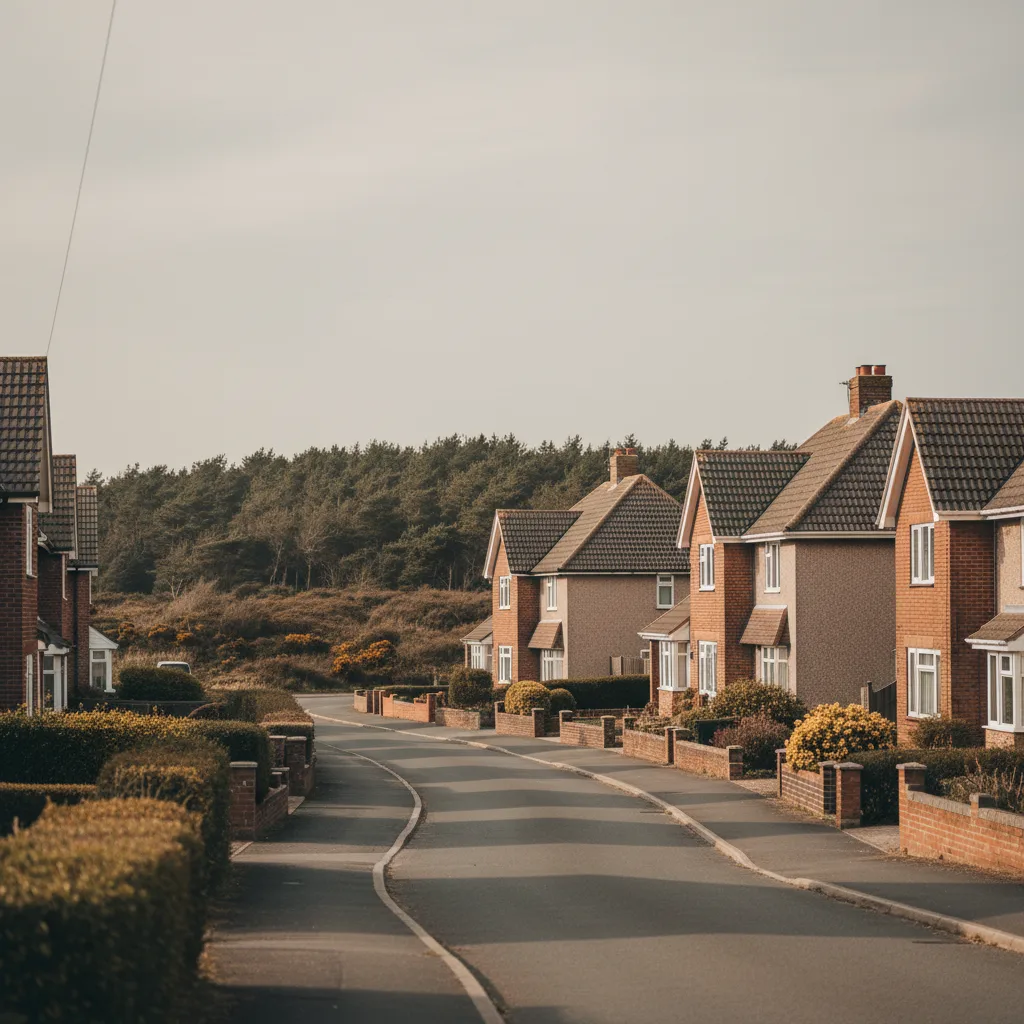
Throop is not a suburb, and the enquiries prove it
Throop is a lane, a mill, a church at Holdenhurst up the road, water meadows either side of the Stour and a scattering of houses and working buildings among them, with the Muscliff estates sitting on the higher ground above. It is inside BCP Council and it is ten minutes from Castlepoint, and it still does not behave like the rest of Bournemouth in any way that matters to a roof.
The clearest sign of that is what people ask us for. From the suburbs we get roof windows in bedroom slopes and flat rooflights on kitchen extensions. From Throop and the land around it we get those, plus a steady run of enquiries about buildings that are not houses: a workshop, a stable block, a garage with a sheeted roof, a barn being turned into something better than storage. Those are a different job with different rules, and most firms quoting a domestic rooflight have no intention of going near one.
The covering decides everything here, far more than the postcode does. A rooflight is not a product you choose and then fit. It is a hole in a weatherproof surface, and the surface dictates the detail: the flashing kit, the fixing method, the minimum pitch, the way water is turned aside above the opening and released below it. On a plain tiled house roof that is well-trodden ground. On a profiled fibre cement sheet roof over a farm building it is a completely different set of answers, and the two have almost nothing in common except the daylight at the end.
What goes into which roof
| Covering | What can be installed | The detail that decides it |
|---|---|---|
| Plain tile or slate on a house | In-plane roof windows, singly or in pairs | Rafter spacing and pitch. Standard flashing kits, matched to the covering profile |
| Concrete interlocking tile | The same, with a deeper profile flashing kit | Kit must match the tile profile. A low-profile kit on a deep tile leaves a channel water can track along |
| Profiled fibre cement sheet | In-plane translucent sheets that replicate the profile exactly, fixed on the crown and lapped like the sheet they replace | Profile match and fixing position. Also whether the existing sheeting can be walked on at all — usually it cannot |
| Profiled steel, single skin or composite | Matching in-plane rooflight sheets, or a proprietary upstand unit on a composite panel roof | Panel type and thickness, and sealing at the side laps, which is where these leak |
| Old corrugated plastic or GRP | Replacement in kind, and it is one of the most common jobs we do out here | Age. These yellow, craze and go brittle, and a brittle sheet is a hazard as well as a poor light |
| Flat felt or single-ply on an outbuilding | Kerb-mounted flat rooflight | Deck condition and fall, exactly as on a house extension |
Fragile roofs, and why we will not just nip up there
The part of this page we would ask you to read even if you use somebody else
The hazard: older fibre cement sheeting and ageing plastic rooflight sheets are fragile. They will not reliably carry the weight of a person, they give no warning before they fail, and falls through them are a long-standing cause of serious injury in exactly the sort of building this area has plenty of. A sheet that has been up for thirty years is fragile whatever it looks like from the ground, and the existing rooflight sheets are usually the most fragile part of the whole roof.
What that means in practice: nobody walks on it. Access is from below or from proper staging — crawling boards spanning the purlins, edge protection, or a powered platform where the building and the ground allow one. That costs more than a ladder and it is not negotiable.
The exception worth knowing: modern replacement rooflight sheets can be specified to a non-fragile classification, tested to take a person’s weight in a way the sheet they replace never could. On a building where somebody will have to get up there again in the future, that is worth specifying now. We will tell you which classification we are quoting.
The sheeted roof job, in detail
The common case is a workshop or store with one or two rooflight sheets that went in decades ago, have gone opaque and yellow, and now let in less light than the walls do. Replacing them is straightforward if three things are right.
The profile has to match the existing sheeting exactly, not approximately, because the whole weathering principle of a sheeted roof is that every sheet laps into its neighbour on the same corrugation. Fixings go through the crown of the profile, not the trough, with the correct washers — a fixing in the trough is a fixing sitting in the path of the water. And the purlin positions have to suit, because the replacement sheet has to be supported and fixed exactly where the old one was. All of that is decided on the roof with a tape and a profile gauge, not from a photograph on a phone.
The other thing worth saying about these buildings: a single-skin sheeted roof with no insulation will drip in cold weather whether or not there is a rooflight in it. That is condensation on the underside of the sheet, not a leak, and swapping a rooflight sheet will not change it. Where a building is being converted into something people use, the insulation and the vapour control need designing as a whole, and a new rooflight is one component of that rather than a fix for it.
Getting there, and standing something on a water meadow
Ground conditions are a real line on a Throop quotation. Scaffold and towers are designed to be founded on ground that will carry them, and low-lying land beside the Stour after a wet fortnight is not that ground. In practice it means sole boards and spreaders as standard, base jacks levelled on made-up ground, sometimes temporary trackway or decking, and occasionally a frank conversation about whether a job should wait three weeks for the ground to dry rather than start on schedule and churn a paddock into a mess. None of that is exotic. All of it is expensive to discover on the morning of the first day, which is why we look at it at the survey, in whatever weather the survey happens to be in.
Lanes, deliveries and the size of what is coming
The other logistical fact about this end of the borough is the approach. Narrow lanes, passing places, tight gateways and, in places, a bridge or a bend that settles what can physically arrive. A large lantern or a long flat rooflight is a big, heavy, awkward object that usually turns up on a lorry with a tail lift, and there are addresses here where that lorry is not getting past the second gate.
It is entirely solvable — transfer to a smaller vehicle, a longer carry by hand, or a delivery to a nearby hard standing and a shuttle — but it has to be planned and it has to be priced. We establish the approach at survey, including where a vehicle can turn. A unit that cannot be delivered is a unit that cannot be fitted, however good the price was.
The river, the trees and the shade
Being in a river valley changes the small things. Mist sits over the meadows on still mornings well into the day, dew persists, and the slopes that face north or sit under riverside trees stay damp far longer than the same slope would on the hill at Muscliff. Moss and algae follow, and the practical consequence for a rooflight is not that it leaks but that its drainage path silts up: the flashing channels at the sides and the courses immediately below the unit are where the debris lands, and blocked channels turn a perfectly sound detail into standing water.
So on a shaded, tree-lined slope we position the unit with a decent clear run of covering below it where we can, and we say plainly at handover that the channels want clearing once a year. That is maintenance rather than a fault, and it is the kind of thing that is much easier to hear at the start than after a wet February.
What we do here, and what we do not
Scope, stated before you spend time on us
We do: install and replace rooflights, skylights, roof windows, lanterns and in-plane rooflight sheets — in houses, and in workshops, garages, stables and outbuildings, on tile, slate, sheet and flat coverings.
We do not: re-sheet or re-cover a roof, repair structural timber or steelwork, or take on general roofing. If your barn roof needs replacing rather than a new rooflight in it, we will say so and we will not pretend the job is the one we happen to sell.
Consents: Building Control for work to a dwelling goes through BCP Council or an approved inspector. Agricultural and other non-domestic buildings sit under different rules again, and where a building is listed, in a conservation area or subject to a condition from an earlier permission, the position has to be checked with BCP for your specific building rather than assumed. Consent is assessed on its merits and we never state an outcome as a certainty.
How a Throop job is put together
- What the building is, and what the covering is. Established first, because it changes the product, the method and the safety plan.
- Access and ground assessed — approach for the delivery, where plant can stand, and whether the roof can be walked on at all.
- Structure checked from inside. Rafters and purlins on a house; purlin spacing and sheet condition on a sheeted roof.
- Specification written down, including the fragility classification of any replacement sheet.
- Fixed written price after survey, itemised, with access and ground works shown as their own line.
- Consents confirmed before an order, not after it.
- Installed, weathered and tested, with the reveal insulated and lined on any heated room, and the site left as we found it.
The commitments
Two, in writing
A ten-year workmanship guarantee on our installation, not insurance backed — a distinction we state rather than blur. Manufacturer warranties on sheets, glazing and frames are handed over at completion.
A fixed written price after survey. If the purlins under a sheeted roof turn out to be corroded, or the deck under a felt roof has gone, we stop, show you, and price the remedy separately rather than absorbing it quietly or springing it at the end.
The firm is new, it holds none of those, and it will not imply otherwise. If you have a building out here with a yellowed rooflight sheet in it and you are wondering whether it is worth doing, ring 01202 923272 and describe the roof — the answer usually starts with what the sheets are made of.
Related reading
Rooflight and Skylight Installation Alderney
The Alderney question is not what it is made of. It is whether it opens Most of the calls we…
Rooflight and Skylight Installation Barton on Sea
Barton on Sea is a cliff top with a clear view of the Isle of Wight and absolutely nothing between…
Rooflight and Skylight Installation Bere Regis
Cob, and why we ask what your walls are made of Cob is earth. Subsoil, water, straw and sometimes chalk…
Rooflight and Skylight Installation Blandford Forum
A town rebuilt all at once, and what that does to roof work Most English towns grew in layers, so…
Rooflight and Skylight Installation Boscombe
In Boscombe, the roof is usually not the shape people think it is Ask someone what their roof looks like…
Rooflight and Skylight Installation Bournemouth
Bournemouth is not one exposure, and neither is its roof stock Bournemouth runs from a clifftop down a set of…