Rooflight and Skylight Installation Mudeford
Rooflight and skylight installation in Mudeford, the most aggressive exposure in our area, where marine-grade coatings and A4 stainless fixings are specified as standard rather than offered as an upgrade.
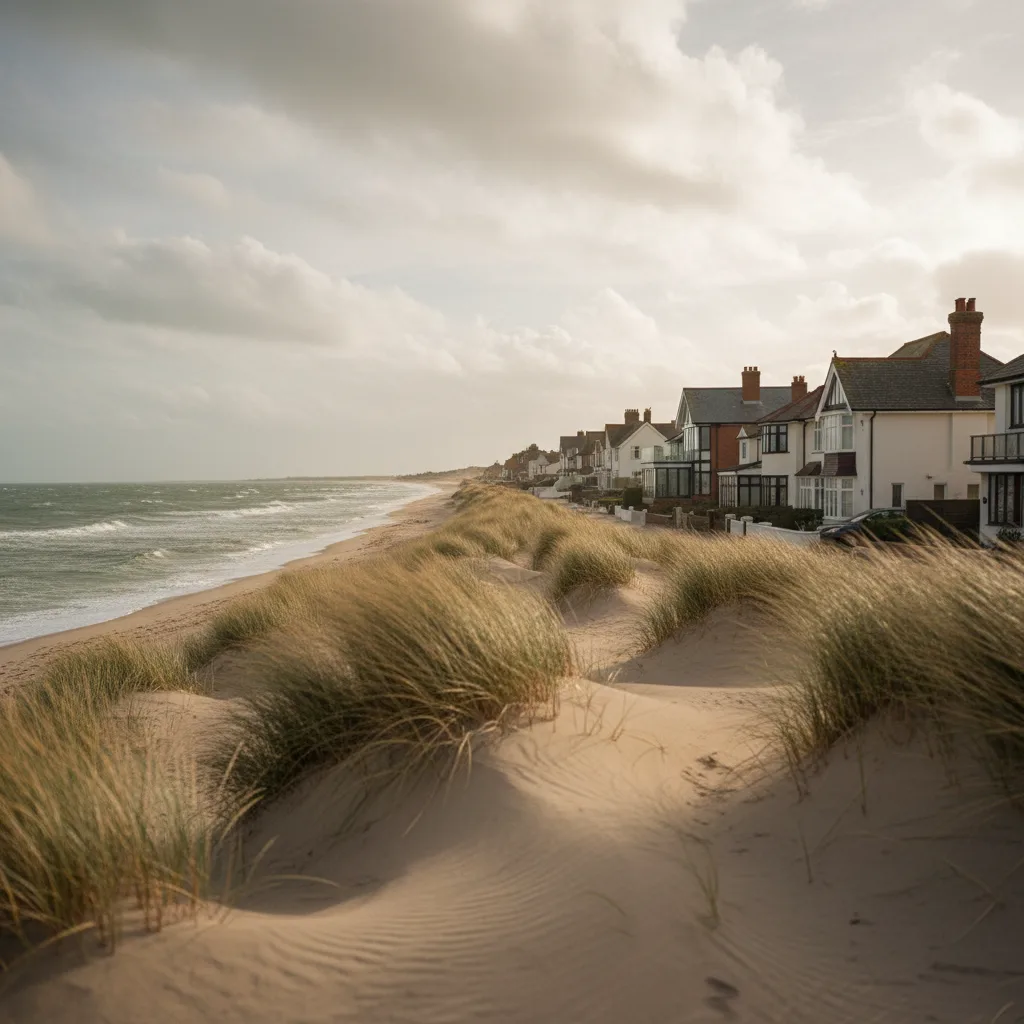
The hardest exposure we work in, and it is not close
Everywhere else on this coast has land behind it doing some of the work. Mudeford does not. The spit is a bank of sand with the harbour on one side and the open Channel on the other, and the mainland side of the quay faces the narrow channel the whole harbour empties through. A rooflight here is out in the weather in a way that a skylight two miles inland simply is not, and it has to be specified as though that were true, because it is.
No fetch break is the technical way of saying nothing gets in the way. Wind crossing open water picks up salt in suspension and carries it until something stops it. On the spit, and on the seaward face of the quay, nothing does. The salt does not arrive as an occasional splash in a storm; it arrives as a fine continuous deposit that settles on the frame, sits in the gaskets, and stays there until rain or somebody washes it off. That is a different job from a coating that has to survive the odd salty gust.
The consequence is simple and expensive to ignore. A standard architectural powder coat that would last decades in an inland position can start going chalky and patchy here within a few seasons, and ordinary stainless fixings pit and bleed rust down a pale frame in a way the customer notices long before the unit leaks.
What salt actually does, component by component
| Component | What goes wrong here | What we specify instead | How you can check it |
|---|---|---|---|
| Frame coating | A standard polyester powder coat chalks, loses gloss and then stops protecting the metal underneath | A marine or seaside-class coating system, which is a different pre-treatment and usually a two-coat build rather than just a different colour | Ask the supplier which coating class, in writing, on the order. “Coastal” as an adjective on a brochure is not a specification |
| Fixings | A2 (304) stainless pits in a chloride-heavy atmosphere and weeps rust stains down the frame and the roof covering | A4 (316) stainless throughout — exposed and concealed — because concealed fixings on the spit still breathe salt air | A4 fixings are marked. Ask to see the box before it goes on the roof |
| Flashings and clips | Mild steel or plated clips in a flashing kit rust out long before anything else does | Non-ferrous or stainless clips, and lead or aluminium flashings dressed rather than bedded in mastic | Look at what is holding the flashing down, not just the flashing |
| Gaskets and seals | Salt crystals lodge in the seal, hold moisture against it and work with UV to harden the rubber early | Good-quality EPDM seals and a maintenance routine that actually removes the deposit rather than smearing it about | Run a finger along the seal in summer. A seal going hard and shiny is on its way out |
| Glass | Salt does not attack the glass, but a deposit that is never rinsed builds into a haze that will not come off easily | Self-cleaning outer pane where the unit has enough pitch for rain to run off it, and realistic advice where it does not | A flat unit with no fall collects and dries. Ask what the fall is before you buy self-cleaning glass for it |
The upgrade people try to remove from the quote
The rule, and the exception that is not an exception
The rule for Mudeford: marine-grade coating and A4 (316) stainless fixings, every time, on both the spit and the exposed side of the quay. This is the one part of our area where we will not quote a standard build-up as an option, because we would be selling something we expect to fail and then guaranteeing our workmanship on it for ten years.
The exception people ask for: “the roof is round the back, out of the wind — can we save the upgrade there?” No, and here is why. Salt is carried as an aerosol, not thrown as spray. It reaches a sheltered north-facing courtyard roof perfectly well. What a sheltered position removes is the rain that would have rinsed it off. Sheltered roofs on a spit often corrode faster than exposed ones for exactly that reason.
Elsewhere in our area we argue the other way just as firmly. Four miles inland the same upgrade is money spent on nothing, and we say so on those pages too. The point of naming the exposure zone is that it cuts both ways, or it is just an upsell with a map attached.
Stainless into aluminium: the detail that gets missed
Here is a failure we see on coastal replacements that were specified by somebody who did half the job right. Most rooflight frames are aluminium. The correct fixing in this position is A4 stainless. Put those two metals in direct contact with salt water between them and you have made a battery: the aluminium is the one that gives way, and it corrodes around the fixing rather than at the surface where anyone would see it.
The fix is neither difficult nor expensive. Isolate the two metals — nylon or polymer washers and sleeves, a bedding compound at the interface, correct washers under the head rather than whatever came in the bag. What it requires is somebody who knows the problem exists. On the spit we treat it as standard, and on the quote it is listed rather than buried, so you can see it has been done.
Wind is the other half of the problem
Uplift, not weight, is what tries to remove a rooflight here. Wind flowing over a roof drops the pressure above it, and on an exposed single-storey roof with open water in front of it that suction is the governing load. It is resisted by fixings at the right centres into sound structure, with a kerb tied into the deck rather than sitting on it — not by a heavier unit. The most common thing we find under a failed rooflight on an older roof out here is fixings driven into soft or delaminated deck ply that never had the pull-out strength for the position.
Wind also governs the fitting day. Lifting a large sealed unit on an exposed roof in a stiff onshore breeze is how people get hurt and how glass gets broken, so we watch the forecast and we will move a date rather than push on. You will get a phone call and a new date, not a surprise.
Keeping it alive: the wash-down nobody mentions at the point of sale
- Rinse the frame with fresh water. Not a jet wash, which drives water into seals. A hose and a soft brush, working the salt out of the gasket line rather than just wetting the surface.
- Do it often enough to matter. In a marine position that means quarterly rather than annually. Check your coating warranty — a cleaning interval is frequently a written condition of it, and a coating claim gets declined without evidence the cleaning happened.
- Clear the drainage. Sand is the local addition to the problem. Drainage channels and weep holes silt up with it, and a blocked channel puts standing salt water against a seal permanently.
- Look at the fixings once a year. Any rust bloom at a fixing head is telling you something about grade or isolation, and it is cheap to correct early.
- Check the seals each spring. Hard, shiny or shrinking rubber is a replacement you can plan for, rather than one that announces itself in February.
None of this is onerous and all of it is the difference between a unit that reaches its design life on the spit and one that does not. We put it on the handover sheet because it is our workmanship guarantee that gets called on if it is skipped.
Replacement work around the quay
Most of what we are asked to do here is replacement rather than a new opening. Glazing installed in the 1990s and 2000s along this shoreline is reaching the end of a life that the exposure shortened, and the symptoms arrive in a familiar order: a chalky frame, then rust weep at the fixings, then misting between the panes, then a call.
A replacement is the right moment to correct the specification rather than repeat it. The frame size is known, the opening exists, and the extra cost of going from a standard build-up to a marine one is small set against doing the job twice. Where a frame is genuinely sound and only the sealed unit has failed, we will say so — on a standard size it is sometimes possible to change the glass and keep the frame, and we would rather tell you that than sell you a whole unit you did not need.
Consents, and the work we do not take
Where you stand with BCP Council
Planning: a rooflight on a house is normally permitted development, provided it projects no more than 150mm beyond the plane of the existing roof slope and sits no higher than the highest part of the roof. Flats are outside those householder rights. Conservation designations and Article 4 directions apply in places along this coast; BCP publishes the boundaries and we check yours at survey.
Building Control: applies to essentially every installation, through BCP Council or an approved inspector. Structure, glazing performance against the 2.2 W/m²K limiting standard for a rooflight, and safe glazing above an occupied room.
What we do not take on: the beach huts on the sandbank. They are leasehold structures on someone else’s land with their own rules, and they are not domestic glazing work. If that is what you are ringing about, we will tell you honestly that it is not our trade rather than take a look and charge you for it.
What we will put in writing
Two documents, no claims beyond them
A ten-year workmanship guarantee on our installation. It is not insurance backed and we state that plainly. Glazing and frame components carry their own manufacturer warranties — and on the spit, read the coastal conditions attached to those, because they are where the cleaning requirement is written.
A fixed written price after survey. The exposure zone, the coating class and the fixing grade are all named on it, so you can hold us to the specification rather than trust the word “marine” in a sales conversation.
This firm is new. It installs and replaces rooflights, skylights, roof windows and lanterns; it is not a general roofing firm. If you are in Mudeford and somebody has quoted you a standard specification, ring 01202 923272 and ask them which coating class and which fixing grade they meant. The answer tells you most of what you need to know.
Related reading
Rooflight and Skylight Installation Alderney
The Alderney question is not what it is made of. It is whether it opens Most of the calls we…
Rooflight and Skylight Installation Barton on Sea
Barton on Sea is a cliff top with a clear view of the Isle of Wight and absolutely nothing between…
Rooflight and Skylight Installation Bere Regis
Cob, and why we ask what your walls are made of Cob is earth. Subsoil, water, straw and sometimes chalk…
Rooflight and Skylight Installation Blandford Forum
A town rebuilt all at once, and what that does to roof work Most English towns grew in layers, so…
Rooflight and Skylight Installation Boscombe
In Boscombe, the roof is usually not the shape people think it is Ask someone what their roof looks like…
Rooflight and Skylight Installation Bournemouth
Bournemouth is not one exposure, and neither is its roof stock Bournemouth runs from a clifftop down a set of…