Rooflight and Skylight Installation Canford Cliffs
Rooflight and skylight installation in Canford Cliffs, where a protected pine canopy rather than the sea decides the drainage, the glass and the access plan.
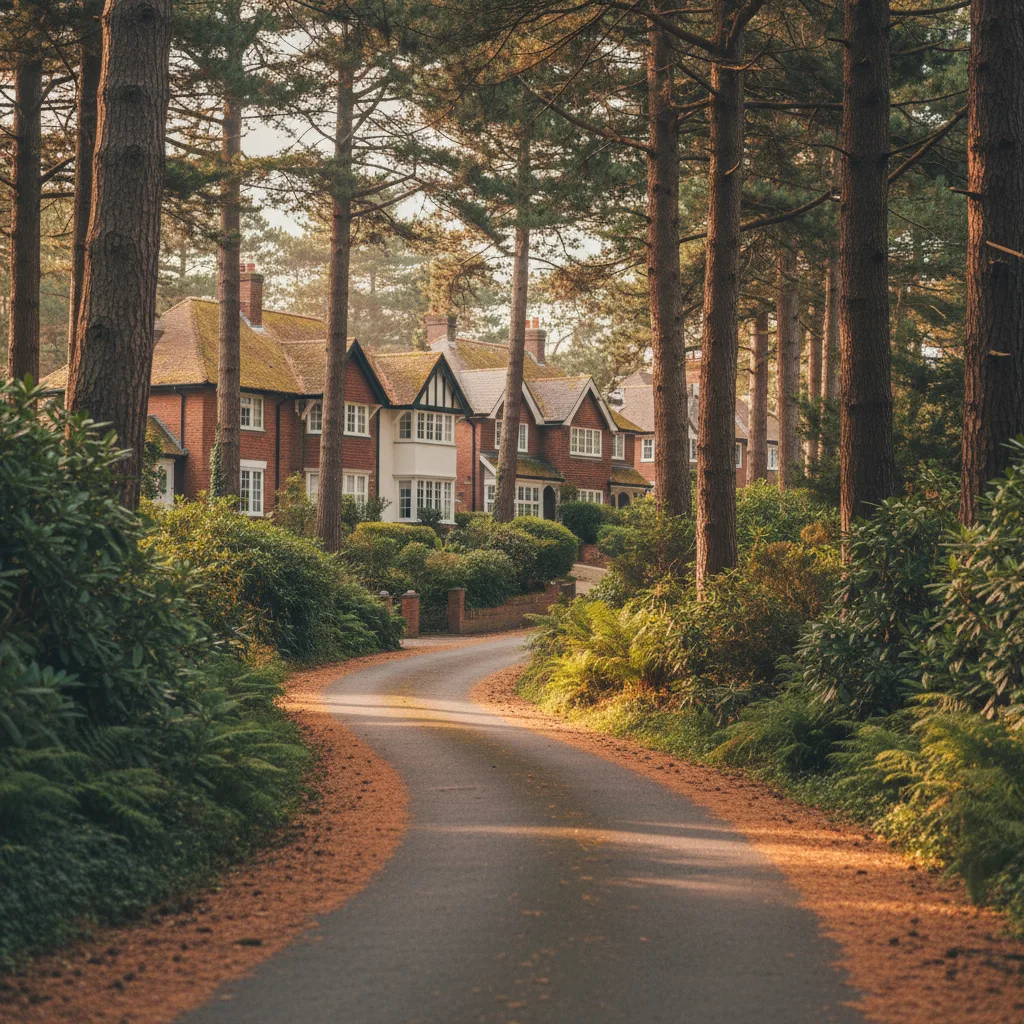
In Canford Cliffs the trees write the specification
Canford Cliffs sits on high ground between Poole Bay and the harbour, and it is wooded in a way that very little of the south coast is. Maritime pine, holm oak and a dense understorey run right through the residential streets, down the chines toward the beach, and across the gardens at Compton Acres. Most of the mature trees are protected. That is the single condition that separates a rooflight or skylight here from one two miles away in Lower Parkstone, and it changes the specification in three separate directions at once.
The first is debris. The second is shade, which quietly changes what solar-control glass is worth paying for. The third is access, because you cannot simply take a branch off to get a scaffold in. None of those is about salt, which surprises people, because the sea is a five-minute walk away down the chine.
Elevation here works in your favour, not against you. Canford Cliffs stands well above sea level with a wooded belt between the houses and the cliff edge. Salt is present in the air but the canopy and the ground rise strip most of it out before it reaches a roof. We treat this as the wooded zone rather than the severe marine zone, and it means we do not charge you for the Sandbanks build-up. What we do specify instead is drainage and glass that can cope with a year-round organic load.
What pine actually does to a rooflight
Needles are the problem, not leaves. A deciduous tree drops for six weeks and then stops. Pine sheds all year, the needles are small enough to pass a coarse filter and long enough to knit into a mat, and they come with resin. On a flat or shallow rooflight that combination is remarkably good at blocking a drainage channel, and a blocked channel is how water finds a way past a seal that was working perfectly well.
| What the canopy drops | What it does to the glazing | How we design around it |
|---|---|---|
| Pine needles, all year | Knit into a mat in the perimeter channel and at the foot of glazing bars; standing water follows | Wider drainage channels, accessible outlets, and a pitch at the steeper end of the sensible range so they slide rather than settle |
| Resin and honeydew | A sticky film that holds dust and defeats the hydrophilic action of self-cleaning glass | Self-cleaning coating as standard, plus an honest warning that it is not a substitute for cleaning under pines |
| Oak and holm oak leaf | Bulk blockage in autumn, usually at the outlet rather than across the pane | Outlets sized and sited where a householder can actually reach them |
| Bird lime under a roosting canopy | Etches a coating over time if it is left to bake on | Toughened outer pane with a good coating, and a realistic cleaning interval agreed at handover |
We would rather tell you the cleaning interval at survey than let you discover it. Under a mature pine canopy a rooflight wants looking at twice a year, and the design decision that matters most is whether you or a cleaner can safely reach the outlets without a tower each time.
Shade changes the glazing sum
This is the part that saves Canford Cliffs customers money, and it is the opposite of what a coastal firm working a straight shoreline would tell you. Solar control glass buys you a lower g-value: clear double glazing sits around 0.6, a neutral solar-control unit around 0.4, a high-performance one near 0.3. Each step trades visible light for summer heat. Under a heavy canopy, some of that trade has already been made for you by the trees, for free.
The rule, and the exception
The rule: on a Canford Cliffs roof genuinely shaded by mature canopy to the south and west, clear or lightly coated glass is usually the better buy. The room is already shaded in August, and high-performance solar control will make a naturally dim, green-lit space dimmer still through a Dorset winter.
The exception: a roof above the canopy line, or on a plot where the protected trees are all on the north side, gets the full solar-control answer — and so does any large south-facing lantern, because the aperture is doing the work of a small conservatory roof. Canopy cover is checked on the plot at survey, from the roof, at the time of year you are in. We will not guess it from an aerial photograph taken in February.
The housing: big interwar villas and very large rebuilds
Canford Cliffs was laid out as a wooded residential suburb and the stock reflects it. There are substantial Edwardian and interwar villas with steep tiled roofs, generous loft volumes and original purlin-and-rafter carpentry. There are 1960s and 1970s houses on the same generous plots. And there is a continuing programme of replacement — older houses coming down and very large contemporary houses going up, often with flat roof areas, deep plans and a genuine need for top light in the middle of the building.
Those three groups want different things. A cut-roof villa will usually take a roof window or a pitched-roof skylight between existing rafters with modest trimming, and the interesting question is head height and where the purlin runs. A deep-plan modern house is asking for a large flat rooflight or a lantern over a stair or a kitchen island, and there the question is span, structure and uplift. A 1970s house with a flat-roofed rear section is usually asking whether the deck under the covering is sound enough to build a kerb on, and often the honest answer is not yet.
We survey what is actually there rather than what the drawings claimed, because on houses of this age and this many alterations the two are rarely the same document.
Protected trees, scaffolding and getting to the roof
Tree preservation orders are widespread across Canford Cliffs, and a conservation area designation brings its own notification duties for tree work. The practical consequence for glazing work is simple: the trees are a fixed constraint, and the access plan has to be designed around them rather than the other way round.
- Canopy checked before a scaffold is priced. Where the branches actually sit decides whether a standard scaffold run is possible or whether a tower and a longer programme is the only lawful option.
- No cutting without the right consent. Pruning a protected tree to make an access route easier is a matter for you and BCP Council, in advance and in writing. We will not take a branch off to save ourselves a day.
- Root protection areas respected. Scaffold standards and a loaded delivery vehicle both apply load to ground that may be inside a root protection area. Spreader boards and a sensible standing position are cheap; a damaged protected tree is not.
- Delivery route checked for width and overhang. Several approaches here are narrow with heavy overhanging canopy, which is a real constraint on a lorry carrying a large glazed unit.
- Panes carried, not craned, wherever possible. On a wooded plot a crane needs an outrigger footprint and a clear swing, and often there simply is not one.
Approvals for a Canford Cliffs address
BCP Council is the planning and Building Control authority. Most rooflight work on a house is permitted development; almost all of it still needs Building Control because roof structure and a thermal element are both being altered. Two different approvals, routinely confused.
What changes the answer at a Canford Cliffs address is more likely to be trees or a conservation area than the glazing itself. Conservation area status affects the external appearance question and brings tree notification duties. A flat rather than a house has no permitted development rights at all. And any earlier planning consent on a replacement dwelling may carry conditions that removed permitted development rights entirely, which is more common on recently rebuilt plots than people expect.
Checking takes ten minutes and belongs in the survey. We look up the designation position for your specific address before anything is ordered, tell you which route applies, and put it in the quote. We do not submit planning applications for you, and we will not start work on the assumption that permitted development covers it.
Questions from Canford Cliffs
Do I need marine-grade frames this close to the sea?
Usually not. Canford Cliffs sits high with a wooded belt between the houses and the cliff, and that strips most of the airborne salt before it reaches a roof. We specify the wooded-zone build-up here — standard architectural coating, upgraded gaskets, self-cleaning glass as standard — and we will say in writing why we have not charged you for the Sandbanks specification.
Is self-cleaning glass worth it under the pines?
It helps and it is not magic. The coating needs rain running over it to work, which is why we like a pitch on it, and resin film will still defeat it periodically. Think of it as lengthening the interval between cleans rather than removing the need.
Can a rooflight go in if there is a TPO tree right beside the house?
Almost always yes. The tree affects the access plan and sometimes the programme, not whether the work can happen. What it does rule out is casually pruning to make the job easier.
Will a skylight be dark under all that canopy?
Less than you would think — overhead light is far stronger than side light even filtered through a canopy, which is exactly why top light works so well in these houses. But it does change the glass choice, and it is why we will often steer you away from a heavy solar-control tint here.
How quickly can you come and look?
Ring 01202 923272 and we will arrange a survey. We will tell you the exposure zone for your address on the phone; everything after that needs the roof measured.
The method, the guarantee, and what we do not claim
Written down, not implied
The exposure zone in writing. The survey names which of the Poole zones your roof sits in and what build-up follows from it, with the reason attached, so you can check whether you are being sold the right specification rather than the dearest one.
A ten-year workmanship guarantee on our installation work. It is a workmanship guarantee and it is not insurance backed. Glass and frame components carry their own manufacturer warranties, handed over on the day.
A fixed written price after survey. Itemised, with any carpentry or roof repair shown as its own line. If something unforeseeable appears once the covering is lifted, we stop and show you before spending your money.
We are a new firm. We install and replace rooflights, skylights, roof lanterns and roof windows across Poole and about thirty miles around it, and we do not take on general roofing. If the honest answer for your Canford Cliffs roof is that the flat roof covering needs replacing before anything is glazed into it, that is what the survey will tell you.
Related reading
Rooflight and Skylight Installation Alderney
The Alderney question is not what it is made of. It is whether it opens Most of the calls we…
Rooflight and Skylight Installation Barton on Sea
Barton on Sea is a cliff top with a clear view of the Isle of Wight and absolutely nothing between…
Rooflight and Skylight Installation Bere Regis
Cob, and why we ask what your walls are made of Cob is earth. Subsoil, water, straw and sometimes chalk…
Rooflight and Skylight Installation Blandford Forum
A town rebuilt all at once, and what that does to roof work Most English towns grew in layers, so…
Rooflight and Skylight Installation Boscombe
In Boscombe, the roof is usually not the shape people think it is Ask someone what their roof looks like…
Rooflight and Skylight Installation Bournemouth
Bournemouth is not one exposure, and neither is its roof stock Bournemouth runs from a clifftop down a set of…