Rooflight and Skylight Installation Lytchett Matravers
Rooflight and skylight installation in Lytchett Matravers, an inland ridge village where wind matters and salt does not, and a marine specification would be money spent on nothing.
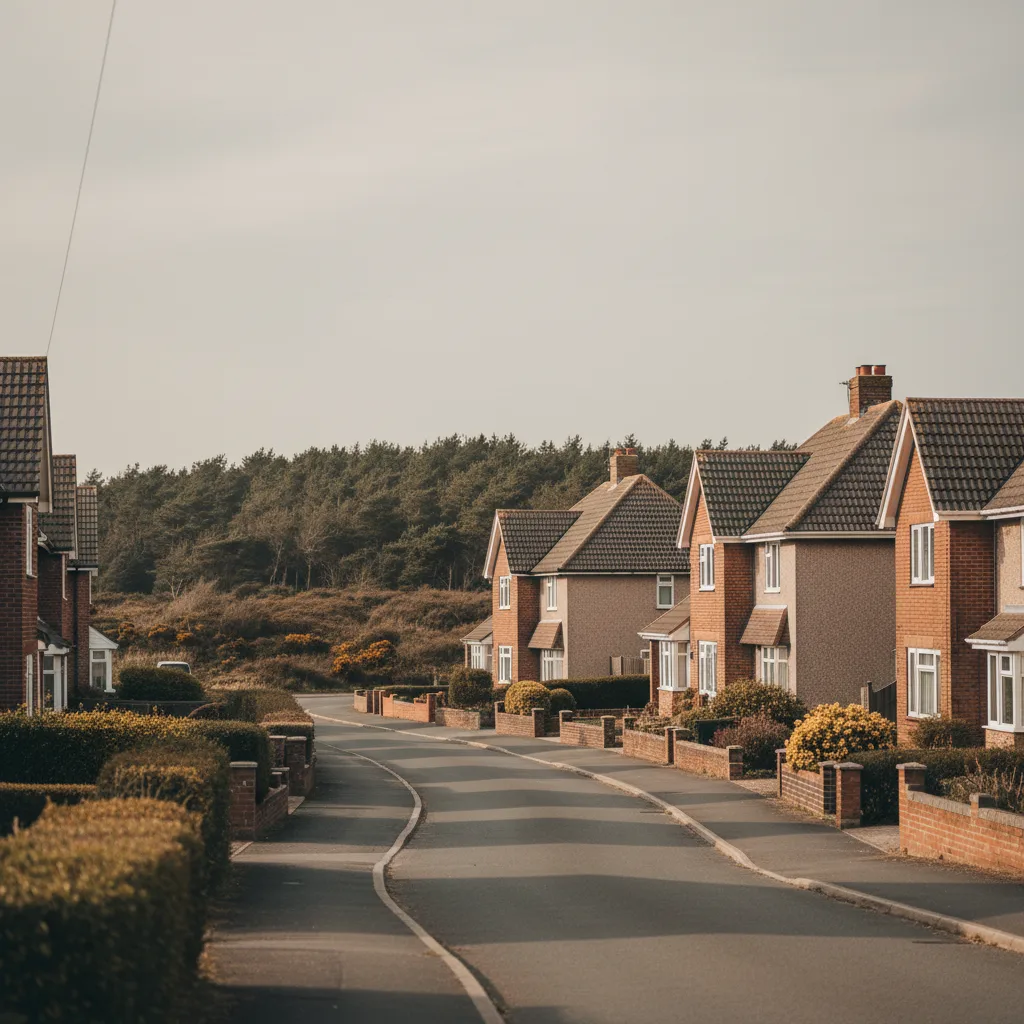
You do not need a marine specification here, and we will not quote you one
Said first, because it is the thing worth saying
Lytchett Matravers is inland. It sits on high ground north of the harbour, with several miles of farmland, heath and woodland between it and open water. There is no meaningful salt load on a roof in this village.
So the specification is the standard one: standard architectural powder coat, standard fixings, ordinary gaskets. Marine-grade coating and A4 (316) stainless throughout would add cost to your quote and protect you against a condition your address does not experience.
The exception: if you want the upgrade anyway, for resale, for peace of mind or because you simply prefer it, we will quote it — clearly labelled as an option you asked for rather than as a specification we say you need. That distinction is the whole basis on which this firm works.
We publish exposure zones across Poole and the harbour towns precisely so this can be checked rather than taken on trust. A firm that specifies one build-up everywhere is wrong in at least two places, and inland is where it is wrong in the expensive direction.
Exposed and coastal are not the same word
Here is where it gets interesting, and where the easy version of this advice goes wrong. Lytchett Matravers is not sheltered. It is one of the larger villages in Dorset and it sits on a ridge with open farmland around it, which means a roof here gets a good deal of wind — more than a roof tucked into a valley or a town street. What it does not get is salt.
Those are two entirely different failure modes with two entirely different answers, and they get conflated constantly by firms that sell one coastal package everywhere on this coast.
| Failure mode | What causes it | What actually fixes it | Relevant in Lytchett Matravers? |
|---|---|---|---|
| Coating chalks and fades | Airborne salt sitting on a powder coat that was not formulated for it | Marine-grade coastal coating | No — there is no salt load to drive it |
| Rust streaks down the frame | A2 stainless or plated fixings corroding in a salt atmosphere | A4 (316) stainless fixings, non-ferrous clips | No — A2 is entirely adequate inland |
| Unit lifted or loosened | Wind uplift on an exposed roof, fixings at the wrong centres or into soft timber | Correct fixing schedule into sound structure, frame tied down rather than rested | Yes — this is the one that matters here |
| Driven rain at the head | Upstand too low, or a flashing detail asked to work harder than it was designed for | Adequate upstand height and the correct detail for the covering | Yes — open ridge sites get driven rain without needing to be coastal |
| Debris and staining | Mature trees, farmland dust, pollen and seed on the pane | Pitch where possible, self-cleaning glass where rain can run off it | Yes — more than people expect |
What the village is built of
Lytchett Matravers is mostly a twentieth-century village around an older core. There is a long High Street with older property along and off it, and then a good deal of post-war and later housing built out around the village in phases: bungalows and chalet bungalows, semis, detached family houses, and more recent development at the edges.
The covering that goes with most of that is concrete interlocking tile, with plain tile and some slate on the older stock. Concrete interlocking tile is the one covering for which every manufacturer makes a properly engineered flashing kit. The components are off the shelf, the detail is known, and a rooflight or skylight going into a sound roof of that kind is a day’s work. That should be reflected in what you are charged, and on an inland village roof there is nothing about the location that should push the price up.
The trees are the local variable
The thing that will actually annoy you about a skylight in this village is debris, not weather. Mature trees through the older parts of the village, hedgerow and field boundaries around the newer estates, and a farmed landscape that produces dust, pollen and seed in quantity at certain weeks of the year. On a pitched unit rain rinses most of it off and self-cleaning glass earns its cost. On a nearly flat unit it sits, dries and leaves a ring, and self-cleaning glass does considerably less for you than the brochure suggests, because the coating needs running water to work. We tell you which of those you have before you pay for the upgrade.
Loft conversions, which is a lot of the work here
The typical Lytchett Matravers enquiry is a loft. Family houses with usable roof space, owners who would rather add a room than move, and roof windows as the daylight in it. That is a well-trodden job and the order of work is fixed.
- Set out from inside first. The window positions are decided against the rafters and against where the bed, the stair and the head height actually are — not from a photograph of the outside.
- Check the rafters. Size, spacing and condition. Cutting one rafter is routine; cutting two or three needs trimming designed rather than improvised, and beyond a modest opening we want a structural engineer rather than a rule of thumb.
- Confirm the pitch. Most pitched roof window ranges are rated from about 15 degrees. It is the measurement that decides which product you can have, so it is taken early.
- Agree the glazing. A south or west-facing loft under glass overheats in August, and that is a g-value decision rather than a blinds decision. Clear glass sits near 0.6, neutral solar control near 0.4, high-performance nearer 0.3.
- Building Control. A loft conversion is a Building Control matter in its own right — structure, thermal elements, and escape. The route is Dorset Council or an approved inspector.
- Fit, in order. Covering lifted, opening formed and trimmed square, unit set and fixed at the specified centres, flashing kit dressed for the covering, covering re-laid.
- Water test, make good, hand over the written specification, the named zone and the guarantee.
The roof is not left open overnight. On a straightforward loft window into a sound tiled roof, opened and closed is one day.
Dorset Council, not BCP
Lytchett Matravers is in the Dorset Council area. Poole, Broadstone and Canford Heath are in Bournemouth, Christchurch and Poole. The village is close enough to all of them that people assume one authority covers the lot, and it does not: different planning portal, different local plan policies, different Building Control team. Until 2019 this was Purbeck District Council, whose name is still in wide use and still attached to a lot of guidance that no longer applies.
Most work here is permitted development — a rooflight or skylight fitted into an existing slope, projecting no more than 150mm beyond the plane of the roof and sitting below the highest part of it. Building Control is a separate approval and is nearly always required. The exceptions to permitted development are listing, an Article 4 direction, and conditions on an earlier consent, which are more common on estate housing than people expect because they were sometimes applied across a whole development. Where consent is needed the outcome is decided on the merits and is never assured. We check what applies to your address at survey; we do not make applications on your behalf and we do not predict decisions.
What we promise, and what we refuse to claim
The two written things
A ten-year workmanship guarantee on our installation work. It is a workmanship guarantee and it is not insurance backed. We put that in the same sentence every time rather than letting the word carry more weight than it can. Units and components carry their own manufacturer warranties.
A fixed written price after survey. One itemised figure, not a range and not a guide, with any roof repair shown separately.
The firm is new and has none of those. Saying so is cheaper than the alternative and it is also the only lawful option.
We install and replace rooflights and skylights across Poole and about thirty miles around it. We are not general roofers. And in Lytchett Matravers, the most useful thing we are likely to tell you is that your roof needs less than you were expecting to be sold. Ring 01202 923272 and ask which zone your address is in — we will answer that on the phone, and everything after it needs the roof measured.
Related reading
Rooflight and Skylight Installation Alderney
The Alderney question is not what it is made of. It is whether it opens Most of the calls we…
Rooflight and Skylight Installation Barton on Sea
Barton on Sea is a cliff top with a clear view of the Isle of Wight and absolutely nothing between…
Rooflight and Skylight Installation Bere Regis
Cob, and why we ask what your walls are made of Cob is earth. Subsoil, water, straw and sometimes chalk…
Rooflight and Skylight Installation Blandford Forum
A town rebuilt all at once, and what that does to roof work Most English towns grew in layers, so…
Rooflight and Skylight Installation Boscombe
In Boscombe, the roof is usually not the shape people think it is Ask someone what their roof looks like…
Rooflight and Skylight Installation Bournemouth
Bournemouth is not one exposure, and neither is its roof stock Bournemouth runs from a clifftop down a set of…