Rooflight and Skylight Installation Highcliffe
Rooflight and skylight installation in Highcliffe, where clifftop roads take direct Channel exposure, the salt load falls away within a few hundred metres, and BCP is the authority right up to the boundary.
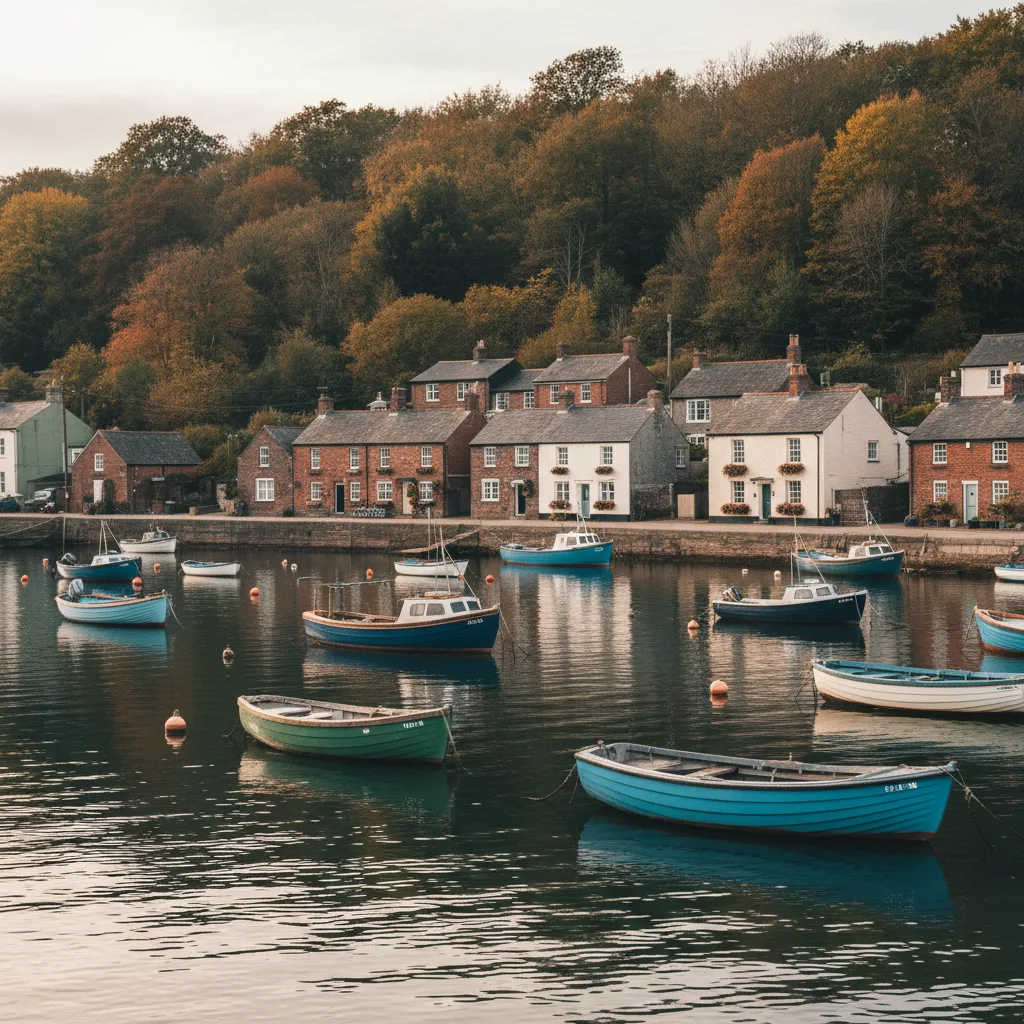
Facing open Channel, with nothing in the way until the Isle of Wight
Highcliffe is named for what it is. The town sits on a cliff at the eastern edge of the BCP area, looking south across Christchurch Bay with the Needles on the horizon on a clear day. That view is the whole appeal of the place, and for a rooflight it is also the whole problem, because the same open water that gives you the view gives the wind a clear run at your roof.
Direct Channel exposure is not the same as being near the sea. Plenty of roofs in our area are within a mile of salt water and sheltered from it by land, buildings or trees. On the seaward roads here there is nothing between the roof and the water but the cliff face itself. The prevailing south-westerly crosses open sea, arrives at roof level carrying salt, and it does that on ordinary days rather than only in storms. A skylight frame specified for a sheltered inland roof will look tired here within a handful of winters.
What makes Highcliffe interesting to specify is how quickly that stops being true. This is a small town, and the drop-off from clifftop to ordinary suburban exposure happens over a few hundred metres.
How far back the salt reaches
| Position | What we specify | The reasoning we put on the quote |
|---|---|---|
| The clifftop roads themselves | Marine or seaside-class coating, A4 (316) stainless fixings throughout, non-ferrous flashing clips, isolation between stainless fixings and aluminium frames | Continuous salt deposit plus full southerly UV on the same face. Standard coatings chalk and A2 fixings pit and weep |
| The first streets behind the clifftop | Coastal-grade coating, A4 stainless on all exposed fixings, standard grade concealed | One row of buildings takes a surprising amount out of the wind, but salt still reaches these roofs on any strong onshore day |
| Inland of the main road through the town | Coastal coating where the slope faces the sea, standard where it faces away, A4 stainless on visible fixings | At this distance the orientation of the slope does more than the distance does |
| The wooded northern edge | Standard architectural coating and standard fixings, upgraded gaskets, self-cleaning glass where trees overhang | Tree debris rather than salt is what shortens the life of glazing here, and marine-grade would be charging for a risk that is not present |
Every quote names which of those four your address is in, with the reason next to it. If you disagree, argue before you order. That argument costs nothing at survey stage.
Which council, and why people get told the wrong one
A boundary point that catches Highcliffe out specifically
The position: Highcliffe is within Bournemouth, Christchurch and Poole Council. BCP is the planning authority and BCP or an approved inspector handles Building Control. That is true right up to the eastern boundary of the town.
Why the confusion: the New Forest district begins just beyond it, so contractors working across both sides regularly reach for the wrong authority, and older paperwork may reference Christchurch Borough Council, which was abolished in 2019. It costs a fortnight to find out after an application is lodged in the wrong place. We check which side of the line your address falls on before anything is submitted.
There is also a listed building at the centre of the town that shapes local expectations about appearance. Highcliffe Castle is council-owned and open to the public, and its setting is the reason people here ask more often than average whether a rooflight will be visible from the street. It is a fair question and the answer is usually an in-plane unit that sits within the roof line rather than on top of it.
Bungalows, and the dark middle of a deep plan
Highcliffe has a lot of bungalows and chalet bungalows, much of it built from the 1930s onwards and a good deal of it single storey with a wide, deep floor plan. That shape produces a specific and very common complaint: the windows at the front and back light two ends of the house well and the middle not at all. A hallway, an inner lobby, a kitchen pushed to the centre of the plan — rooms that have artificial light on at midday in June.
Roof glazing is the only real answer to that, because there is no external wall available to put a window in. The mistake is to buy one large unit. Daylight from a rooflight falls in a defined pool beneath it, so a single big opening gives you one very bright patch and leaves the corners of the room where they were. Two or three smaller units spread across the ceiling give a flatter, more usable light, generally cost less to install than one large structural opening, and keep the structural work trivial because each one can often sit between existing rafters without any being cut.
Getting to the roof on a clifftop plot
- Look at the ground, not just the roof. Clifftop gardens fall away, and a scaffold on sloping or soft ground needs sole boards and base plates set to the fall. That is a bigger and more expensive structure than the same job on the level.
- Find the route. Whether there is a genuine side access or every pane comes through the house. On a bungalow this is usually straightforward, which is one of the few things bungalows make easier.
- Check where the lorry can stand. Some of the seaward roads are narrow with limited turning, and a delivery that cannot get close changes the handling plan.
- Decide scaffold or tower. On a single-storey roof a tower is often enough and considerably cheaper. On anything exposed and above single storey, scaffold.
- Book against the weather, not the diary. Handling a large sealed unit on an exposed clifftop roof in a strong onshore wind is not something we push through. The date moves.
- Protect and set out inside before anything is opened up, then form the opening, weather it, fit the unit and hose test it the same day.
We do not take work that needs a platform over a cliff edge or any kind of rope access. That is a different trade with different tickets, and pretending otherwise would be the sort of claim this site does not make.
Choosing the glass for a south-facing coast
| Glazing | Rough g-value | Where it belongs in Highcliffe | The trade-off |
|---|---|---|---|
| Clear double glazed, soft coat | Around 0.6 | North-facing slopes, shaded plots on the wooded edge, rooms used mostly after dark | Brightest and cheapest, and a south-facing room will be uncomfortable in July |
| Neutral solar control | Around 0.4 | Most south-facing bungalow roofs here, which is most of them | A slight tint, more noticeable from outside the house than inside it |
| High-performance solar control | Around 0.3 | Large openings on unshaded south-facing roofs with the sea in front of them | Cooler-looking light and a higher unit cost |
| Laminated inner pane | Unchanged | Every unit above head height, which in practice means all of them | None worth having — laminated glass holds together if it breaks, and it is not the place to save money |
The U-value limit for a rooflight is 2.2 W/m²K and any decent unit clears it comfortably. It is the g-value that decides whether you enjoy the room in August, and it is the number most quotes leave out.
Replacing a unit on an exposed elevation
A good share of Highcliffe enquiries are replacements of glazing fitted fifteen to twenty-five years ago. On this frontage that is a normal life rather than a premature failure, and the symptoms run in order: the coating goes flat and chalky, rust weeps appear at the fixings, then the sealed unit mists and somebody rings.
The replacement is the moment to correct the specification instead of repeating it. The opening already exists, the size is known, and the difference between a standard build-up and a marine one on a single unit is modest next to the cost of doing the whole job again in six years. Where the frame is genuinely sound and only the glass has gone, we will tell you that too — on a standard size the unit can sometimes be changed and the frame kept, and that is a smaller invoice than the one you were expecting.
Consents in plain terms
What applies, and when it does not
Planning: a rooflight on a house is usually permitted development, provided it projects no more than 150mm beyond the plane of the existing roof slope and no part of it stands above the highest part of the roof. Flats fall outside householder rights. Conservation designations, Article 4 directions and conditions on an earlier consent can all remove the right, and BCP publishes the mapping that shows it.
Building Control: needed for essentially every installation, through BCP Council or an approved inspector. It checks the altered structure, the thermal performance of the glazing, and safe glazing above a room people occupy. We lodge it, and we do not submit planning applications on your behalf.
What is promised, and what is not
The written position
A ten-year workmanship guarantee on our installation work. It is not insurance backed, and that is said here rather than left in small print. Glass and frames carry their own manufacturer warranties, which on a coastal elevation come with cleaning conditions worth reading before you need to rely on them.
A fixed written price after survey. Measured on the roof, not estimated from a photograph, with the exposure position, the coating class and the fixing grade all named so the specification is checkable rather than a promise.
We install and replace rooflights, skylights, roof windows and lanterns across Highcliffe and about thirty miles around Poole. We do not do general roofing. To find out which exposure band your Highcliffe street sits in before you speak to anyone about money, ring 01202 923272.
Related reading
Rooflight and Skylight Installation Alderney
The Alderney question is not what it is made of. It is whether it opens Most of the calls we…
Rooflight and Skylight Installation Barton on Sea
Barton on Sea is a cliff top with a clear view of the Isle of Wight and absolutely nothing between…
Rooflight and Skylight Installation Bere Regis
Cob, and why we ask what your walls are made of Cob is earth. Subsoil, water, straw and sometimes chalk…
Rooflight and Skylight Installation Blandford Forum
A town rebuilt all at once, and what that does to roof work Most English towns grew in layers, so…
Rooflight and Skylight Installation Boscombe
In Boscombe, the roof is usually not the shape people think it is Ask someone what their roof looks like…
Rooflight and Skylight Installation Bournemouth
Bournemouth is not one exposure, and neither is its roof stock Bournemouth runs from a clifftop down a set of…