The Jurassic Coast World Heritage Site and roofs in its setting
The inscription recognises geology rather than buildings and removes no permitted development right, but setting is weighed where an application is needed — and exposure on this coast drives the specification far harder than the designation does.
The Jurassic Coast runs from Orcombe Point at Exmouth to Old Harry Rocks at Studland, roughly ninety-five miles of cliff inscribed as a World Heritage Site in 2001. The eastern third of it sits inside this firm’s service area, and owners in Swanage, Portland, Kimmeridge and the Purbeck villages regularly ask what it means for putting a rooflight in a roof.
The short version is that it means less than the name suggests, and the reason is worth understanding — because the designations that do decide these cases are sitting right next to it on the same map.
What the inscription is actually for
The site was inscribed for its geology and geomorphology: an almost continuous sequence of Triassic, Jurassic and Cretaceous rock exposed along one coast, with the landforms and the fossil record that go with it. It is a natural inscription, not a cultural one. The buildings behind the cliff are not what was inscribed, and the listing at Paris says nothing about roofs.
That is a genuine distinction rather than a technicality. A cultural World Heritage Site inscribed for its built environment brings a completely different set of expectations about what happens to the buildings inside it. This one was inscribed for the rock.
It is not a planning designation
World Heritage status does not create a consent regime. There is no World Heritage permission, no separate application, and no body that has to approve your rooflight because you live near the coast. It does not remove permitted development rights: the rights a rooflight relies on are unaffected by the inscription, and the things that do remove them are the same everywhere — an Article 4 direction, a condition on an old permission, listing, or the property being a flat.
The Jurassic Coast Trust and the site partnership produce guidance and management plans and are consulted on significant development. They do not determine householder applications, and on an ordinary skylight in an ordinary roof they will not be involved at all.
What each designation on this coast actually does
| Designation | Does it remove permitted development? | What it does do |
|---|---|---|
| World Heritage Site | No | Setting is a material consideration where an application is needed. Relevant to major development, rarely to a domestic rooflight |
| Dorset National Landscape | No, not for a plain rooflight | Narrows some other permitted development classes, and is weighed on applications for its landscape and scenic quality |
| Conservation area | Not by itself | Changes what is assessed and is the usual home of an Article 4 direction |
| Article 4 direction | Yes, for the rights it names | Turns work that needed nothing into work that needs an application |
| Listed building | Consent is required regardless | Covers the whole building, inside and out, wherever the unit goes |
The National Landscape sits over much of the same ground
Most of the Purbeck coast inside the World Heritage Site is also inside the Dorset National Landscape, the designation formerly called the Dorset Area of Outstanding Natural Beauty. The two overlap so thoroughly that people conflate them, and it is the National Landscape rather than the World Heritage Site that is more likely to be mentioned in a Dorset Council officer’s report. That designation has its own page: does the Dorset National Landscape restrict rooflights.
Where setting genuinely bites
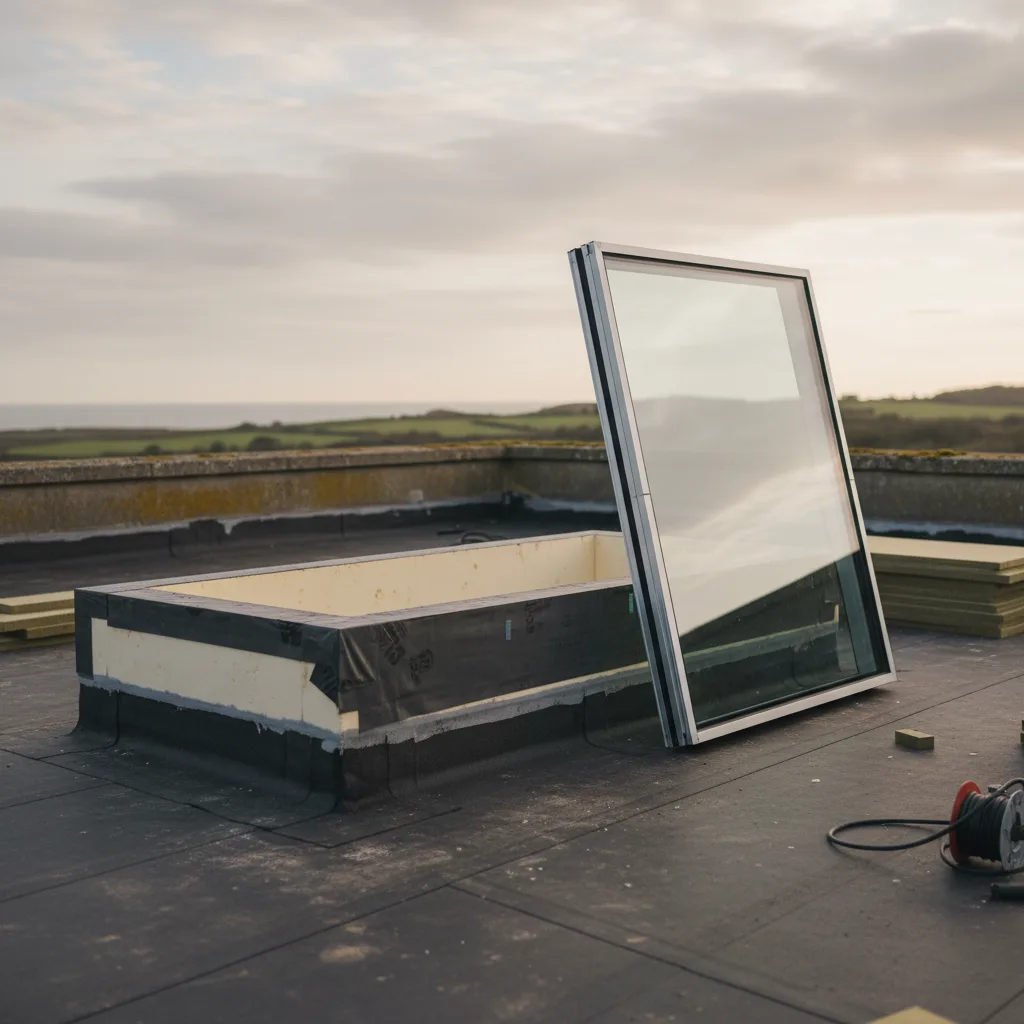
Setting is about views into and out of a site, not about proximity. A house half a mile inland with no view of the coast and none from it is not meaningfully in the setting of anything, whatever the map says. A house on an open slope above Kimmeridge, read against the sea from the coast path, is — and so is a roof on the seaward edge of Swanage seen from the water.
Even then, the thing being weighed is the effect on the character of the landscape, and a single rooflight on one slope is a small part of that. What raises it from small to worth mentioning is glare, a bright frame, or a slope that carries three or four units in a row where it previously carried none.
Views from the coast path and views from the water
This coast is walked and sailed in a way that inland Dorset is not. The South West Coast Path runs along the cliff for the whole length, which means roofs at Swanage, Durlston, Worth Matravers, Kimmeridge and Portland are seen from above and from the side, at distances where a whole roof plane reads as one surface. Boats in Poole Harbour and off Studland see the same roofs from the other direction.
The practical consequence is not planning. It is that the honest answer to “can anybody see this slope” is different here from what it would be in Creekmoor, and it is worth walking the path before deciding a rear roof is private.
The towns and villages inside and beside it
Swanage, Langton Matravers, Worth Matravers, Kingston, Kimmeridge, Osmington, Portland and Weymouth all sit on or immediately behind this coast, and Studland marks the eastern end. Nearly all of them carry conservation areas, a high proportion of listed buildings, and Dorset Council as the authority — with the Purbeck stone slate covering that comes with the geology.
The pattern we see repeatedly is an owner worried about the World Heritage Site and unaware that their building is listed, or that an Article 4 direction covers the street. The anxiety is aimed at the wrong designation, and half an hour on the council’s register would redirect it.
The stone under the cliff is the stone on the roof
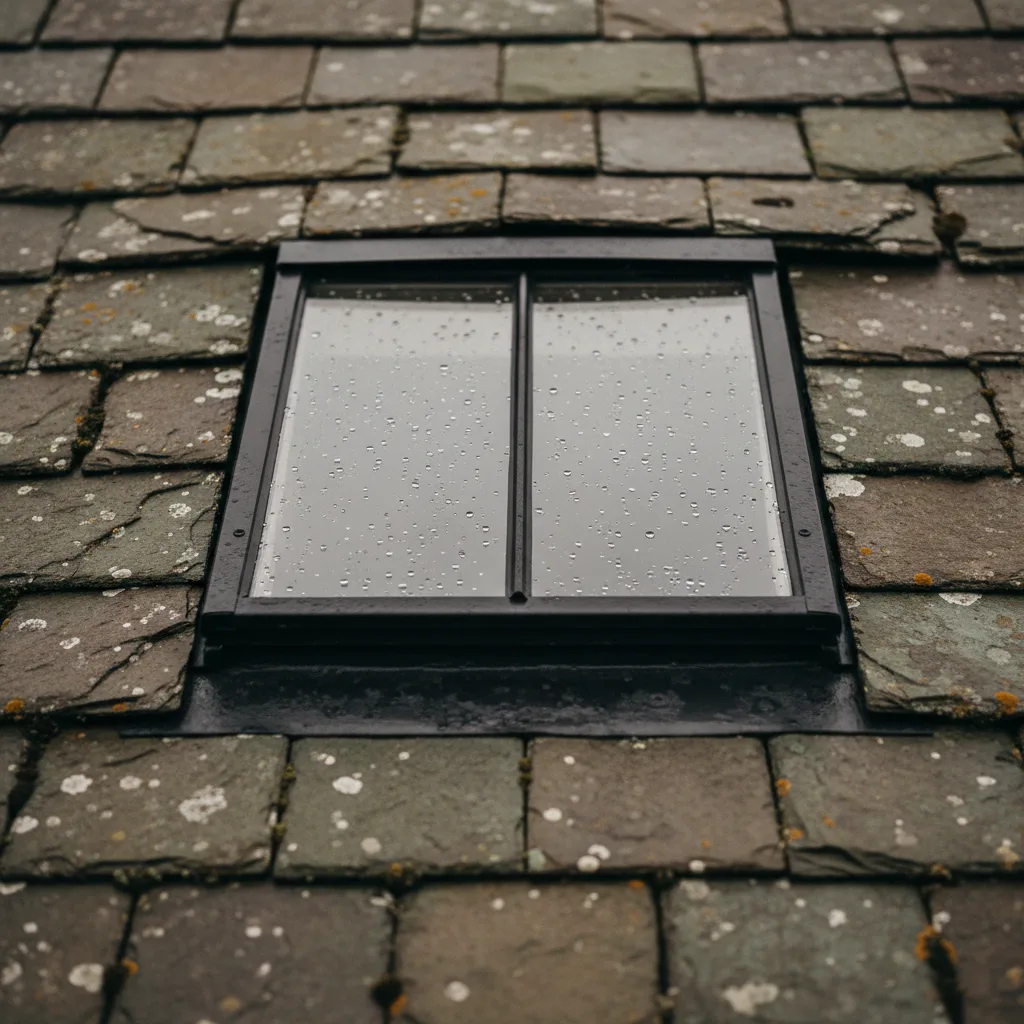
The rock that got the coast inscribed is the rock the roofs are made of. Purbeck limestone quarried in the ridge behind Swanage is the covering on a large share of the older buildings in this part of Dorset, and it is the reason no standard flashing kit fits a heritage roof here. That is a construction problem rather than a planning one, and it is the subject of Purbeck stone slates and rooflights that respect the roof around them.
Exposure is the real driver on this coast
| Where | Exposure | What the specification does about it |
|---|---|---|
| Portland, Weymouth seafront | Direct Channel exposure with no shelter and sustained wind load | Marine-grade coating, stainless fixings throughout, and fixing centres reviewed rather than taken from the standard sheet |
| Swanage, Durlston, Peveril | Genuine coastal salt with some shelter from the ridge behind | Cast aluminium frames preferred over coated steel; lead patinated so it does not stain the stone |
| Langton Matravers, Worth Matravers | Elevated and open, salt-laden wind across the ridge | Stone slate detailing and the same marine fixing standard; the height matters as much as the distance to water |
| Wareham, Corfe Castle | Inland and sheltered despite being close on a map | Ordinary specification, and we say so — marine grade here is an overcharge |
What decides your case instead
Ask these four questions and ignore the coastline
Is the building listed? If it is, consent is needed wherever the rooflight goes, and that single fact governs everything.
Is it in a conservation area, and is there an Article 4 direction? Ask which rights the direction removes, by address, rather than whether one exists.
Is there a condition on an old permission? Conditions run with the land and are invisible unless the planning history is read.
Is it a flat or a maisonette? If so, there are no rights of this kind at all, and the freeholder comes before the council.
What we will and will not say
We will tell you which authority covers the address, which designations apply, which exposure band the roof sits in and what that changes in the specification, and whether the unit can drop between rafters. We will produce the section detail and the product data an application needs, and we will say plainly where we think a proposal is weak.
We will not tell you what a decision will be. Applications on this coast are assessed on the merits of the individual building and its setting by officers who know the ground, and an installer who predicts that outcome is guessing in writing. We also do not order a bespoke unit before a decision is in your hand.
Our installation carries a ten-year workmanship guarantee, given directly by us and plainly not insurance backed, at a fixed written price after survey. Ring 01202 923272, or send a photograph of the roof and the view it has to 447880284133.
Related reading
Are conservation rooflights double glazed?
Almost always, yes — but with a slim double-glazed unit rather than the standard sealed unit that goes into a…
Are conservation rooflights heavier than standard ones?
Yes, size for size. A metal frame with glass in it weighs more than a timber roof window, and a…
Article 4 directions and the permitted development they remove
Two houses on the same street, the same age, the same roof. One has a pair of skylights in the…
Can a conservation rooflight be fitted to a thatched roof?
No — not the recessed metal type this page is part of a hub about. A conservation rooflight is designed…
Can a conservation rooflight go on a front facing roof slope?
Often, yes — and the front slope is the one case where the checking has to be done properly first.…
Can a modern rooflight be changed to a conservation one later?
Yes, and it is a job we are asked for regularly — but it is not a swap. A modern…