Article 4 directions and the permitted development they remove
What an Article 4 direction is, which permitted development right a rooflight depends on, how to find out whether a direction or an old planning condition covers your address, and what changes if one does.
Two houses on the same street, the same age, the same roof. One has a pair of skylights in the rear slope that went in without any application at all. The other has an owner who has just been told they need planning permission for a single rooflight. Nothing is wrong with either account. Somewhere between the two, a right was taken away.
That removal usually has one of two causes: an Article 4 direction made by the council, or a condition attached to a planning permission years ago. Both do the same thing from where you stand, and neither of them is visible from the pavement.
The right a rooflight normally relies on
Most rooflight work on an ordinary house is permitted development, which means the national legislation grants permission in advance and no application is made. The class covering alterations to a roof carries two limits that matter here: the alteration must not project more than 150mm beyond the plane of the existing roof slope, and no part of it may sit higher than the highest part of the original roof.
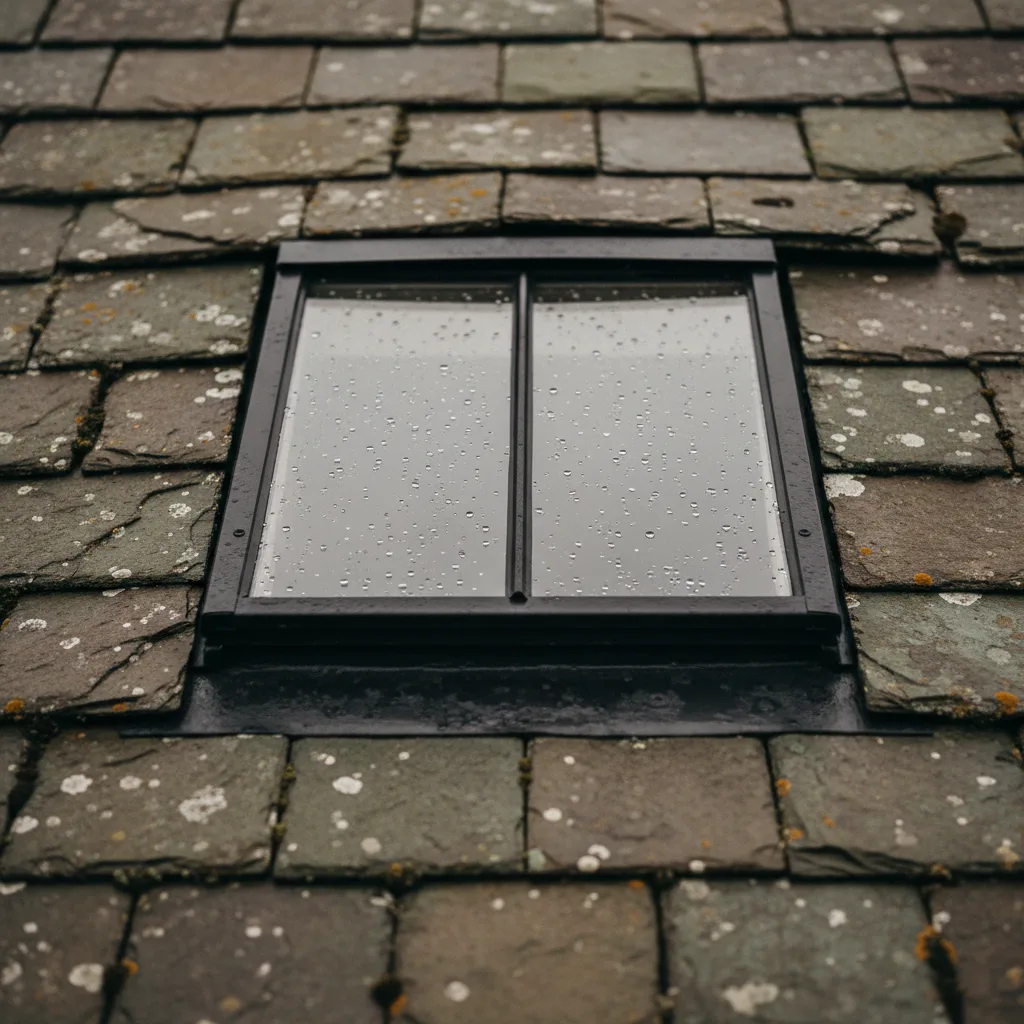
A recessed conservation unit clears the first limit comfortably, which is one of the quiet advantages of the type. A rooflight in a slope is nowhere near the second. So in the ordinary case the only approval actually needed is Building Control, and that is a different department answering different questions.
Permitted development is not a light-touch permission. It is permission already granted. That is why its removal changes the situation so completely: you are not being asked to meet a higher standard, you are being asked to apply for something that, up the road, nobody had to apply for at all.
What an Article 4 direction actually is
An Article 4 direction is a formal instrument made by the local planning authority that withdraws specified permitted development rights within a defined area. It is named after the article of the General Permitted Development Order that allows a council to do it.
The purpose is targeted. A council that has designated a conservation area may conclude that the cumulative effect of unremarkable individual changes — replacement windows, painted brickwork, front boundary walls removed, roof alterations — will erode the character it designated the area to protect. Rather than hope, it removes the rights that allow those changes without an application, so each one comes to a desk and gets looked at.
| What a direction does | What it does not do |
|---|---|
| Requires an application | It does not ban the work. A rooflight in an Article 4 area is a planning question, not a prohibition |
| Applies to a defined area or a defined list of properties | It is not automatic in every conservation area. Plenty of conservation areas have no direction at all |
| Names the specific rights withdrawn | It does not necessarily touch roof alterations. A direction aimed at front elevations may leave your rear slope untouched |
| Is a public document | It is not hidden. It can be checked, and it should be checked rather than assumed either way |
That third row is the one people miss. Hearing that an Article 4 direction covers a street tells you very little on its own. The question is always which rights it removed, because a direction written to stop uPVC sash replacements has nothing to say about a skylight in a slope facing a back garden.
Immediate and non-immediate directions
Two ways a direction comes into force
Non-immediate. The council publishes the direction, consults, and confirms it after the representation period. The rights come off when it is confirmed. This is the usual route.
Immediate. The direction takes effect on the day it is made, with the consultation running afterwards and confirmation required within a set period or it lapses. Councils use this where the alterations concerned could otherwise all be carried out before the process finished.
From a homeowner’s position the distinction matters in one situation only: if a direction is in progress over your street while you are planning work. If that is the case, the date your rights are affected is a question for the authority, and it is worth a phone call to their planning team rather than a guess.
The condition on an old permission does the same job quietly
Article 4 directions get the attention, but around Poole the more common cause of a missing right is a condition on a permission granted decades ago. When a barn was converted, when an estate was laid out, when a house was granted permission in a sensitive setting, the council could and often did attach a condition removing permitted development rights for future alterations.
That condition runs with the land. It binds you even though you were not the applicant, it does not expire, and there is no reason you would know about it unless somebody looked. Converted agricultural buildings around Wareham and the Purbeck villages, and newer estates across the BCP area, are where we see it most often.
How to find out whether your roof is affected
- Identify your authority. BCP Council for Poole, Bournemouth and Christchurch; Dorset Council for Wareham, Swanage, Corfe Castle, Wimborne, Blandford and Dorchester; New Forest District Council on the Hampshire side; and the New Forest National Park Authority inside the park boundary.
- Check the conservation area position. Councils publish their designated areas and, where they exist, the appraisals and management plans that go with them. Designation on its own does not remove any right, but it tells you where to look next.
- Ask the planning department directly about Article 4. A short enquiry naming your address is faster and more reliable than reading a map edge. Ask which rights are withdrawn, not just whether a direction exists.
- Search the planning history of the property. Every authority has a public planning register. Look for the original permission, especially if the house is a conversion or part of a planned development, and read the conditions.
- Read your deeds and any transfer covenants. These are not planning controls, but a restrictive covenant can stop work that planning would allow, and a lease on a flat almost always requires the freeholder’s consent separately.
- Consider a formal route if the answer matters. Pre-application advice gives you an officer’s view, and a lawful development certificate is the formal way to establish that work does not need permission. Neither is free and neither is instant, but on a contested roof both beat a gamble.
What changes if a direction applies
If the right has gone, a householder planning application is required for the rooflight. The work itself does not change; the process does.
| Stage | What is involved | What decides it |
|---|---|---|
| Application | Drawings showing the roof as existing and as proposed, elevations, a section through the unit and the product details | Completeness. A validated application starts the clock; an incomplete one sits still |
| Consultation | Neighbour notification, and a conservation officer’s view where the area is designated | Visibility of the slope and the effect on the character of the area |
| Assessment | The case officer weighs the proposal against local and national policy | The merits of your building and its setting. Never a product name |
| Decision | Granted, granted with conditions, or refused, with a right of appeal | The authority, not the installer. We will not predict it and nor should anyone else |
A condition on the grant is common and usually concerns the specification — the finish, the projection above the slate line, sometimes the glazing bar. Those are conditions a recessed metal unit is well placed to satisfy, which is the practical reason the type gets specified in Article 4 areas even where nothing formally requires it.
Three authorities and a national park
Our radius crosses a county line, so the body that makes and administers directions changes inside the service area. BCP Council covers the conurbation. Dorset Council covers Wareham, Swanage, Corfe Castle, Wimborne, Blandford, Dorchester and the Purbeck area. New Forest District Council covers the Hampshire side outside the park, and inside the park boundary the New Forest National Park Authority is the planning authority in its own right — the county boundary and the park boundary are not the same line, and houses near Brockenhurst and the villages around it are where that catches people out.
The Dorset National Landscape and the Jurassic Coast World Heritage Site sit within the same radius. Neither changes who determines an application and neither removes a permitted development right, but both are considerations an officer weighs where a slope is visible from open country or the coast path.
What a direction does not mean
Worth saying plainly
An Article 4 direction does not mean you cannot have a rooflight. It means the decision is made by a person rather than by a national rule. People refuse work at this point because they have read the word direction and assumed a refusal, and that is a poor reason to live in a dark room.
It also does not mean you need a conservation unit. It means the appearance of what goes in is now part of a decision somebody makes, and a recessed skylight is the version of that appearance most likely to be found unobjectionable. Likely is the strongest word available and we will not use a stronger one.
Where we stop, and what we hand over
We check which authority covers your address and flag the designations that apply to it, as part of the survey. We are not planning consultants and we do not submit applications — if yours needs one, you or an agent you appoint makes it.
What we produce is the technical half of the pack: the measured survey, the covering thickness and recess detail, the frame material and coating grade appropriate to your exposure zone, and the manufacturer’s section drawing and data for the unit proposed. That is what a case officer needs to see and it is the part we are qualified to write.
Nothing bespoke is ordered until a decision is in your hand, because a made-to-order rooflight is not returnable. Our workmanship guarantee runs ten years, is given directly by us, and is not insurance backed. If you want to know whether your roof sits inside a direction, ring 01202 923272 with the address and we will tell you who to ask and what to ask them.
Related reading
Are conservation rooflights double glazed?
Almost always, yes — but with a slim double-glazed unit rather than the standard sealed unit that goes into a…
Are conservation rooflights heavier than standard ones?
Yes, size for size. A metal frame with glass in it weighs more than a timber roof window, and a…
Can a conservation rooflight be fitted to a thatched roof?
No — not the recessed metal type this page is part of a hub about. A conservation rooflight is designed…
Can a conservation rooflight go on a front facing roof slope?
Often, yes — and the front slope is the one case where the checking has to be done properly first.…
Can a modern rooflight be changed to a conservation one later?
Yes, and it is a job we are asked for regularly — but it is not a swap. A modern…
Can a Quayside building in the Old Town take a new rooflight?
Sometimes, and the first two questions have nothing to do with the rooflight. Is the property a flat or a…