Rooflight and Skylight Installation Wool
Rooflight and skylight installation in Wool, where who owns the roof and how shallow its pitch is decide the job long before exposure comes into it.
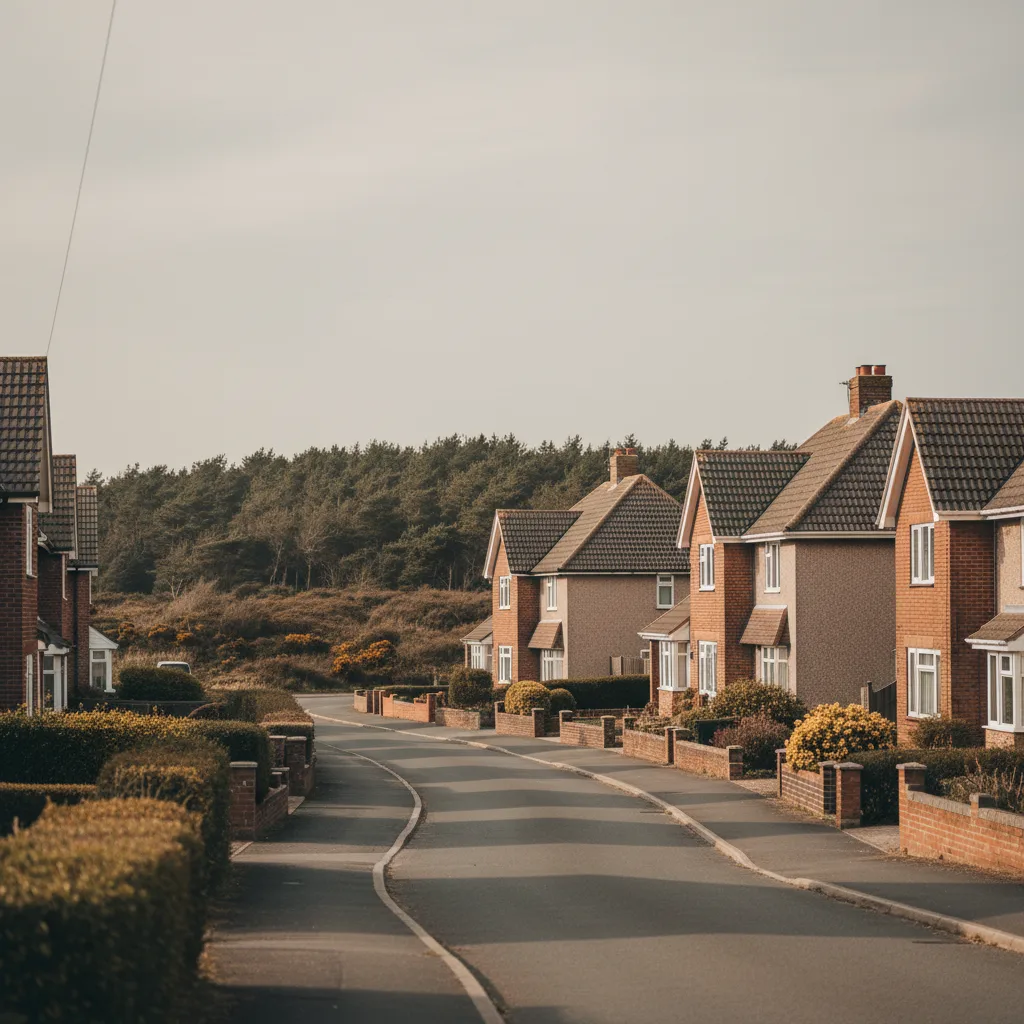
The first question in Wool is who owns the roof
Not a formality. The thing that decides whether there is a job at all
Wool is a garrison village as much as a Dorset one. Bovington Camp is a short distance north, the railway brings people in and out, and a significant part of the local housing is rented, let to service families, or owned by a landlord who is not the person ringing us. That is simply the shape of the place, and it changes how this work starts.
The rule: we survey and install for the person who owns the building, or for someone with the owner’s written authority. A tenant cannot authorise a permanent alteration to a roof, and service family accommodation cannot be altered without the landlord’s consent. Cutting an opening in someone else’s roof on a tenant’s say-so would put the tenant in breach and put us somewhere worse.
The exception, and it is a common one: plenty of people in Wool own their home outright and are simply near a camp. If that is you, none of this applies and the rest of the page is the useful part. And if you are a landlord, we are happy to deal with you directly and to keep your tenant informed about dates and access.
What we will never do is quote work we know needs a consent nobody has asked for, take a deposit, and leave the consent as the customer’s problem.
If the property is rented or service accommodation
This is not complicated, it just has to happen before anything else does. The order matters because a survey costs everybody time and a written quote is worth nothing if the alteration was never going to be permitted.
- Establish who the freeholder or landlord actually is. For service accommodation that is the housing provider rather than the unit or the camp, and the route for alteration requests is theirs.
- Ask them, in writing, before we visit. The request should say what is proposed, where, and by whom. We will supply a plain description of the proposed work for you to send.
- Get the answer in writing too, including any conditions attached, such as making good on departure or using a specified type of unit.
- Then survey. With consent in hand, the job proceeds like any other, and the quote can be fixed properly rather than hedged.
- Leaseholders, check the lease. In a flat or maisonette the roof is very often not demised to you at all, which means the freeholder decides, not you.
- Keep the paperwork. Landlord consent, our guarantee and the Building Control paperwork all belong in the same folder, and the missing one always turns out to be the one a solicitor asks for.
Pitch decides more than size does
Here is the technical fact that catches out more Wool enquiries than anything else. A pitched roof window is designed to work within a range of roof pitches, and below the minimum pitch the manufacturer states, it is not a suitable product. Water does not leave a shallow slope with any enthusiasm, and a unit relying on flashings and gravity needs a slope steep enough to shift it.
A lot of the post-war and later housing around the camp and along the village edges has a shallow roof by older standards, and some of the single-storey additions are shallower still. That does not mean no glazing. It means a different product.
| Roof pitch | What is suitable | What to watch |
|---|---|---|
| Steeper than about 25 degrees | Almost any pitched roof window, and conservation units where appearance matters | Head height inside. A unit set too high gives a bright ceiling and no view from standing |
| Roughly 15 to 25 degrees | Most roof windows, but the flashing kit must be right for both the pitch and the tile profile | The wrong kit on a shallow slope is the commonest leak we get called to look at |
| Below about 15 degrees | Generally a flat rooflight on a built kerb rather than a pitched roof window | The kerb has to deliver a fall so the glass sheds water and dirt instead of collecting them |
| Flat deck | Flat rooflight on an insulated upstand | Deck condition first. A new kerb fixed into a soft deck is a failure waiting to be booked in |
The manufacturer’s stated minimum for a given unit is the figure that governs, and we measure your actual pitch rather than estimating it from the pavement. Fitting below a stated minimum voids the product warranty, which is the one part of this that no workmanship guarantee can rescue.
The older village, and the Frome
Wool is older than the camp by several centuries. The village sits on the River Frome, and the crossing there, with the old bridge and the manor house beside it, is among the more recognisable historic spots in this part of Dorset. Thomas Hardy used the setting in Tess of the d’Urbervilles, which is why the name turns up in more literature than most Dorset villages manage.
What that means for roof work: the old core includes listed buildings, thatch and historic fabric, and those are consent questions rather than product questions. We do not put rooflights into thatch at all. Where a thatched cottage has a tiled outshot or a later extension, that is where glazing belongs, and it is usually where the dark rooms are anyway.
Inland, and the specification says so
Wool lies inland on the Frome valley, with the heath and the Purbeck ridge between it and the sea. Salt is not a design case here. Marine-grade coatings, A4 stainless throughout and non-ferrous flashing clips answer chloride attack, and chloride attack is a Portland and Sandbanks problem, not a Wool one. If a quote for this address includes a coastal upgrade, ask what was measured to justify it.
What is worth spending on instead is the part nobody photographs: the underlay lapped correctly into the frame, an insulated reveal that keeps the perimeter warm enough not to stream with condensation in January, fixings landing in sound timber, and the right flashing kit for the actual covering. Those decide whether an installation is still sound in fifteen years. A better coating does not.
Permissions in Wool
Dorset Council is the authority for planning and Building Control here, not BCP. On a house, rooflight work is usually permitted development provided it projects no more than 150mm beyond the roof plane and does not sit above the highest part of the roof. In the historic part of the village, on a listed building, or where permitted development rights have been removed, that changes and you should assume you need to ask.
Building Control is a separate matter from planning and applies to nearly all of this work: thermal performance, safety glazing above head height, ventilation to the room below and any structural alteration where an opening affects the roof. Applications for consent are assessed on their individual merits and the outcome is never assured; we will tell you what applies to your address, and we will not predict a decision or submit an application on your behalf.
If you might be posted in two years
An honest answer to a question we get asked here and almost nowhere else
Is it worth doing? If you own the house and a dark room is the reason you do not enjoy living in it, two years of a better house is a real thing to buy. If the only motive is resale value, be cautious: roof glazing makes a house nicer to live in and to view, and we are not going to put a figure on what it adds, because nobody honestly can.
Do it properly or not at all. A cheap unit fitted badly is worse than no unit when a survey is done for a sale, because a leaking or non-compliant rooflight becomes a negotiating point. The Building Control paperwork is what makes it a non-issue, and it is the cheapest part of the job.
Keep the guarantee transferable in practice. Ours is a ten-year workmanship guarantee on our installation; hand the paperwork to the buyer with the rest of the file so the work is documented rather than mysterious.
Wool questions
I am in service family accommodation. Can I have a skylight fitted?
Only with the written consent of whoever provides that accommodation. We are glad to give you a written description of the proposed work to send with the request, but we will not start without the answer.
My roof looks quite flat. Can I still have a roof window?
Perhaps not that product, but almost certainly some glazing. Below roughly fifteen degrees the right answer is usually a flat rooflight on a built kerb that creates a fall. We measure the pitch at survey rather than guessing.
Can you fit into a thatched roof?
No. Thatch sheds water across a deep coat of material rather than over a flashed joint, and it is treated as its own category for fire. We glaze the tiled parts of a building instead, and we will show you at survey where those are.
Will a rooflight be noisy in heavy rain?
Any glazed opening is more audible in rain than a tiled roof, and it is more noticeable over a bedroom than over a kitchen. Laminated glass takes some of the edge off it. Anyone who tells you it is silent has not stood under one in a Dorset downpour.
Do you charge extra to come to Wool?
No. It is within the area we work from Poole. Scheduling occasionally groups jobs in this direction, and if that affects your dates we will tell you rather than leave you waiting.
Before you ring us
Two documents and no borrowed credibility. A ten-year workmanship guarantee on our installation, which covers workmanship and is not insurance backed, said in those words. A fixed written price after survey, itemised, with the measured roof pitch, the covering, the exposure zone and any structural work all named on it.
The firm is new. We install and replace rooflights, skylights, roof windows, roof lanterns and sun tunnels across Poole and around thirty miles of Dorset. To arrange a survey in Wool, ring 01202 923272, and tell us at the outset whether you own the property, because it is the question that decides everything that follows.
Related reading
Rooflight and Skylight Installation Alderney
The Alderney question is not what it is made of. It is whether it opens Most of the calls we…
Rooflight and Skylight Installation Barton on Sea
Barton on Sea is a cliff top with a clear view of the Isle of Wight and absolutely nothing between…
Rooflight and Skylight Installation Bere Regis
Cob, and why we ask what your walls are made of Cob is earth. Subsoil, water, straw and sometimes chalk…
Rooflight and Skylight Installation Blandford Forum
A town rebuilt all at once, and what that does to roof work Most English towns grew in layers, so…
Rooflight and Skylight Installation Boscombe
In Boscombe, the roof is usually not the shape people think it is Ask someone what their roof looks like…
Rooflight and Skylight Installation Bournemouth
Bournemouth is not one exposure, and neither is its roof stock Bournemouth runs from a clifftop down a set of…