Rooflight and Skylight Installation Sandford
Rooflight and skylight installation in Sandford, the borderline case where a roof is near the harbour but screened from it, and the specification lands between inland and coastal.
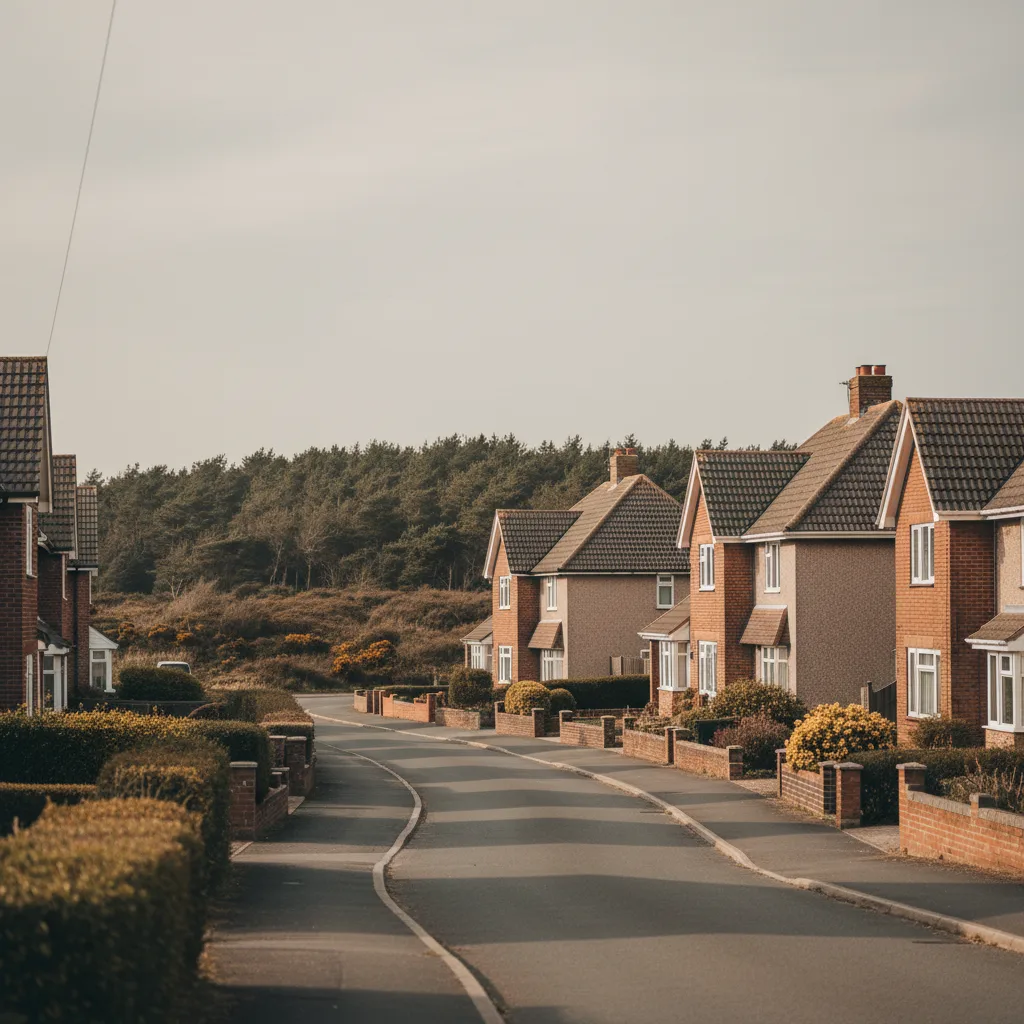
Sandford is the address where our own zone map has to make a judgement
Most of what we write is easy to be definite about. Sandbanks is the worst exposure in the area and gets the hardest specification we sell. Verwood is miles inland and gets the ordinary one. Sandford is neither, and pretending otherwise would be the sort of tidy answer that makes a firm look confident and leaves a customer with the wrong roof.
The village sits on the heath north of Wareham, a short distance from the western reaches of Poole Harbour. On a map that looks coastal. On the ground it is not, or not simply: there is heath, pine and a good deal of low woodland between here and the water, the harbour at that end is shallow and sheltered rather than open sea, and the prevailing south-westerly arrives over land rather than over a fetch of open water.
Distance to water is the worst single predictor of how much salt reaches a roof, and it is the one most firms quote. What actually matters is how much open water the wind crosses before it reaches you, how much land, tree cover and building it has to get through afterwards, and whether the roof in question faces into that wind or away from it. A house four hundred metres from a sheltered harbour inlet behind a pine belt can see less airborne chloride than a house a mile from an open beach with nothing in between.
What we actually assess before writing the zone on your quote
| What we look at | Why it matters | How Sandford usually scores |
|---|---|---|
| Fetch, meaning the open water the wind crosses | Salt is picked up off breaking water. No fetch, little salt, however close the water looks | Low. The harbour at this end is shallow, sheltered and broken up by land |
| What stands between you and the water | Heath, woodland and buildings strip airborne chloride out of the wind quickly | Substantial. Heath and pine belts on the harbour side |
| Direction the roof faces | A slope facing into the prevailing wind takes far more of everything than the leeward side of the same roof | Varies plot by plot, which is why we look rather than assume |
| Exposure of the plot itself | Open heath edge means higher wind uplift, which is a structural matter and not a corrosion one | Often genuinely open, and this is the one that does change the specification |
| Evidence already on the building | Existing metalwork tells you what the site has been doing for twenty years | Usually mild. Rust bleed on old fixings, chalked coatings and pitted ironmongery are what we look for |
That last one is the most useful thing on any survey and it costs nothing. Your gutters, your existing roof window, your gate hinges and the screws in your fascia have been running a twenty-year experiment on the actual exposure at your address. We read it before we write anything down.
The middle specification, and what it contains
Not the coastal build-up, not quite the inland one
What we usually do include at Sandford: corrosion-resistant fixings on anything exposed to the weather, and non-ferrous or coated fasteners where metals would otherwise sit against each other in a damp joint. That is a small cost and it removes the commonest long-term nuisance, which is rust staining from a fixing rather than failure of a frame.
What we usually do not include: a full marine-grade coating system and A4 stainless throughout. Those answer chloride attack at a level this village does not see, and specifying them here would be charging you for the harbour mouth.
What we may well increase instead: the fixing schedule, because the open heath edge raises wind uplift. That is structural, it is answered by fixing pattern and centres and by landing fixings in sound timber, and it is a genuine local design case rather than an upsell.
And if you disagree we will supply the coastal build-up and write on the quote that it was your choice rather than our recommendation. What we will not do is quote it quietly and let you assume it was necessary.
What is on the roofs here
Sandford is mostly twentieth-century housing, with a lot of post-war and later stock, bungalows and chalets among it, and a scatter of older property and former workers’ housing associated with the area’s industrial past on the heath. Coverings are predominantly modern: profiled interlocking concrete tiles on battens and underlay over trussed rafters, occasionally plain tile or slate on the older buildings.
That is good news for cost. A modern profiled covering has a manufacturer’s flashing kit made for it, correctly matched to the profile, and the job is quick and reliable. The two things worth checking on a Sandford roof of a certain age are the state of the underlay, which goes brittle and tears rather than folding once it is past about forty years, and the tile nibs, because concrete tiles get fragile and a realistic breakage allowance belongs in the quote rather than on the final invoice.
There is one local building type we will be straight about. A park home or holiday lodge is a manufactured structure, not a house, with a lightweight roof designed and certified as a whole. We do not cut openings into one unless the manufacturer’s own detail permits it and you have their confirmation, because the structure, the warranty and sometimes the site licence all depend on that roof staying as it was built.
How the survey runs
- Outside first, at the plot. Aspect, shelter, prevailing wind, what stands between the house and the water, and the condition of existing metalwork.
- The covering identified properly. Profile, material, approximate age, and whether a matched flashing kit exists for it or a lead detail is needed.
- Inside the roof. Structure type, truss spacing or rafter layout, underlay condition, insulation, and whether the void is ventilated.
- The room below. Orientation, existing daylight, what the space is used for, and whether overheating or glare is a realistic risk in summer.
- Access assessed. Where a scaffold can stand, whether it is on your ground or the highway, and how a large sealed unit reaches the roof.
- The zone written down. One line on the quote saying which exposure zone your roof is in and what specification follows from it, so you can check our reasoning rather than trust it.
Wareham, Dorset Council, and the heath
Sandford is in the Dorset Council area, not BCP. Poole is six or seven miles away round the harbour and it is a different authority, so guidance written for a Poole address does not apply here. Building Control is likewise Dorset Council or an approved inspector.
Rooflight work on a house is usually permitted development, subject to projecting no more than 150mm beyond the roof plane and not sitting above the highest part of the roof. Flats, maisonettes and properties whose permitted development rights have been removed are different, and we check the address rather than assume.
The heath around Sandford is protected habitat, and that constrains development on the land rather than glazing on an existing roof. It is worth knowing if your project is larger than a rooflight, because it shapes what can be built here and what conditions attach to it.
Five straight answers
I can see the harbour from my roof. Do I need the coastal specification? Seeing it and being exposed to it are different things. What matters is whether the wind reaching your roof has crossed open water or crossed heath and woodland first. We will look, tell you which, and write it on the quote.
Is it worth paying for better fixings anyway? At Sandford, yes, and it is a small sum. Corrosion-resistant fixings and sensible metal pairings remove rust staining and seized fastenings, which are the nuisances that actually turn up here. A full marine coating system is a different order of cost for a problem you do not have.
My underlay is ancient. Does that stop the job? No, but it changes the method. Brittle bitumen underlay tears when disturbed, so the opening needs a proper patch and lap into the new frame rather than tape and optimism.
Can you fit a rooflight to my park home? Only if the manufacturer’s detail allows it and you have that in writing. These are certified structures with lightweight roofs, and cutting one without the manufacturer’s blessing can affect the structure, the warranty and the site licence.
How far are you from Sandford? Comfortably within our area. We work from Poole across about thirty miles, and Wareham and the villages around it are routine for us.
What is written on the quote
Method and guarantee, instead of borrowed proof
The exposure zone, named, with the specification that follows from it and a note of what we have deliberately left out. At Sandford that line will explain the judgement rather than simply asserting one.
A ten-year workmanship guarantee on our installation. It covers workmanship, and it is not insurance backed. Units and components carry their own manufacturer warranties.
A fixed written price after survey, itemised, with tile breakage allowance, underlay repair and any structural design shown separately.
because the firm is new and holds none.
We install and replace rooflights, skylights, roof windows, roof lanterns and sun tunnels. We do not re-roof, and we will tell you when a covering needs a roofer before it needs us. To arrange a survey in Sandford, ring 01202 923272.
Related reading
Rooflight and Skylight Installation Alderney
The Alderney question is not what it is made of. It is whether it opens Most of the calls we…
Rooflight and Skylight Installation Barton on Sea
Barton on Sea is a cliff top with a clear view of the Isle of Wight and absolutely nothing between…
Rooflight and Skylight Installation Bere Regis
Cob, and why we ask what your walls are made of Cob is earth. Subsoil, water, straw and sometimes chalk…
Rooflight and Skylight Installation Blandford Forum
A town rebuilt all at once, and what that does to roof work Most English towns grew in layers, so…
Rooflight and Skylight Installation Boscombe
In Boscombe, the roof is usually not the shape people think it is Ask someone what their roof looks like…
Rooflight and Skylight Installation Bournemouth
Bournemouth is not one exposure, and neither is its roof stock Bournemouth runs from a clifftop down a set of…