Replacing a VELUX without disturbing the surrounding tiles
A replacement reaches only as far into the roof as the flashing does, and the real risk is not the window but whether the surrounding tiles survive being lifted and put back.
The window is the easy part. The question that decides how a VELUX replacement goes is whether the tiles around it can be lifted and re-laid without breaking.
Homeowners usually ask for a replacement roof window, or a replacement skylight, and picture a straight swap: sash out, sash in, done by lunchtime. Sometimes that is exactly what it is. More often the old unit and the roof around it have grown together over twenty-five years, and the honest answer depends on which of four quite different jobs your roof is actually asking for. This page sets out that ladder, because the price, the timescale and the risk change at every rung.
Four different jobs that all get called a replacement
| What is replaced | Does the roof covering get touched? | When it is the right call |
|---|---|---|
| The sealed glass unit alone | No, done from inside or from the sash | Misting or a cracked pane in a frame and sash that are otherwise sound |
| The opening sash, frame retained | No, where the sash generation matches the frame | Rotten or damaged sash, sound frame, an upgrade to better glazing on some generations |
| The whole unit, existing flashing reused | Minimally, at the perimeter only | Rarely. Flashing kits are generation-specific and a reused one is a gamble we usually advise against |
| Whole unit and new flashing | Yes, lifted around the opening | The default for a unit at the end of its life, and the only version with a clean junction at the end of it |
Most people who have been told they need a new rooflight actually need the first or the fourth. The middle two exist and are worth checking, but they depend on what generation is already up there.
Why the tiles have to move at all
A flashing kit is not laid on top of the roof. It is woven into it: the side sections tuck under the tiles either side, the head section runs under the course above, and only the apron at the sill sits over the covering below. To release the old one you have to lift the covering that holds it down, and to bed the new one you have to put that covering back.
So the phrase in the title is relative, not absolute. What a careful replacement avoids is stripping the roof, disturbing anything beyond the immediate perimeter, or leaving the slope short of tiles at the end. Two or three courses above, one or two tiles each side, and the courses below the sill get touched. That is the footprint.
The tiles that break, and the ones that do not
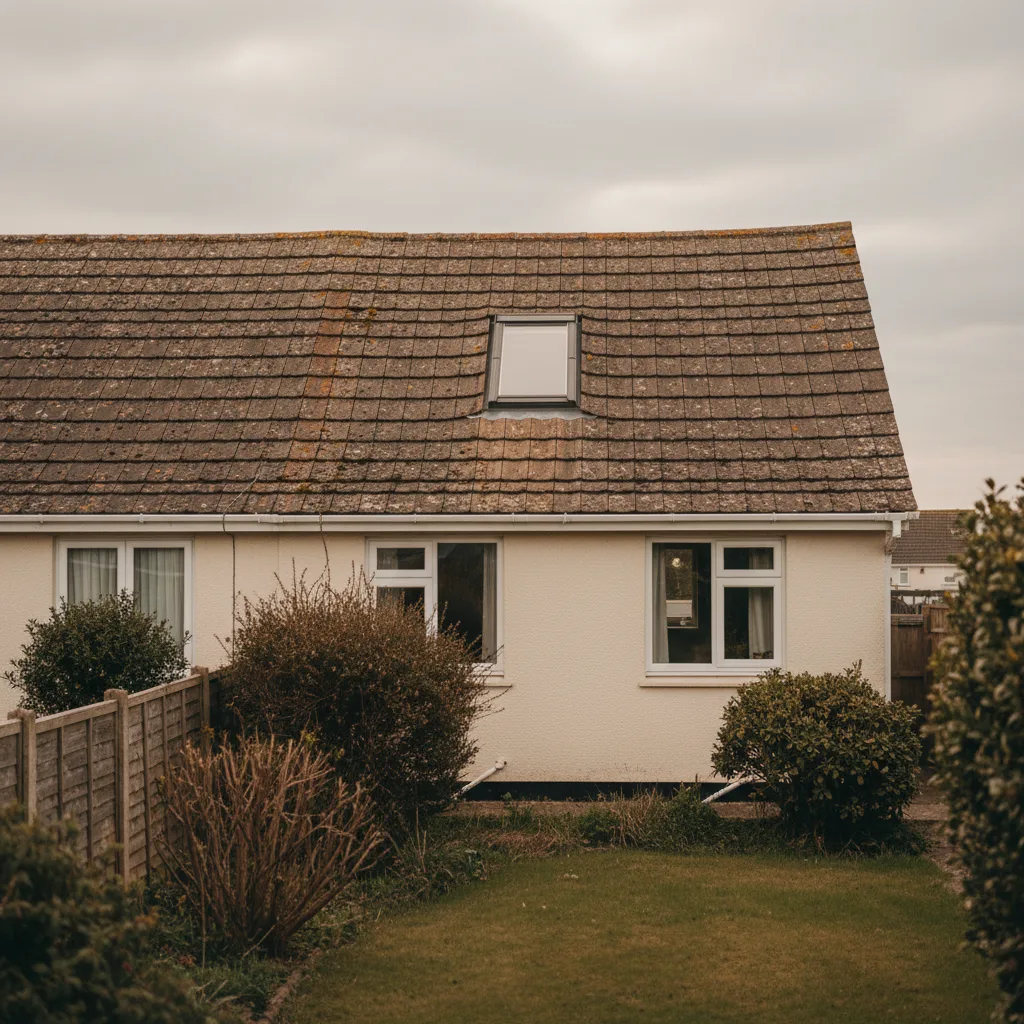
This is where local roofing stock decides the job. Concrete interlocking tiles from the 1960s onwards are heavy but forgiving; they lift and re-lay with a low breakage rate, and replacements are easy to source. Old clay pantiles are a different animal. The nibs that hang them on the batten become brittle with age, and a tile that has been in place since the 1930s may snap the moment the weight comes off it.
Natural slate sits somewhere between. Slates are released with a ripper rather than lifted, they re-fix with a tingle or a new nail depending on position, and a good slater loses very few. Fibre cement slates of a certain age become fragile and delaminate at the fixing holes.
Purbeck stone slates are not in this conversation at all. A stone slate roof in Corfe Castle, Langton Matravers or the villages around Swanage takes a bespoke formed detail rather than a boxed flashing kit, and re-laying stone around a new opening is a specialist operation with its own sequence. If your roof is stone, treat everything on this page as background and the survey as the real answer.
Spare tiles: where they come from when there are none
Every old roof job starts with the same question, and on a 1930s Poole semi the answer is rarely a merchant. A discontinued clay pantile is not sitting on a shelf anywhere. Three sources actually work.
- The owner’s own stack. Ask before anything else. A surprising number of houses have a dozen spares behind the shed from a previous repair, and they are the perfect match by definition.
- A concealed elevation on the same roof. Tiles are borrowed from a small area that is genuinely not visible, and that area is made good with the closest available match. The visible slope keeps its original tiles; the compromise goes where nobody looks.
- Reclamation. Dorset and Hampshire reclamation yards carry regional clay pantiles and plain tiles, and a good match is usually findable given a week. It is not usually findable the same morning, which is why this question is asked at survey rather than on site.
The order of work on the day
A replacement runs outside-in and then inside-out, and the sequence is designed so the roof is never open for longer than it has to be.
- Access is set up, which on a two-storey house means scaffold or a tower rather than a ladder leant on the gutter.
- The covering is lifted back from the head and sides and stacked in course order, so it goes back as it came off.
- The old flashing is released and the unit taken out, usually in two parts with the sash removed first to reduce the weight.
- The opening is inspected properly, because this is the only moment anyone will ever see it: batten condition, underlay condition, rafter ends, and any staining that shows where water has been going.
- The new frame is set, squared and fixed to the correct height for the flashing family being used.
- Underfelt collar, insulation collar and vapour collar are fitted in sequence before anything closes up.
- Flashing goes on, the covering is re-laid from the bottom course upward, and the roof is watertight before the internal work starts.
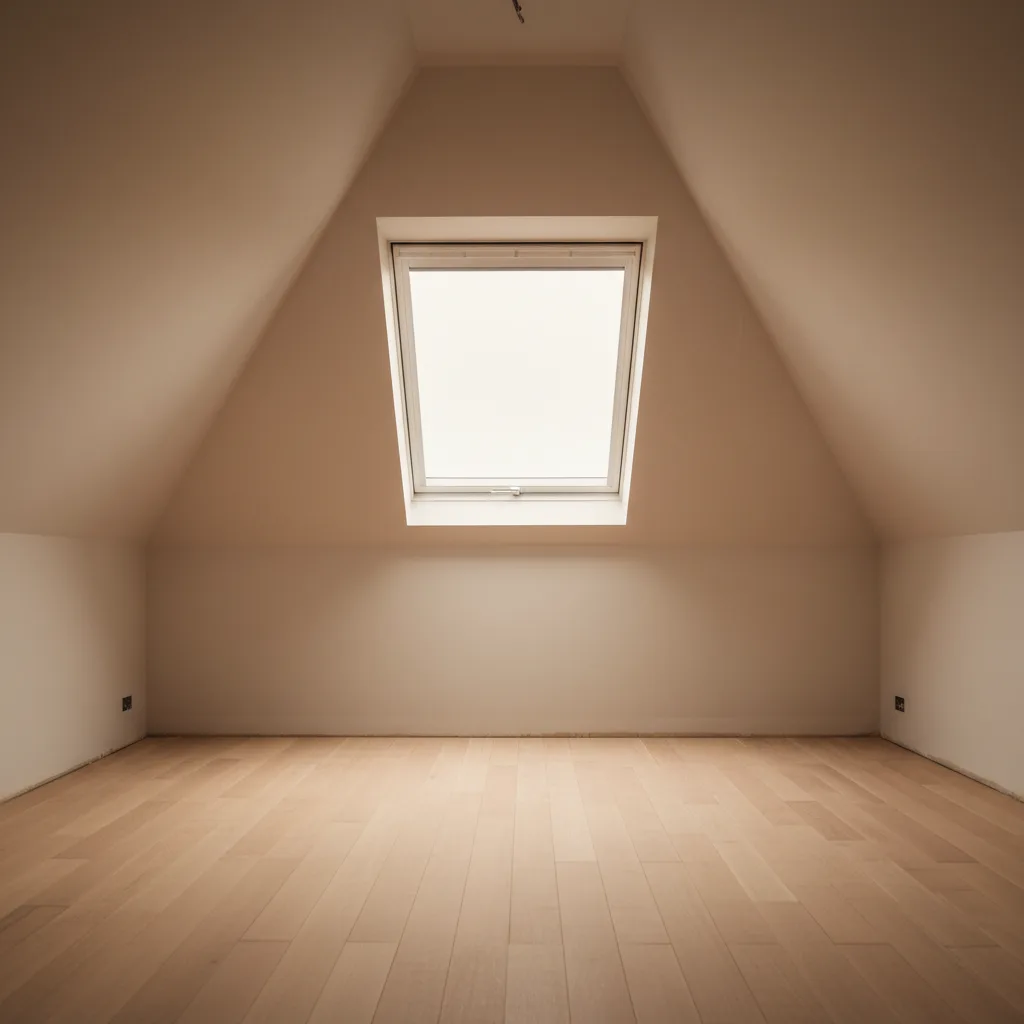
- The internal lining is made good, or replaced if the old reveal was damaged or the new frame sits differently.
The inspection at step four is the point of the whole job
An old roof window that has been quietly letting water past for years leaves a record: dark staining down the rafter sides, a soft batten end, a tide mark on the underlay below the sill. None of that is visible with the unit in place and none of it is visible again once the new one is in.
If we find it, we stop and show you, with a photograph, before carrying on. Rot in a rafter end is a different job with a different price and it is not something to discover afterwards on an invoice. A fixed price given after survey covers what the survey could see; anything genuinely hidden gets discussed at the moment it is uncovered, in writing, before the work continues.
Weather, and the open hole in the middle of it
A replacement can be done in winter and we do them through it. The roof is open for a matter of hours, not days, and temporary cover is part of the method rather than a contingency.
What stops work is wind, not rain. Handling sheet flashing and a glazed sash at height in a strong south-westerly is unsafe, and on the exposed elevations around Sandbanks, Studland and the harbour mouth the wind arrives with nothing in front of it. We move the date rather than push on, and we would rather explain that in advance than on the morning.
What changes between generations
A unit fitted in the 1990s and a current one of the same nominal size are not the same object. Frame depths, fixing bracket positions, sash profiles and the way the flashing engages have all moved. The practical consequences are that the structural opening usually still works, the flashing almost never transfers, and the internal reveal frequently needs remaking because the new frame presents its face at a slightly different depth.
An old frame is not a template. Offering a new unit up to the frame that is coming out tells you very little, because the new frame sits in the structural opening differently. The measurement that matters is rafter face to rafter face and head to sill, taken with the old unit out or taken internally through the existing lining.
The size code on the old plate is the starting point for the order and not the end of it, which is covered in full in the size code guide in this hub. On a replacement we measure the opening as well as reading the plate, every time.
What this does not cover
Two adjacent questions belong elsewhere so that neither page repeats the other. Whether a like-for-like swap falls under building regulations, and whether a same-size unit is genuinely available, are both answered directly in this hub. So is the separate case of a misted sealed unit, where replacing the glass alone is often the whole job.
Booking one
We do not. If the glass alone will do it, we will say so. Call 01202 923272, or send a photograph of the window and the roof around it on WhatsApp and we will tell you which of the four jobs above we think you are looking at, before anyone visits.
Related reading
Can a VELUX be converted from manual to electric?
Usually yes, if the unit is from roughly the last twenty years. A retro-fit kit replaces the top control bar…
Can a VELUX be fitted to a flat roof?
Not as it comes. A standard pitched-roof unit needs a slope of roughly fifteen degrees or more to shed water…
Can a VELUX be fitted to a roof with solar panels?
Yes, but it stops being a roofing question and becomes a clearance and sequencing one. A flashing needs a clear…
Can a VELUX be replaced with the same size unit?
Usually yes. The standard size grid has been stable for decades, so a like-for-like frame is normally available, but “same…
Can a VELUX window be repaired?
Yes, more often than not. Glass, gaskets, filters, handles, friction components and flashings are all replaceable on their own. The…
Can I fit a blind to an old VELUX window?
Usually yes, provided you can read the size and type codes off the data plate. Manufacturer blinds are made to…