Rooflight and Skylight Installation Colehill
Rooflight and skylight installation in Colehill, where mature tree cover and shade, rather than salt, decide the glazing, the drainage detail and the cleaning interval.
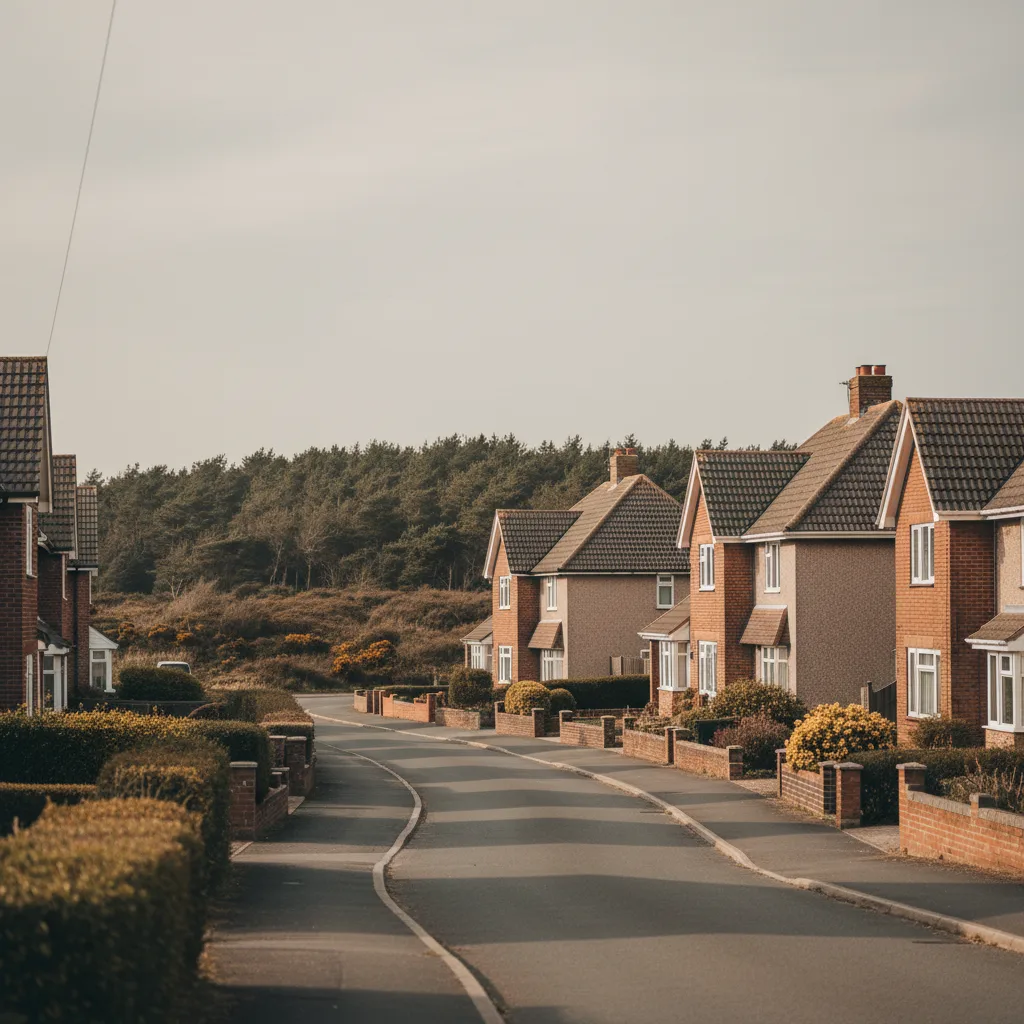
What ages a rooflight in Colehill is leaf litter, not salt
Colehill occupies the high ground east of Wimborne, and it is one of the greenest places we work. Large plots, deep gardens, mature oak, beech, birch and pine, a lot of it older than the houses it now overhangs. The village has almost no historic core to speak of and very little that pre-dates the twentieth century, so the constraint here is not heritage and it is certainly not sea air. It is what falls out of the trees.
That sounds like a small point. It is the single biggest thing that shortens the working life of a skylight on a Colehill roof, and it gets almost no attention at the quoting stage because it cannot be sold as an upgrade.
Organic debris does three separate things to a rooflight, and only one of them is obvious.
It blocks drainage. Most flat rooflights and roof windows rely on a small drainage channel or gap round the frame. Fill that with needles and rotting leaf and water stands where it was meant to run. Standing water finds seals.
It defeats self-cleaning glass. The self-cleaning coating works by breaking down organic film in sunlight and letting rain sheet it away. Under a canopy there is less direct sun to trigger it and more organic matter landing on it, which is the worst combination available.
It feeds moss and algae, which hold moisture against the frame and the tiles around it, all year, not just in autumn.
The shade question, and an upgrade you may not need to buy
The same canopy that causes the debris does something useful, and it changes what we should be selling you. Solar-control glazing is a genuine product with a genuine purpose: stopping a south-facing room becoming unusable in July. Under a heavy Colehill canopy, a good deal of that work is already being done for free by forty feet of beech.
We would rather assess it than assume it. Tree cover is seasonal, it varies wildly between one plot and the next along the same road, and it changes over a decade as trees grow or come down. What we look at is the actual sky visible from the point where the glass will sit, at the orientation it will face.
| The situation at your plot | What we would specify | Why |
|---|---|---|
| South-facing slope, open sky, no canopy | Solar-control glass, and a discussion about blinds or ventilation | The room will overheat otherwise. This is the case solar control was designed for |
| South-facing but under deciduous canopy | Usually clear or lightly coated glass | The leaf shades the summer peak and drops for the winter light. Heavy solar control here buys you a darker room in January for a summer problem you do not have |
| Under mature evergreen or pine | Clear glass, and attention to drainage and cleaning access instead | Year-round shade. The money belongs in the detail that handles debris, not in a coating that reduces light you are already short of |
| North-facing, any canopy | Clear glass, maximum available area | Even, steady light with no glare problem to solve. Solar control would be spending money to make the room dimmer |
Living under a canopy without living up a ladder
If the trees are staying, and they usually are, the installation should be designed so the maintenance is realistic for the person who owns it. That is a design decision made before the unit is ordered, not advice handed over at the end.
- Put the unit where it can be reached. A rooflight at the top of a steep slope above a conservatory roof is a scaffold job every time it needs clearing. Two feet lower, it may be a ladder and ten minutes.
- Keep the drainage path generous and visible. A wide, open channel that you can see is blocked beats a neat concealed one that silts up invisibly for six years.
- Specify the kerb height honestly. On a flat roof under trees, a taller upstand keeps the glass edge clear of the leaf mulch that collects on the deck. This is one of the few genuine Colehill upgrades and it costs very little.
- Check the gutters and outlets serving the same roof. There is no point clearing a rooflight channel that discharges into a blocked outlet. We will tell you what we can see, even though gutters are not our work.
- Agree a clearing interval. Under a heavy canopy, twice a year, after autumn leaf fall and again in spring. That is not a maintenance contract we are selling, it is a job you can do or ask your window cleaner to do.
Protected trees, and access that has to work round them
The rule, and the part people get wrong
The rule: many trees in Colehill are covered by tree preservation orders, and carrying out work to a protected tree without consent is an offence, not a paperwork slip. Dorset Council is the authority. That applies to pruning, cutting roots and lopping a limb that happens to be in the way of a scaffold.
The part people get wrong: it is the contractor’s convenience that most often triggers it. A branch gets taken off so a tower can stand square, or a root is cut for a scaffold base, and nobody asks first. We design the access round the canopy. If a job genuinely cannot proceed without tree work, that is a conversation with the council and a tree surgeon before anyone books a date, and it is your decision and not ours.
The exception worth knowing: a tree preservation order does not stop the work on your roof. It shapes how we get to it. In practice that means smaller lifts, more hand-carrying, and occasionally a different position for the unit.
High ground, and the one place the specification does go up
Colehill sits high, on the ridge above the Stour valley, and there are plots here with a genuinely open aspect to the west and south-west where the ground falls away. Those roofs see more wind than the tree-enclosed plot two hundred yards along the same lane.
That is a structural question, not a corrosion one. Wind uplift on a large sealed unit is resisted by the fixings, their pattern and their centres, and by what they are fixed into. It is not resisted by a better coating. On an exposed Colehill plot with a wide flat rooflight or a lantern, we want the fixing schedule to come from a calculated uplift figure rather than from habit, and the timber under it to be sound enough to hold what the calculation asks for.
The rest of the Colehill specification is ordinary, and we will say so plainly. You are miles inland, behind Wimborne, behind Poole, behind a great deal of land. Marine-grade coatings and A4 stainless throughout are real answers to a real problem that your address does not have.
The houses, and what is under the tiles
| Typical Colehill property | Likely roof structure | What usually suits it |
|---|---|---|
| Interwar and 1950s detached on a large plot | Cut roof with purlins, often with a usable void | Roof windows trimmed conventionally; good candidates for a proper loft room |
| 1960s to 1980s detached and chalet | Trussed rafters, commonly at 600mm centres | Units between trusses, width capped by the bay unless an engineer designs the opening |
| Later infill and replacement houses | Modern trussed roof, profiled interlocking concrete tile | Standard flashing kits fit properly here, which keeps the cost down |
| Single-storey rear extension | Flat or low-pitch deck, sometimes over an older structure | Flat rooflight on an insulated kerb, with a taller upstand under trees |
Colehill is one of the easier places in our area to work. Wide plots, side routes, room for a vehicle and somewhere for scaffold to stand on private ground rather than on the highway, which means no licence and no lead time. The constraint is almost always a tree rather than a street.
Questions from Colehill
Is self-cleaning glass worth it under trees?
Honestly, less than the brochure suggests. It needs direct sunlight to work and it is handling a much heavier organic load than it was designed for. We will fit it if you want it, but under a heavy canopy the money does more good spent on drainage detail and a position you can actually reach.
Will leaves make it leak?
Not directly. What leaks is a blocked drainage path with standing water sitting against a seal, over years. A clear channel and a sensible kerb height are what prevent it, and both are decided at installation.
Do I need permission for a rooflight in Colehill?
On a house, rooflight work is usually permitted development, subject to projecting no more than 150mm beyond the roof plane and not sitting above the highest part of the roof. Colehill is in the Dorset Council area, not BCP. Building Control is separate from planning and applies almost always. If there is a tree preservation order on the plot, that is a third and entirely separate consent.
Should I have the trees cut back before you come?
Ask the council first if there is any chance they are protected, and use a tree surgeon rather than us. We would rather work round a canopy than be the reason a protected tree was cut.
Will a skylight make a shaded room bright enough?
Usually yes, and by more than people expect, because roof glazing collects light from the whole sky rather than a slice of it. Under dense evergreen the gain is smaller and we will say so before you order rather than afterwards.
Two documents, and nothing borrowed
Two documents, and no borrowed credibility
A ten-year workmanship guarantee on our installation. It covers workmanship and it is not insurance backed, which we say plainly rather than letting the word do work it has not earned. Glass and frames carry their own manufacturer warranties.
A fixed written price after survey, itemised, with the exposure zone named on it. For Colehill that will read inland, wooded, and it will list what we have deliberately not charged you for.
The firm is new and holds none of them, so it claims none.
We fit and replace rooflights, skylights, roof lanterns, roof windows and sun tunnels, across Poole and about thirty miles around it. We are not general roofers and we do not take on tree work. To arrange a survey in Colehill, ring 01202 923272.
Related reading
Rooflight and Skylight Installation Alderney
The Alderney question is not what it is made of. It is whether it opens Most of the calls we…
Rooflight and Skylight Installation Barton on Sea
Barton on Sea is a cliff top with a clear view of the Isle of Wight and absolutely nothing between…
Rooflight and Skylight Installation Bere Regis
Cob, and why we ask what your walls are made of Cob is earth. Subsoil, water, straw and sometimes chalk…
Rooflight and Skylight Installation Blandford Forum
A town rebuilt all at once, and what that does to roof work Most English towns grew in layers, so…
Rooflight and Skylight Installation Boscombe
In Boscombe, the roof is usually not the shape people think it is Ask someone what their roof looks like…
Rooflight and Skylight Installation Bournemouth
Bournemouth is not one exposure, and neither is its roof stock Bournemouth runs from a clifftop down a set of…